Info
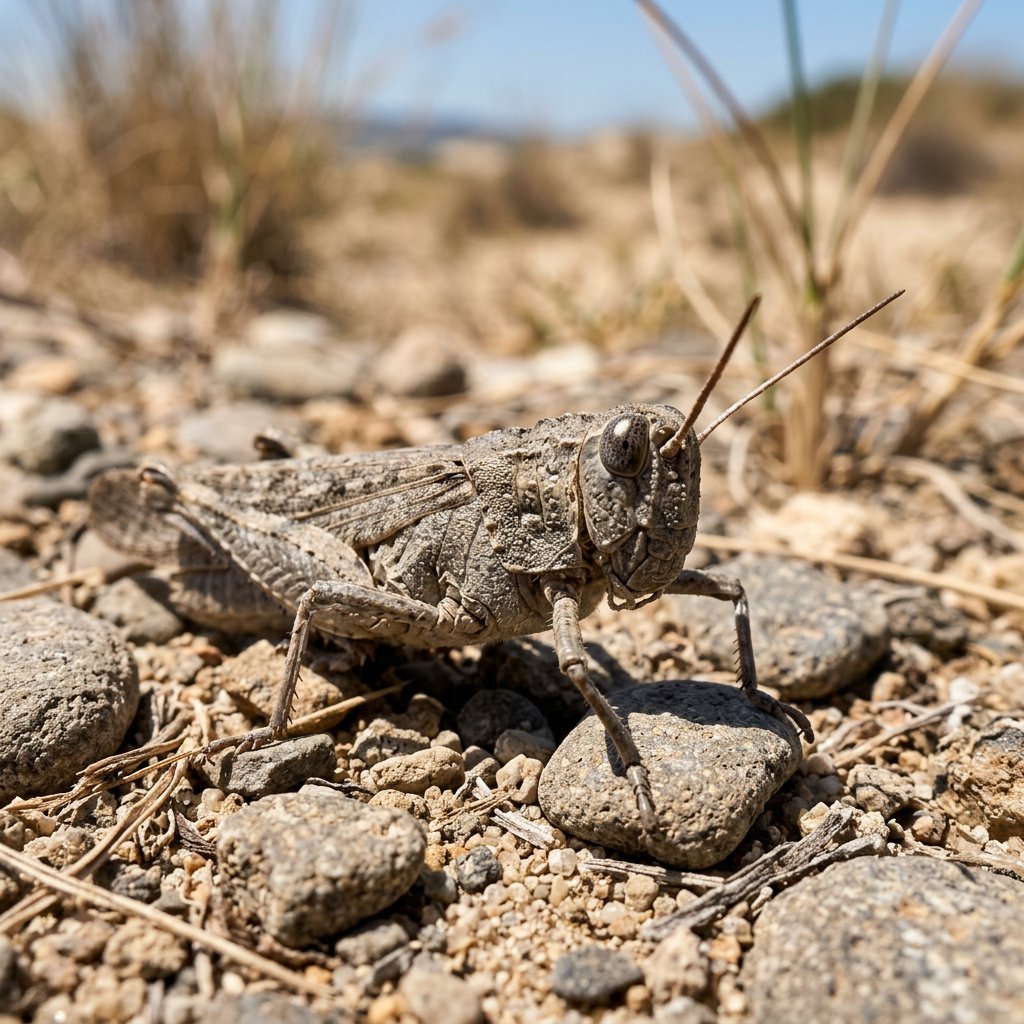
Often called the Blue-winged Grasshopper, this insect is nature’s version of a "bait and switch" artist. On the ground, it is a master of disguise, blending seamlessly into dusty trails and gravel pits. However, the moment it takes flight, it reveals a shocking flash of brilliant sky-blue wings that disappears as soon as it touches down, leaving predators (and hikers) wondering where it went.
🔍 How to Identify
- 🦋 The Secret Wings: The most defining feature is the hind wings, which are a vibrant, translucent light blue with a dark band near the edge. These are only visible during flight.
- 🧱 Cryptic Coloring: When resting, the body is mottled gray, brown, or sandy-colored. It can even slightly adjust its tone to match the specific soil or rocks of its home.
- 📐 Robust Build: It has a somewhat stocky, "saddle-shaped" thorax and relatively long, powerful jumping legs designed for quick launches into the air.
🌲 Habitat & Ecology
- 🏜️ The Pioneer: Unlike most grasshoppers that love lush meadows, this species prefers "wastelands." You will find it in sandy dunes, sun-baked quarries, gravel paths, and areas with very sparse vegetation.
- ☀️ Thermal Hunter: It is highly dependent on bare ground that absorbs heat. It spends its mornings "basking" on rocks to get enough energy to move and feed on small desert-hardy grasses and herbs.
⚠️ Safety & Toxicity
- ✅ Harmless Observer: This grasshopper is completely non-toxic and poses no threat to humans. It does not sting or have a defensive bite.
- 🛡️ Gentle Defense: Its only real defense is its camouflage and its ability to leap great distances. It does not produce any irritating chemical sprays or "tobacco spit" common in some other grasshopper species.
✨ Fun Fact
The Sphingonotus caerulans uses a survival strategy called Flash Coloration. By revealing bright blue wings and then instantly snapping them shut upon landing, it "resets" the predator's visual search. The predator looks for a blue object, while the grasshopper has effectively turned back into a gray stone.
More Details








