Info
Often called the "Underground Architect" or the "Purse-web Spider," Sphodros is a fascinating relative of the tarantula that looks like it crawled straight out of a prehistoric era. These reclusive spiders spend nearly their entire lives hidden inside unique silken tubes, making the rare sighting of a wandering male a true "bucket list" moment for nature enthusiasts. Despite their somewhat formidable appearance, they are the shy, silent sentinels of the forest floor.
🔍 How to Identify
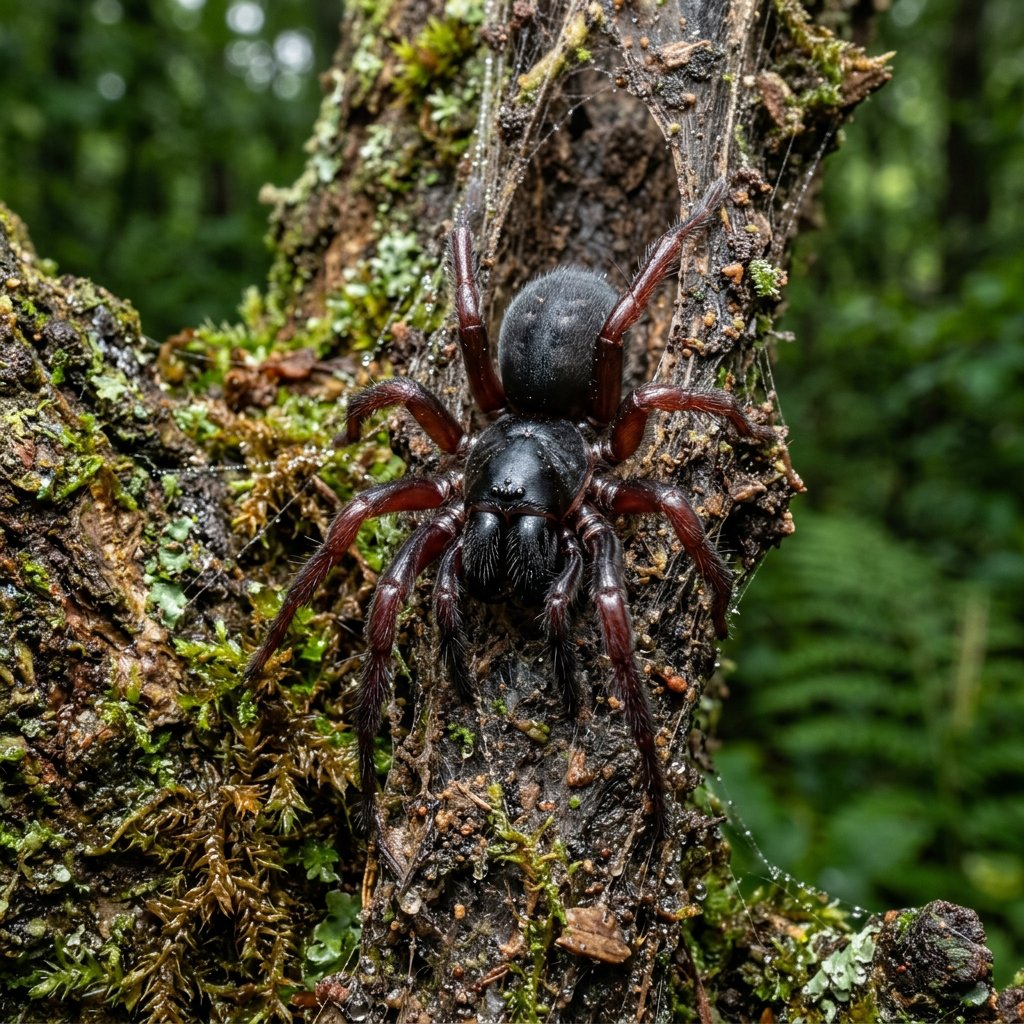
- 🕷️ Massive Fangs: They possess oversized, downward-pointing chelicerae (fangs). Unlike most common garden spiders, their fangs move up and down rather than side-to-side.
- 🪵 The Purse-Web: Their most famous feature is their home—a camouflaged, vertical silk tube that resembles a dirty finger or a tree root extension, often covered in bits of bark and soil.
- 🦵 Striking Contrast: In the most famous species, Sphodros rufipes, the males feature brilliant, "hot-rod" red or orange legs that contrast sharply against a jet-black, velvety body.
🌲 Habitat & Ecology
- 🕸️ Master of Disguise: They are typically found in mature deciduous forests. They build a silken "purse" that extends about 10 inches up a tree trunk and several inches underground. To the untrained eye, these tubes look like part of the tree's bark.
- 🐜 The "Zip-Tie" Hunter: They are ambush predators with a unique style. When an insect crawls across the outside of their silk tube, the spider feels the vibration, bites through the silk wall to grab the prey, pulls it inside, and then quickly "sews" the slit back up from the inside.
- ⏳ Homebodies: Females may live in the same silk tube for over seven years, rarely ever leaving. Males, however, are the ones you’ll see wandering in late spring or summer as they search for a mate's tube.
⚠️ Safety & Toxicity
- 🛡️ Defensive, Not Aggressive: While their large fangs can look scary, Sphodros spiders are very shy. They will only bite if they are squeezed or feel their life is in immediate danger.
- 🐝 Low Risk: Their venom is not considered medically significant to humans. A bite might feel similar to a bee sting—painful due to the mechanical size of the fangs, but generally harmless unless you have a specific allergy. Keep curious pets away to avoid a defensive nip.
✨ Fun Fact
Purse-web spiders belong to a very ancient lineage of spiders called Mygalomorphs. They have remained largely unchanged for millions of years, making them "living fossils" that use the exact same hunting architecture today as their ancestors did during the age of the dinosaurs!
More Details








