Info
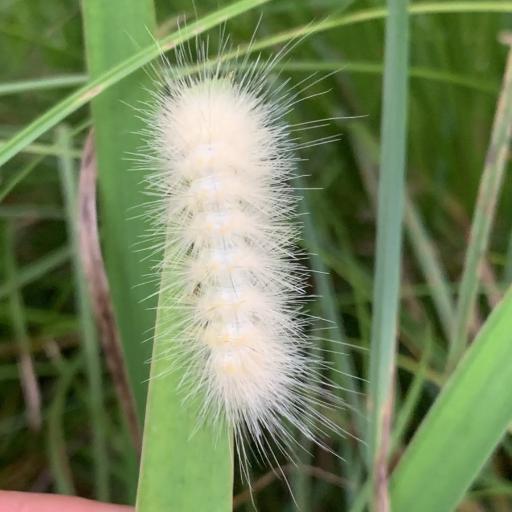
Commonly known as the Virginian Tiger Moth, this species is most famous for its larval stage: the "Yellow Woolly Bear." A staple of North American gardens and fields, it is a master of disguise, transitioning from a hyper-fuzzy, multicolored caterpillar into a sleek, snowy-white moth. Whether it’s scurrying across a sidewalk or resting on a porch light, this insect is a charming and harmless neighbor.
🔍 How to Identify
- ☁️ Snowy Wings: The adult moth has brilliant white wings, usually decorated with just a few tiny, faint black dots (though some individuals are purely white).
- 🌈 Variable Fuzz: The caterpillar (Yellow Woolly Bear) is densely covered in long hairs. Despite its name, it can be pale yellow, cream, rusty orange, or even dark brownish-black.
- 🟡 Hidden Abdomen: If the adult moth spreads its wings, you’ll see a bright yellow or orange abdomen marked with several rows of black spots.
🌲 Habitat & Ecology
- 🍽️ The Ultimate Generalist: These caterpillars are not picky eaters. They are "polyphagous," meaning they happily munch on a massive variety of plants, including clover, dandelions, garden vegetables, and even the leaves of fruit trees.
- 🏃 On the Move: You will frequently spot the caterpillars wandering rapidly across open ground. This usually happens in late summer or fall when they are searching for a protected spot to spin their silk-wrapped cocoons and overwinter.
⚠️ Safety & Toxicity
- ✅ Harmless: The Virginian Tiger Moth is neither venomous nor aggressive. It does not sting or bite humans or pets.
- 🧤 Bristle Sensitivity: While the hairs are not "stinging" hairs like those of a Flannel Moth, they can be a bit coarse. People with very sensitive skin might experience mild irritation or a "prickly" feeling after handling the caterpillar. It’s always best to let them crawl onto a leaf if you need to move them.
✨ Fun Fact
Unlike its cousin, the famous Banded Woolly Bear, the color of the Yellow Woolly Bear has absolutely nothing to do with predicting the severity of the coming winter—its hue is determined entirely by its genetics and what it has been eating!
More Details








