Info
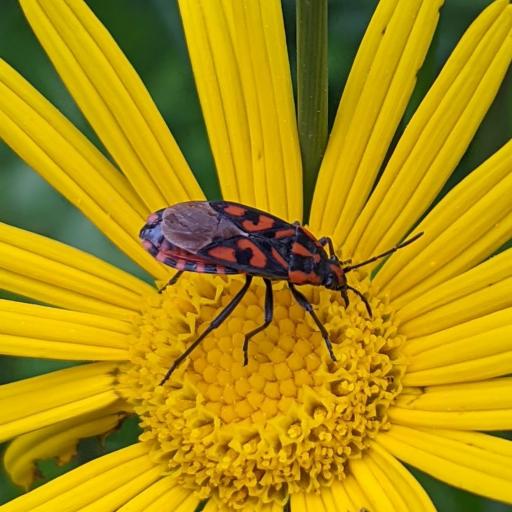
Dressed in a striking tuxedo of crimson and charcoal, the Spilostethus saxatilis—commonly known as the Small Milkweed Bug or Rock Bug—is a master of visual communication. Found basking on sun-drenched stones across Europe and the Mediterranean, its vibrant patterns serve as a bold "keep away" sign to potential predators. While its fiery appearance might look intimidating, this little seed-eater is a peaceful sun-worshipper that plays a quiet role in its local ecosystem.
🔍 How to Identify
- 🎨 Aposematic Pattern: Features a vivid red body decorated with complex black markings, including two distinct black bands on the thorax and a black "X" or heart-like shape on the wings.
- 🪽 Membranous Wings: Unlike some of its lookalikes, this insect has fully developed wings and is an adept flier, often seen fluttering between flowering plants in mid-summer.
- 🐜 Body Shape: It possesses an elongated, oval-shaped body typical of the ground bug family (Lygaeidae), reaching about 10–13mm in length with long, dark antennae.
🌲 Habitat & Ecology
- ☀️ The Sun-Seeker: As its Latin name saxatilis (meaning "living among rocks") suggests, it is most often found in dry, rocky meadows, limestone pavements, and warm hillsides where it can soak up heat.
- 🌱 Specialized Diet: They primarily feed on the seeds and juices of plants like the Pale Swallow-wort (Vincetoxicum) and various Milkweeds, sequestering toxins from these plants to make themselves distasteful.
- 🛡️ Natural Defense: Instead of biting or stinging, they rely on "chemical warfare." When threatened, they can emit a foul-smelling fluid that discourages birds and lizards from making them a snack.
⚠️ Safety & Toxicity
- 🟢 Harmless to Humans: These bugs are completely non-aggressive. They do not bite, sting, or carry diseases that affect humans.
- 🐾 Pet Caution: While not "deadly," they are considered toxic if ingested by pets due to the chemicals they store from their diet. If your dog or cat eats one, they may experience nausea or drooling, but the bitter taste usually prevents them from eating a second one.
✨ Fun Fact
The Spilostethus saxatilis is a member of a "mimicry ring." Many different insect species in its habitat have evolved the exact same red-and-black color scheme. This way, if a bird learns that one species tastes bad, it automatically learns to leave all the others alone, too!
More Details








