Info
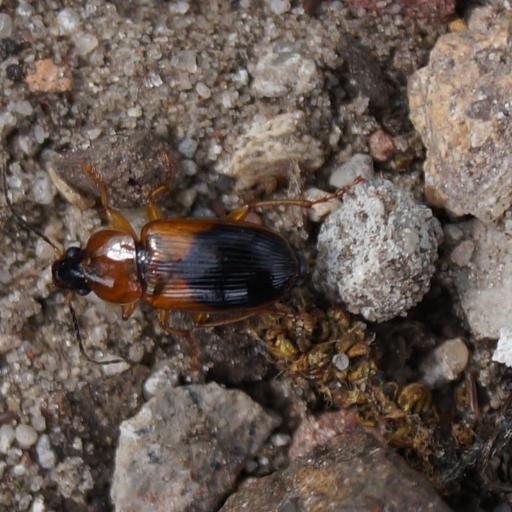
Often found scurrying across garden paths or congregating near porch lights, Stenolophus teutonus—commonly known as a seed-eating ground beetle—is a dapper member of the Carabidae family. With its striking "orange-shouldered" look, it is a beneficial garden visitor that acts as a tiny security guard for your plants. While many ground beetles are strictly carnivores, this species has a more varied palate, making it a versatile inhabitant of damp soil and gravelly gardens.
🔍 How to Identify
- 🎨 The "Two-Tone" Look: It features a deep black head and wing covers (elytra) that contrast sharply with a bright reddish-orange thorax (the middle section).
- 🍊 Shoulder Patches: Look for the signature orange or yellowish spots at the base of the wing covers, right where they meet the "shoulders" of the insect.
- 🏃 Lithe Legs: Its legs are typically pale yellowish-brown and slender, built for high-speed running across open ground rather than climbing.
🌲 Habitat & Ecology
- 🔦 The Night Shift: These beetles are primarily nocturnal and are famously "photophilic," meaning they are highly attracted to artificial lights. You will often find them on your patio or near window screens after dark.
- 🍽️ Dual Diet: This beetle is a useful omnivore. While it hunts small soft-bodied pests like aphids, it also snacks on fallen weed seeds, playing a unique role in natural weed management within your garden.
- 💧 Moisture Seekers: They prefer damp environments, often hiding under stones, logs, or leaf litter during the heat of the day to stay hydrated.
⚠️ Safety & Toxicity
- 🛡️ Status: Completely harmless "friend" to humans and pets.
- 🐜 Non-Aggressive: They do not possess a sting, and their mandibles are far too small to pierce human skin. If handled, they are much more likely to try and "run for cover" than to defend themselves.
- 🌿 Garden Safe: Unlike some beetles that munch on prize roses, these ground beetles are not considered plant pests and won't damage your ornamental flowers.
✨ Fun Fact
✨ Natural Herbicide: Agricultural studies have shown that beetles in the Stenolophus genus can consume a staggering number of weed seeds per square meter, acting as a natural, chemical-free way to keep invasive grasses from taking over the soil!
More Details








