Info
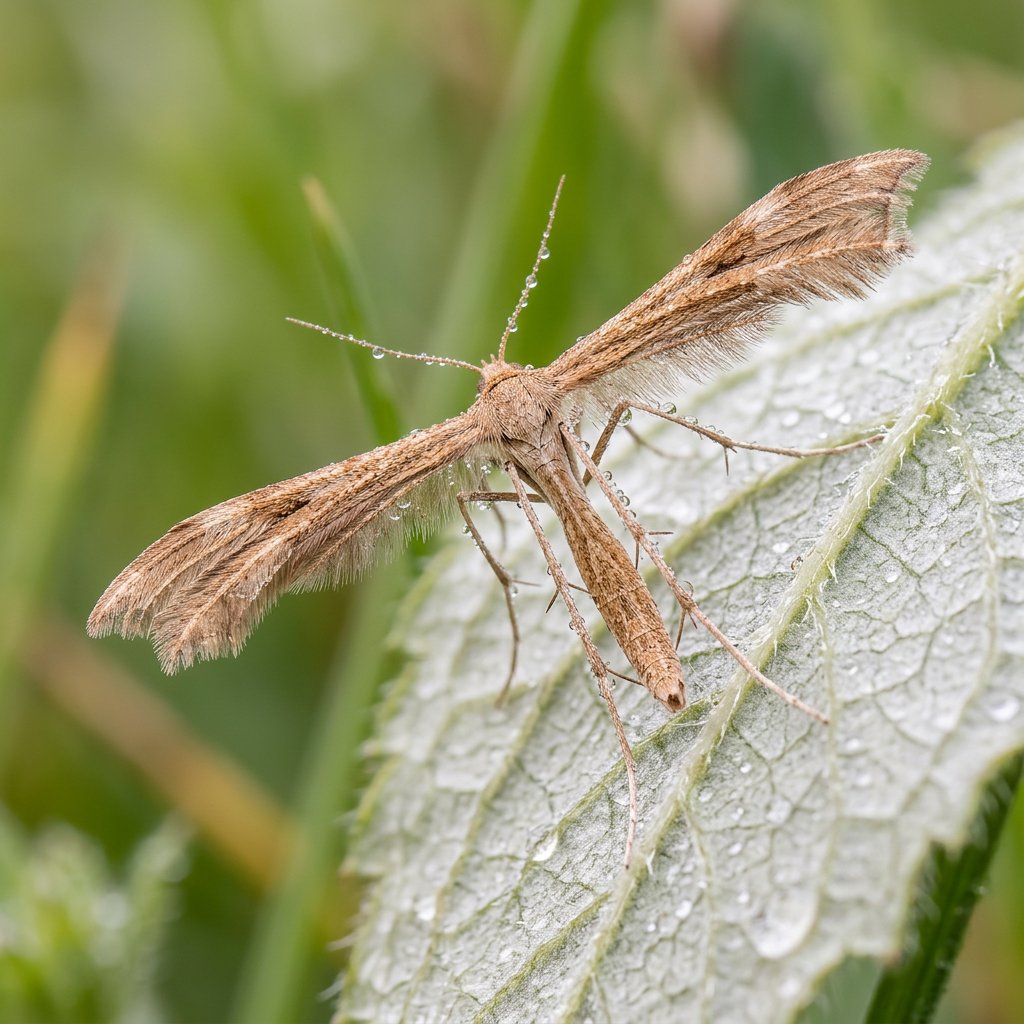
Often called the Brown Plume Moth, this tiny aviator looks less like a traditional butterfly and more like a miniature, feathered glider or a piece of dried grass. Its scientific name, Pterodactyla, evokes the prehistoric "wing-fingered" pterodactyls, a fitting tribute to its unique, T-shaped silhouette. While it may look fragile, it is a master of camouflage, perfectly blending into the meadowlands and gardens of Europe and North America.
🔍 How to Identify
- ✈️ The Resting "T": Unlike most moths that fold their wings over their backs, this species holds its narrow wings at a rigid 90-degree angle to its body, resembling a tiny brown airplane.
- 🪶 Feathered Plumes: Upon close inspection, the wings aren't solid sheets; they are deeply cleft into narrow, feathery lobes (plumes) that give the insect a fuzzy, delicate appearance.
- 🍂 Earthy Camouflage: The body and wings are a mottled brownish-ochre or cinnamon color, usually decorated with a few tiny, dark dots near the wing clefts to help it mimic dried vegetation.
🌲 Habitat & Ecology
- 🌿 The Speedwell Specialist: In its caterpillar stage, this moth is a picky eater, feeding almost exclusively on the flowers and developing seeds of the Germander Speedwell (Veronica chamaedrys).
- 🌙 Crepuscular Flights: While primarily active at dusk and during the night, they are easily "flushed" from tall grass or hedgerows during the day, making them a common sight for hikers and gardeners.
- 🕸️ Stealthy Living: The larvae often hide within the heart of the host plant, sometimes spinning a light web for protection as they feed, remaining largely invisible to predators.
⚠️ Safety & Toxicity
- ✅ Harmless Neighbor: The Brown Plume Moth is entirely safe for humans and pets; it possesses no stinger, does not bite, and carries no known toxins.
- 🌱 Garden Impact: Unlike some moth species that can defoliate entire trees, the Stenoptilia Pterodactyla is rarely found in high enough numbers to cause significant damage to garden plants.
✨ Fun Fact
The name Pterodactyla comes from the Greek words pteron (wing) and dactylos (finger). If you look at the wings through a magnifying glass, they really do look like long, skinny fingers fringed with soft hair!
More Details








