Info
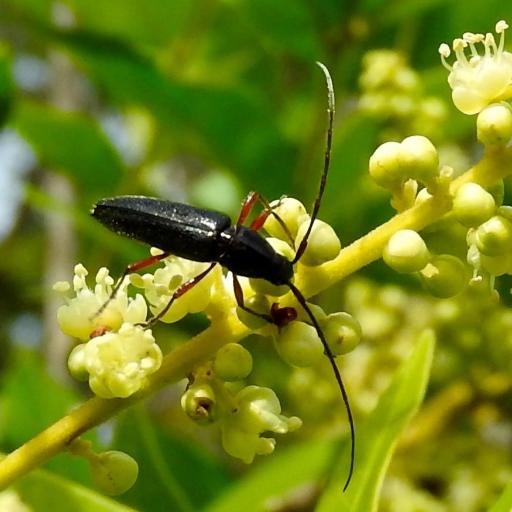
Commonly known as a variety of Longhorn Beetle, the Stenosphenus is a sleek, "narrow-wedge" insect that looks like a tiny, high-speed racer of the beetle world. These beetles are members of the Cerambycidae family, famous for their impressively long antennae that often sweep back past their bodies like elegant plumes. While they spend their youth hidden deep inside hardwood trees, the adults are active sun-lovers often found dancing across flowers or sun-drenched bark.
🔍 How to Identify
- 📏 Body Shape: True to their scientific name (Steno meaning narrow), they have very slender, elongated, and somewhat flattened bodies designed for navigating crevices.
- 📡 Antennae: They sport exceptionally long, segmented "horns" that can be as long as or longer than their entire body.
- 🎨 Coloration: Most species feature a striking contrast, often displaying a bright reddish-orange thorax (the middle section) against dark black or deep navy wing covers (elytra).
- 🦵 Legs: Long, spindly legs that allow them to move with surprising agility and speed compared to bulkier beetles.
🌲 Habitat & Ecology
- 🌳 The Nursery: The larvae are "wood borers," meaning they develop inside the wood of deciduous trees like Oak, Hickory, and Hackberry. They play a vital role in decomposition by breaking down stressed or dying timber.
- 🌸 Adult Diet: Once they emerge as adults, their lifestyle changes completely; they are frequently spotted on flowers, where they feed on pollen and nectar, inadvertently acting as minor pollinators.
- ☀️ Sun Seekers: You are most likely to spot them in late spring or early summer, particularly on the edges of woodlands where sunlight hits the foliage.
⚠️ Safety & Toxicity
- 🛡️ Status: Completely harmless to humans and pets. They possess no stingers and are not toxic.
- 🤏 The "Nip": Like most beetles with strong wood-chewing mouthparts, a large Stenosphenus might give a tiny, harmless pinch if handled roughly, but they are not aggressive and prefer to run away.
- 🏡 Garden Impact: They are generally not considered major garden pests, as they prefer forest trees that are already weakened rather than healthy ornamental plants.
✨ Fun Fact
If you pick up a Stenosphenus (or many of its Longhorn cousins), you might hear a tiny "squeak!" They create this sound by rubbing their body segments together—a behavior called stridulation—intended to startle predators into dropping them.
More Details








