Info
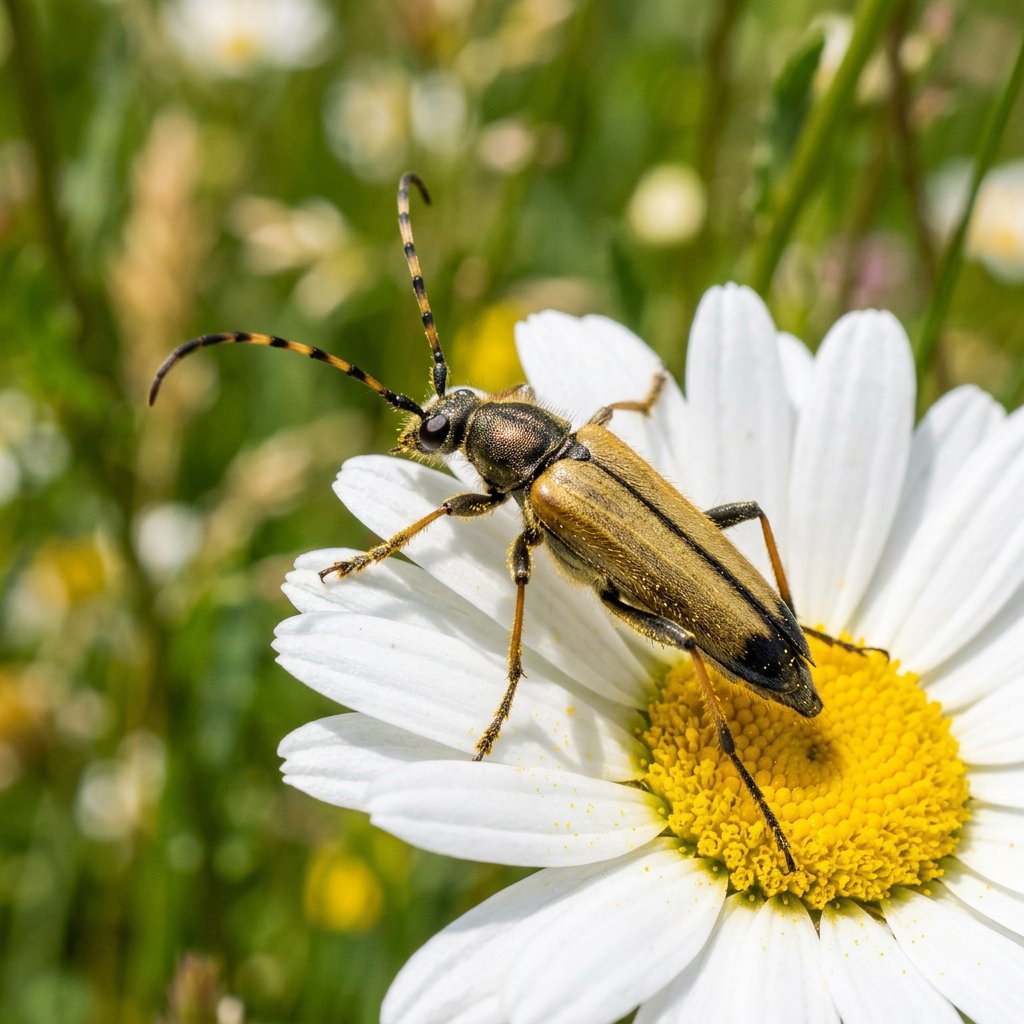
Known as the Black-striped Longhorn Beetle, this slender visitor is a common sight in meadows and woodland edges throughout Europe and Asia during the peak of summer. While its long, sweeping antennae might look intimidating, it is actually a peace-loving pollinator that spends its days basking on sunny wildflowers. It plays a vital dual role in nature: a vibrant sun-seeker as an adult and a master recycler in its larval stage.
🔍 How to Identify
- 🪲 The "Black Tail": The name melanura literally translates to "black tail," referring to the distinct dark tips on its reddish-brown wing covers (elytra).
- 📏 Slender Profile: It has a notably narrow, elongated body, usually reaching about 6–10mm, making it look much more delicate than "chunkier" beetle species.
- 📡 Sweeping Antennae: As a member of the Longhorn family, it sports impressive, jointed antennae that are used to "sniff" out nectar and potential mates across the meadow.
🌲 Habitat & Ecology
- 🌼 Nectar Enthusiast: You will most likely spot them on flat-topped white flowers, such as Cow Parsley or Hogweed. They are essential pollinators that move from bloom to bloom in search of energy-rich nectar.
- 🪵 The Nursery: While the adults love the sun, the larvae prefer the shade. They develop inside the decaying wood of thin, dead branches or twigs, helping to break down organic matter back into the soil.
⚠️ Safety & Toxicity
- ✅ Harmless Neighbor: The Black-striped Longhorn Beetle is entirely non-toxic and possesses no stinger. It is a "friend" to the gardener and a sign of a healthy, biodiverse environment.
- 🧤 Gentle Handling: While it has small mandibles (jaws) used for feeding on pollen, it is not aggressive. It might give a tiny, harmless nip if accidentally squeezed, but it is generally safe around curious children and pets.
✨ Fun Fact
Many Longhorn beetles, including Stenurella melanura, use "Batesian Mimicry." Their jerky movements and striped patterns are designed to trick predators into thinking they are wasps, even though they have no way of defending themselves!
More Details








