Info
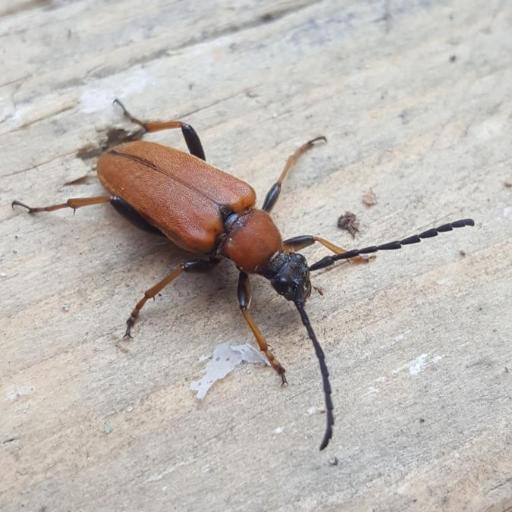
Meet the Red-brown Longhorn Beetle, a striking inhabitant of the forest floor often seen sunbathing on summer blooms. While its long, sweeping antennae might make it look like a tiny woodland warrior, it is actually one of nature’s most efficient recyclers. This beetle is famous among entomologists for its dramatic "dual personality," where males and females look so different they are often mistaken for separate species.
🔍 How to Identify
- 🎨 Color Dimorphism: The female is the star of the show with brilliant brick-red wing covers (elytra) and a matching red thorax. The male is smaller, featuring pale yellowish-tan wings and a solid black thorax.
- 🗼 Long Antennae: True to its "Longhorn" name, it sports thick, segmented antennae that it uses to navigate and "smell" the forest environment.
- 📏 Tapered Body: They possess an elongated, elegant silhouette that narrows toward the back, typically reaching about 10 to 20mm in length.
🌲 Habitat & Ecology
- 🪵 The Great Recycler: You will primarily find them in coniferous forests. Their larvae are "saproxylic," meaning they spend up to three years living inside and eating decaying pine, spruce, or larch stumps, helping turn dead wood back into soil.
- 🌸 Flower Power: Once they emerge as adults in the heat of summer, they abandon their wood-munching ways. You’ll find them hovering around sunlit clearings, feeding on the nectar and pollen of white, flat-topped flowers like Hogweed or Meadowsweet.
⚠️ Safety & Toxicity
- 🛡️ Completely Harmless: Despite their intimidating "horns" and bright colors (which often mimic wasps to scare off birds), these beetles are gentle giants. They cannot sting and rarely bite unless handled very roughly.
- 🏡 Home Safety: They are not "pest" beetles. Because they require very specific, moist, decaying forest wood for their larvae, they pose no threat to the dry structural timber or furniture inside your home.
✨ Fun Fact
Early naturalists were so baffled by the difference between the bright red females and the tan-and-black males that they originally gave them two different scientific names, believing they were entirely unrelated insects!
More Details








