Info
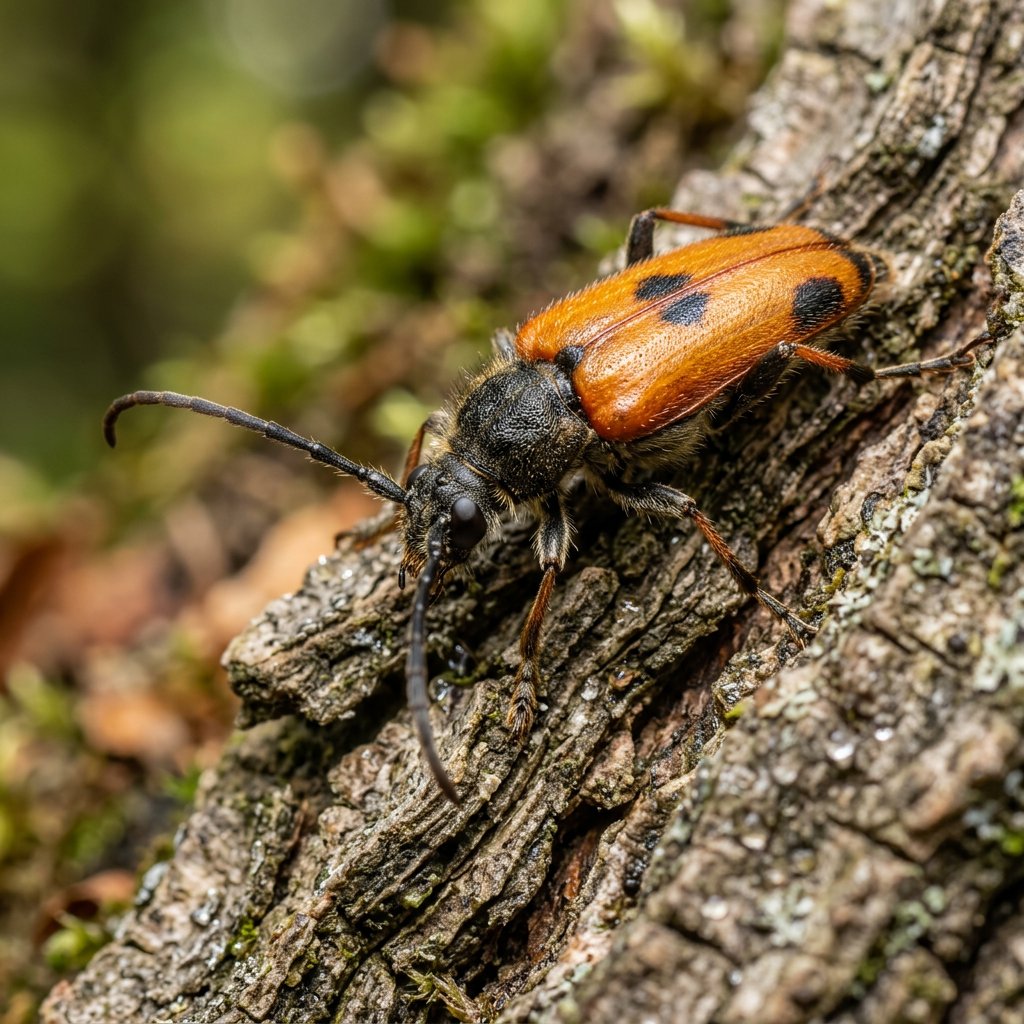
Meet the Black Longhorn Beetle, a sleek, "goth" inhabitant of Europe’s ancient woodlands. Often seen sunning itself on fallen logs, this beetle looks like a tiny armored knight dressed in matte black plate. While its long, sweeping antennae might look intimidating to some, this insect is actually a gentle giant and a vital recycler of the forest floor.
🔍 How to Identify
- 🪲 Matte Finish: Unlike many metallic or shiny beetles, its wing covers (elytra) have a distinct, non-reflective velvety black texture.
- 📡 Arching Antennae: As a member of the "Longhorn" family, it sports exceptionally long, segmented antennae that it uses to "smell" its way through the forest.
- 📐 The Scutellum: Look for the small triangular plate between its "shoulders"; in this species, it is often covered in fine, pale hairs that contrast against its dark body.
🌲 Habitat & Ecology
- 🌳 Ancient Tree Lovers: This beetle is a specialist of old-growth deciduous forests. It specifically seeks out dead or decaying Beech, Oak, and Hornbeam trees to lay its eggs.
- ♻️ The Clean-up Crew: As larvae, they spend two to three years tunneling through hard, dry wood. This process is essential for breaking down timber and returning nutrients to the forest soil.
- 🌸 Summer Socialites: While the larvae eat wood, the adults emerge in mid-summer and can often be found visiting white flowers to fuel up on nectar and pollen.
⚠️ Safety & Toxicity
- 🛡️ Harmless Resident: The Black Longhorn Beetle is not venomous and does not have a stinger. It is a "friend" to the environment and poses no threat to humans.
- 🤏 Strong Grip: If you pick one up, you might feel its powerful legs clinging to your skin, and while it has mandibles for wood, it is very unlikely to bite unless it feels its life is in immediate danger.
✨ Fun Fact
Because this beetle requires very old, decaying wood to survive, its presence is used by scientists as a "bio-indicator." If you spot one, it’s a sign that the forest around you is healthy, ancient, and ecologically rich!
More Details








