Info
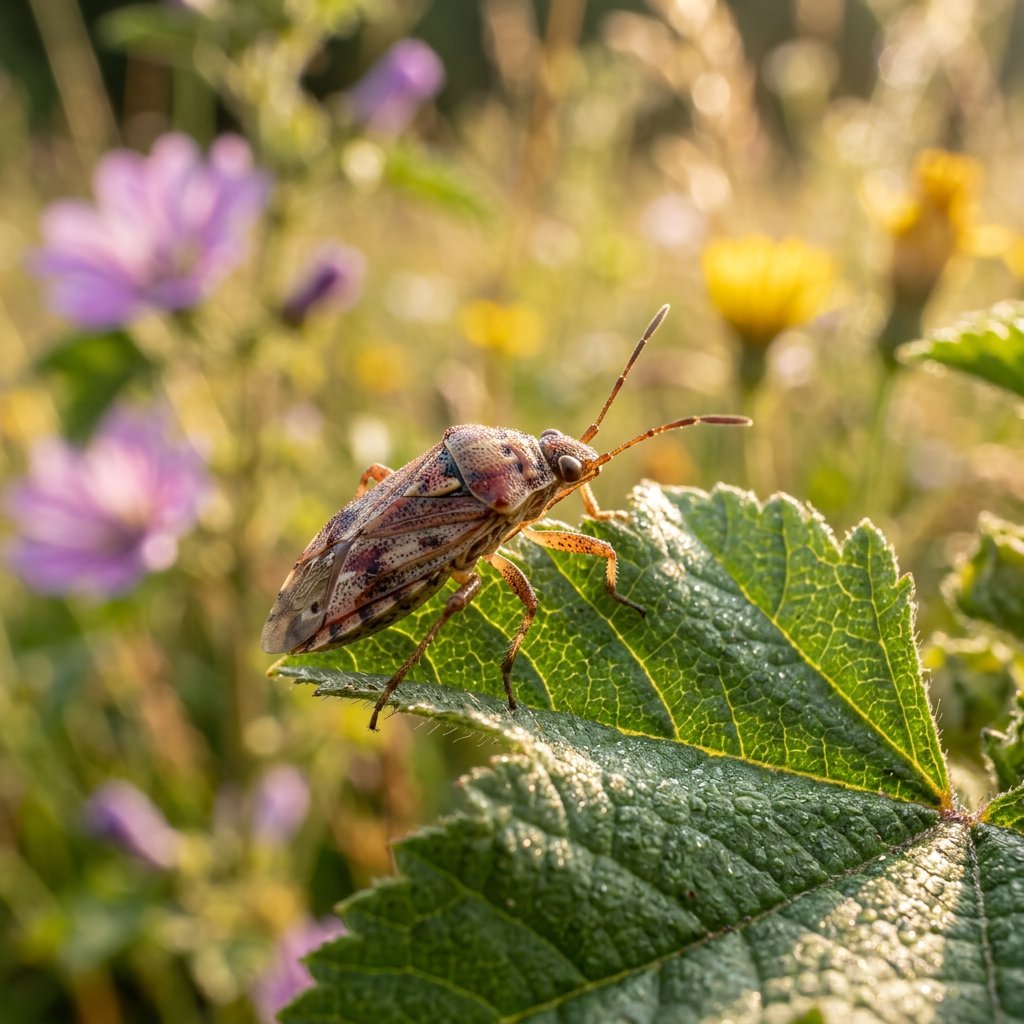
Often called the "Spectacled Scentless Plant Bug," this tiny traveler is a frequent guest in sun-drenched meadows and wild gardens. While it belongs to the broader group of "true bugs," it lacks the pungent chemical defense of its cousins, the stink bugs. It is a peaceful herbivore that spends its days basking on composite flowers, looking like a miniature, fuzzy piece of vintage parchment.
🔍 How to Identify
- 👓 The "Spectacles": The most reliable trait is a pair of dark, circular markings on its pronotum (the shield behind the head) that look exactly like a tiny pair of glasses.
- 🖋️ Fine Details: Its body is covered in fine, short hairs and delicate punctures, giving it a textured, matte appearance rather than a shiny one.
- 🪟 Transparent Wings: The rear portion of its wings is noticeably clear and membranous, often revealing the dark abdomen underneath when at rest.
🌲 Habitat & Ecology
- 🌼 Floral Buffet: This bug is a specialist that loves the Asteraceae family. You will most likely spot it perched on thistles, daisies, or ragwort, where it uses its needle-like mouthparts to sip plant juices.
- ☀️ Sun Seeker: It thrives in dry, warm environments. If you have a "wild" corner of your garden with tall grasses and weeds, you are likely providing a perfect sanctuary for this species.
- 🕊️ Gentle Resident: Unlike some garden pests that decimate crops, the Stictopleurus abutilon rarely appears in high enough numbers to cause significant damage to ornamental plants.
⚠️ Safety & Toxicity
- ✅ Harmless: This insect is completely safe for humans and pets. It does not bite, sting, or carry diseases.
- 🚫 Lacks the "Stink": Because it belongs to the Rhopalidae family, it lacks the well-developed scent glands found in other shield bugs. If you accidentally brush against one, you won't be left with a foul odor on your hands.
- 🐾 Pet Interaction: If a curious cat or dog happens to eat one, there is no known toxicity to worry about, though the crunchy exoskeleton might cause a tiny bit of temporary confusion!
✨ Fun Fact
Despite its scientific name abutilon, this bug isn't actually restricted to the Abutilon plant (Flowering Maple). It was named during a time when scientists were still figuring out its favorite snacks, but it much prefers thistles and wild fleabane!
More Details








