Info
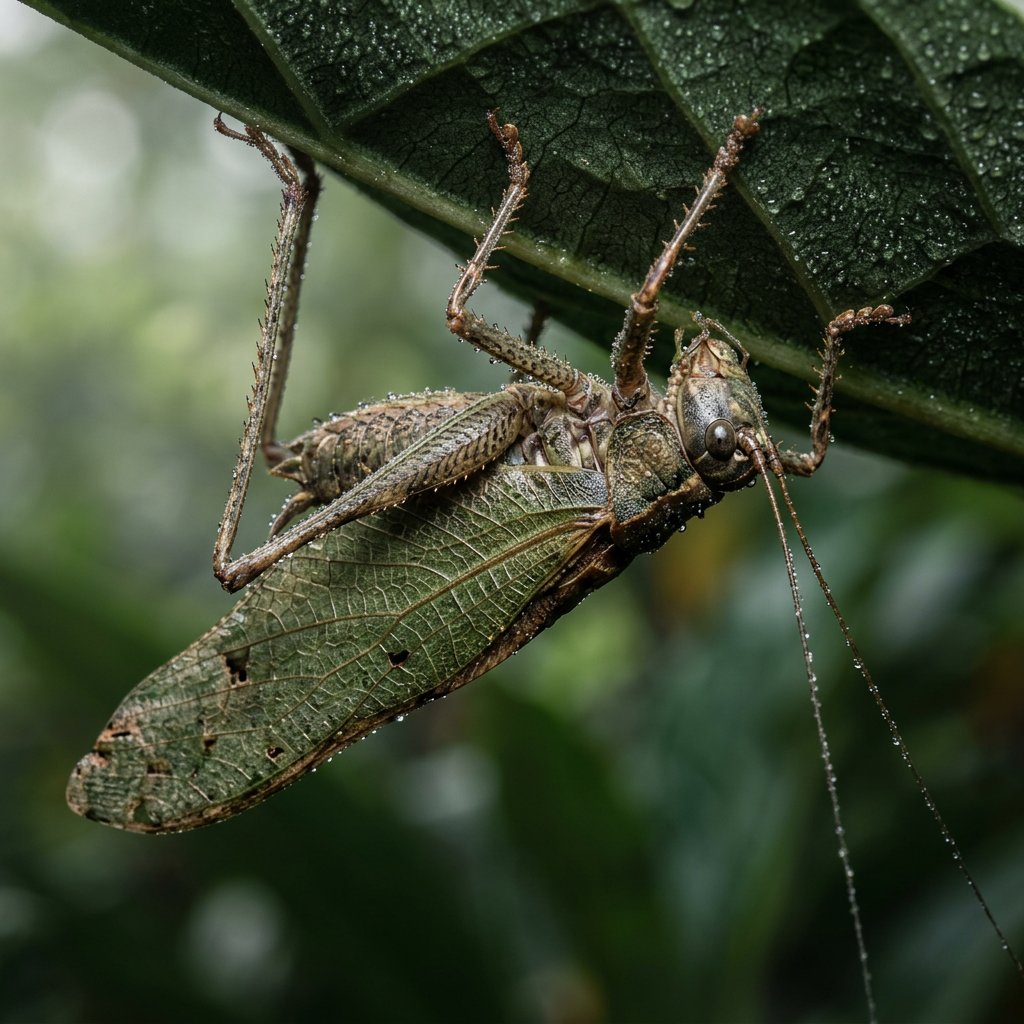
Often called the Giant Florida Katydid or the Giant Leaf Wing, this insect is a true master of disguise. Looking more like a vibrant green leaf than a living creature, it spends its days hiding in plain sight among the foliage of the southeastern United States and the Caribbean. While its size can be startling, it is a gentle giant that adds a rhythmic "song" to the warm summer nights.
🔍 How to Identify
- 🍃 Wing Mimicry: The most striking feature is the forewings, which perfectly mimic a broad green leaf, complete with intricate "veins" and a slightly glossy texture.
- 📏 Impressive Size: As one of the largest katydids in North America, adults can reach a length of nearly 3 inches, making them hard to miss once they move.
- 📡 Thread-like Antennae: They possess incredibly long, thin antennae that often exceed the length of their entire body, used to sense vibrations and chemicals in the air.
🌲 Habitat & Ecology
- 🔊 Nocturnal Musicians: Like most katydids, males create a loud, clicking "song" by rubbing their wings together (stridulation) to attract mates during the night.
- 🥗 High-Canopy Diet: They are primarily herbivores, feeding on the leaves of broad-leaved trees and shrubs. While they occasionally nibble on garden plants or citrus leaves, they are rarely numerous enough to be considered a serious pest.
- 🛡️ Motionless Defense: When threatened, their primary defense is to remain perfectly still. If discovered, they may raise their wings to appear even larger or take a clumsy, fluttering flight to a nearby branch.
⚠️ Safety & Toxicity
- 🟢 Friend Status: These insects are completely harmless to humans and pets. they are not venomous and do not possess a stinger.
- 👄 Mechanical Pinch: While they are docile, they have strong mandibles designed for chewing tough leaves. If handled roughly or squeezed, they may deliver a small, defensive pinch, but it is not medically significant.
✨ Fun Fact
Katydids don't hear with their heads! Their "ears" (called tympana) are actually located on their front legs, just below the "knee" joint, allowing them to pinpoint the direction of a mate's call with incredible precision.
More Details








