Info
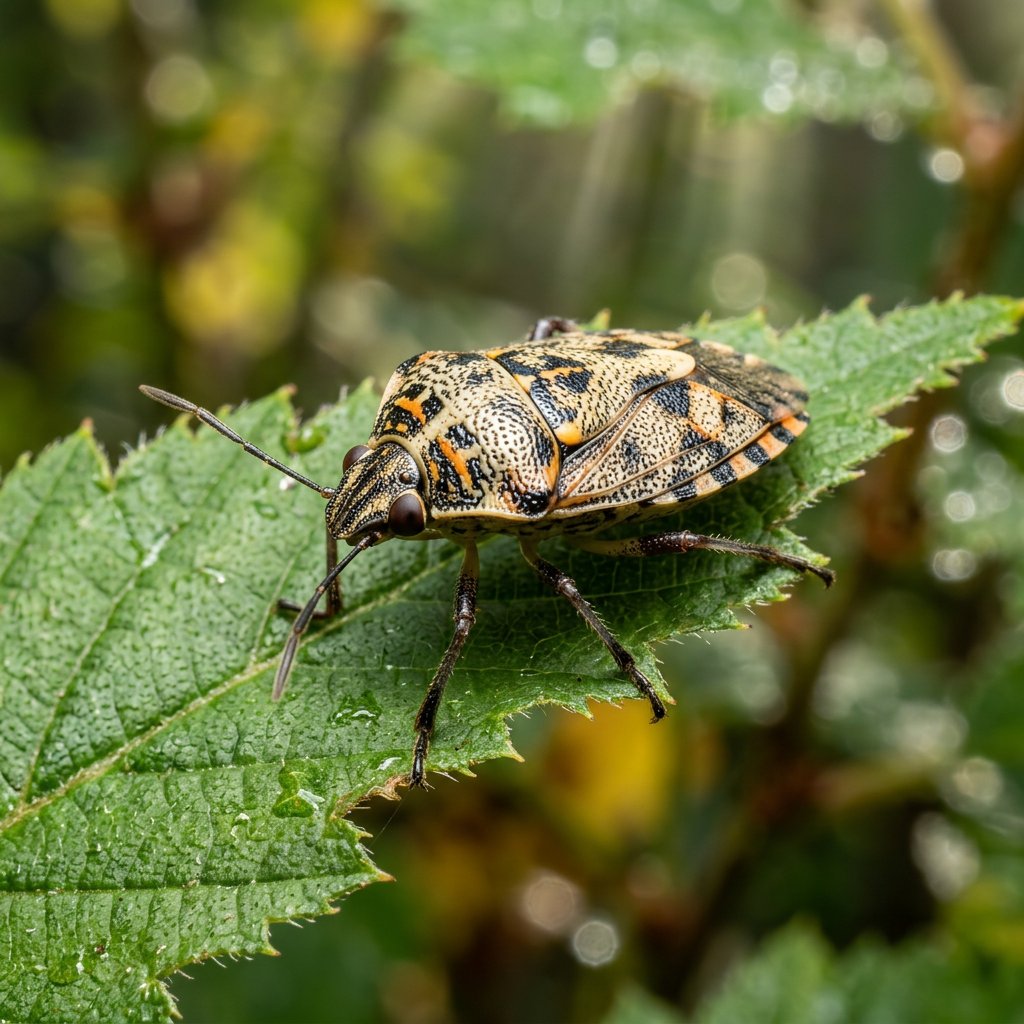
Known as the Anchor Stink Bug, this vibrant little predator is a gardener’s secret weapon. Unlike its sap-sucking cousins that ruin crops, this insect is a bold hunter that protects your backyard from pests. It gets its name from the distinct, anchor-like marking on its back that looks like it was meticulously painted on by hand.
🔍 How to Identify
- ⚓ The Scutellum: Look for a large, central shield on the back featuring a prominent, contrasting anchor-shaped mark.
- 🎨 Variable Colors: While the pattern stays the same, the colors are incredibly diverse; they can range from metallic blue and black to striking combinations of red, orange, or cream.
- 🛡️ Body Shape: It features a classic "shield bug" silhouette—broad, sturdy shoulders and a tough, armored appearance.
🌿 Habitat & Ecology
- ⚔️ A Fierce Predator: These are definitely "friend" insects. They use a heavy-duty, straw-like beak to prey on the larvae of garden pests, particularly the Mexican Bean Beetle and various destructive caterpillars.
- 🍃 Low-Profile Living: You will typically find them patrolling low-growing plants, vegetable patches, and shrubs where their slow-moving prey likes to hide.
⚠️ Safety & Toxicity
- 👃 Stink Defense: Like all members of the stink bug family, they have glands that can release a pungent, musky odor if they are squeezed or threatened. It is harmless to humans but very smelly!
- 🚫 Non-Aggressive: They do not possess a stinger and rarely, if ever, bite humans. They are far more interested in hunting beetles than bothering you or your pets.
✨ Fun Fact
✨ The Master of Disguise: Anchor Stink Bugs are highly "polymorphic," meaning members of the same species can look like entirely different insects. One might be bright "warning" red, while its neighbor is a deep, camouflage navy blue!
More Details








