Info
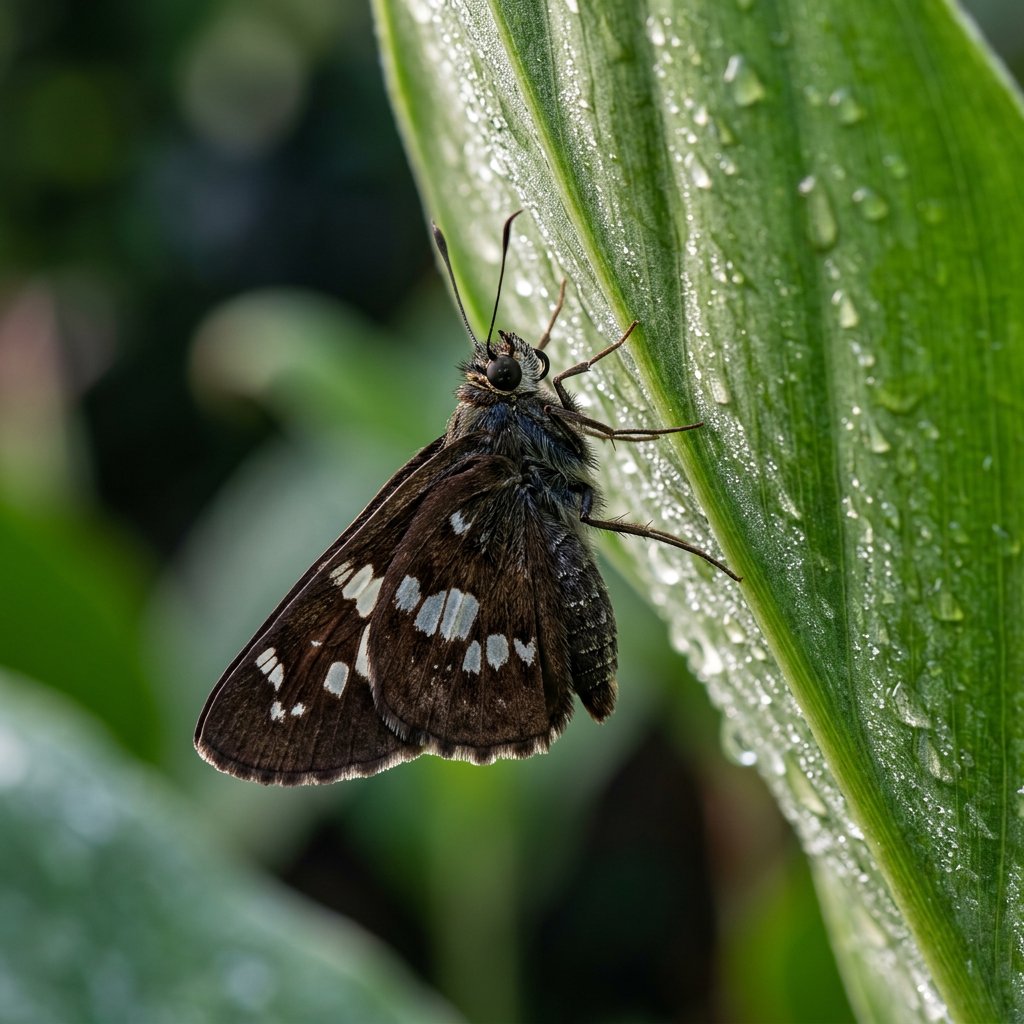
The Indian Palm Bob is a small, energetic butterfly that often acts more like a moth than a typical garden flutterer. Known for its "skipper" flying style—darting rapidly from leaf to leaf—it is a common sight in South and Southeast Asian gardens. While its earthy tones might seem modest, its unique relationship with palm trees makes it a fascinating specialist in the insect world.
🔍 How to Identify
- 🦋 The "Jet" Profile: Like other skippers, it has a thick, muscular body and large eyes. When resting, it often holds its wings at different angles, resembling a tiny fighter jet.
- ⚪ Underside Markings: The easiest way to spot it is by the underside of its hindwings, which are a pale, creamy grey decorated with several distinct, circular black spots.
- 🟤 Upper Wing Color: From above, the wings are a rich chocolate brown with a few translucent white "windows" or spots near the tips of the forewings.
🌲 Habitat & Ecology
- 🌴 Palm Specialists: As the name suggests, this insect is obsessed with palms. Its larvae (caterpillars) feed almost exclusively on palm leaves, including coconut, date, and ornamental garden palms.
- 🏠 Silk Shelters: If you see a palm leaf neatly folded over and "stitched" with white silk, you’ve likely found the home of a Palm Bob caterpillar. They hide in these tubes during the day to avoid birds.
- 🌸 High-Energy Diet: Because they fly so fast, adults require high-sugar nectar. You will often see them "bobbing" around low-lying flowers or damp patches of ground to drink minerals.
⚠️ Safety & Toxicity
- ✅ Harmless Friend: The Indian Palm Bob is completely safe for humans and pets. It does not sting, bite, or carry any toxins.
- 🌿 Garden Impact: While the caterpillars eat palm leaves, they rarely cause enough damage to kill a healthy tree. They are considered a minor "aesthetic" pest rather than a dangerous one.
✨ Fun Fact
- 🚀 High-Speed Travelers: Skippers like the Palm Bob are among the fastest-flying butterflies in the world. Their wing muscles are so powerful that they can reach speeds that make them nearly invisible to the human eye during flight!
More Details








