Info
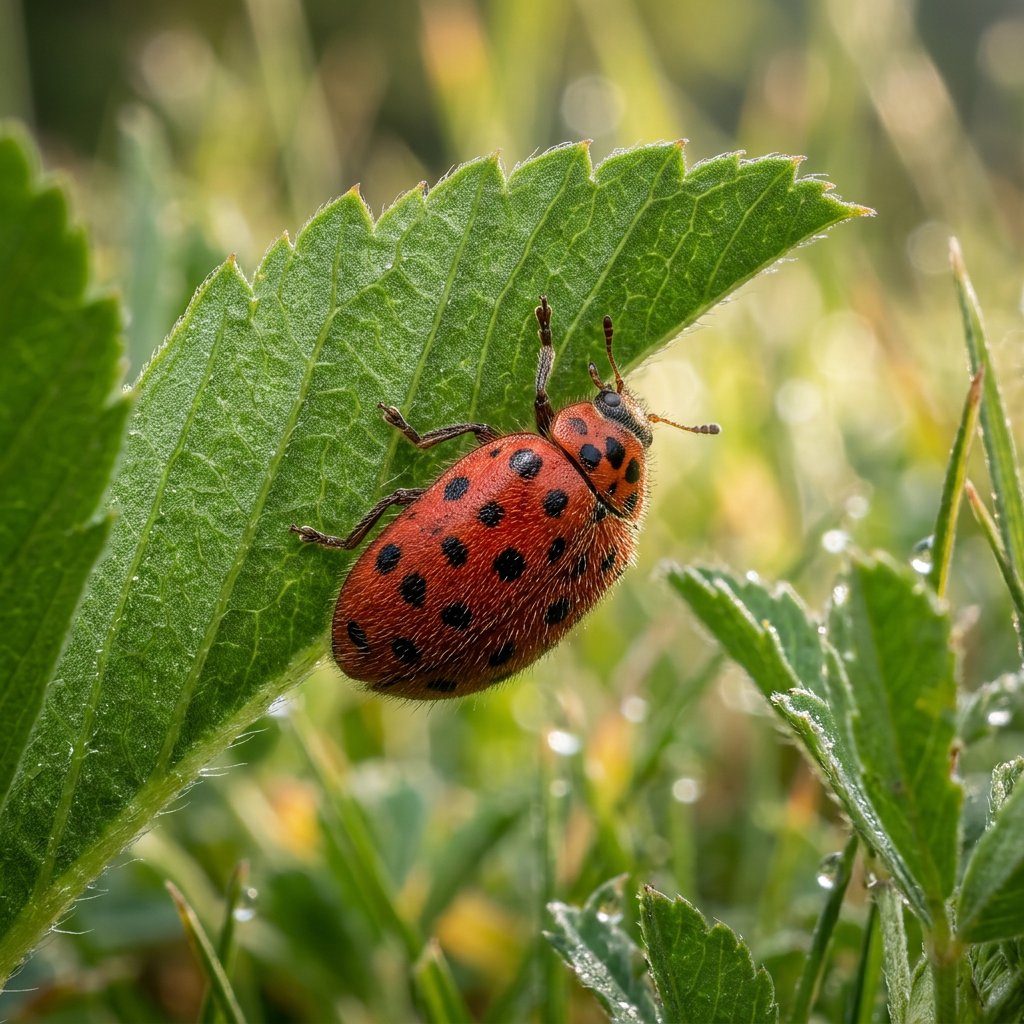
The 24-spot Ladybird is a tiny, velvet-textured rebel in the beetle world. While most ladybirds are celebrated by gardeners as "aphid-hunting heroes," this species is a committed vegetarian that prefers grazing on leaves. Often found tucked away in meadows or overgrown garden corners, it is easily recognized by its crowded spots and uniquely "matte" finish.
🔍 How to Identify
- 🐞 The Spots: As the name suggests, it typically sports 24 black spots. However, these spots can often merge together into larger blotches, making it look quite dark.
- 🧶 Velvet Texture: Unlike the shiny, "waxed car" look of most ladybirds, this species is covered in tiny, fine hairs (pubescence), giving it a dull, matte appearance.
- 📏 Compact Size: It is a miniature member of the family, usually measuring only 3 to 4 millimeters in length—much smaller than the common 7-spot ladybird.
🌲 Habitat & Ecology
- 🥗 The Leaf Grazer: Instead of hunting pests, this ladybird uses its mandibles to scrape the surface layer off leaves. It is particularly fond of clovers, campion, and various meadow grasses.
- 🌾 Meadow Specialist: It favors damp, ungrazed grasslands and coastal areas. If you find one in your garden, it’s likely because you have a "wild" patch with plenty of tall grass and weeds for it to call home.
⚠️ Safety & Toxicity
- 🛡️ Completely Harmless: This beetle is not aggressive and lacks the ability to bite or sting humans. It is a "friend" to have around, even if it nibbles a few leaves.
- 🧪 Reflex Bleeding: If it feels threatened, it may excrete a yellow, bitter-smelling fluid from its leg joints. This "reflex blood" is a defense mechanism meant to tell birds and spiders that it tastes terrible. It is harmless to humans but may leave a faint stain on the skin.
✨ Fun Fact
✨ The Name Game: Its scientific name, vigintiquatuorpunctata, is one of the longest in the ladybird family. It is a literal Latin translation meaning "twenty-four-spotted." Despite the name, some individuals are born with fewer spots, or so many that they look almost entirely black!
More Details








