Info
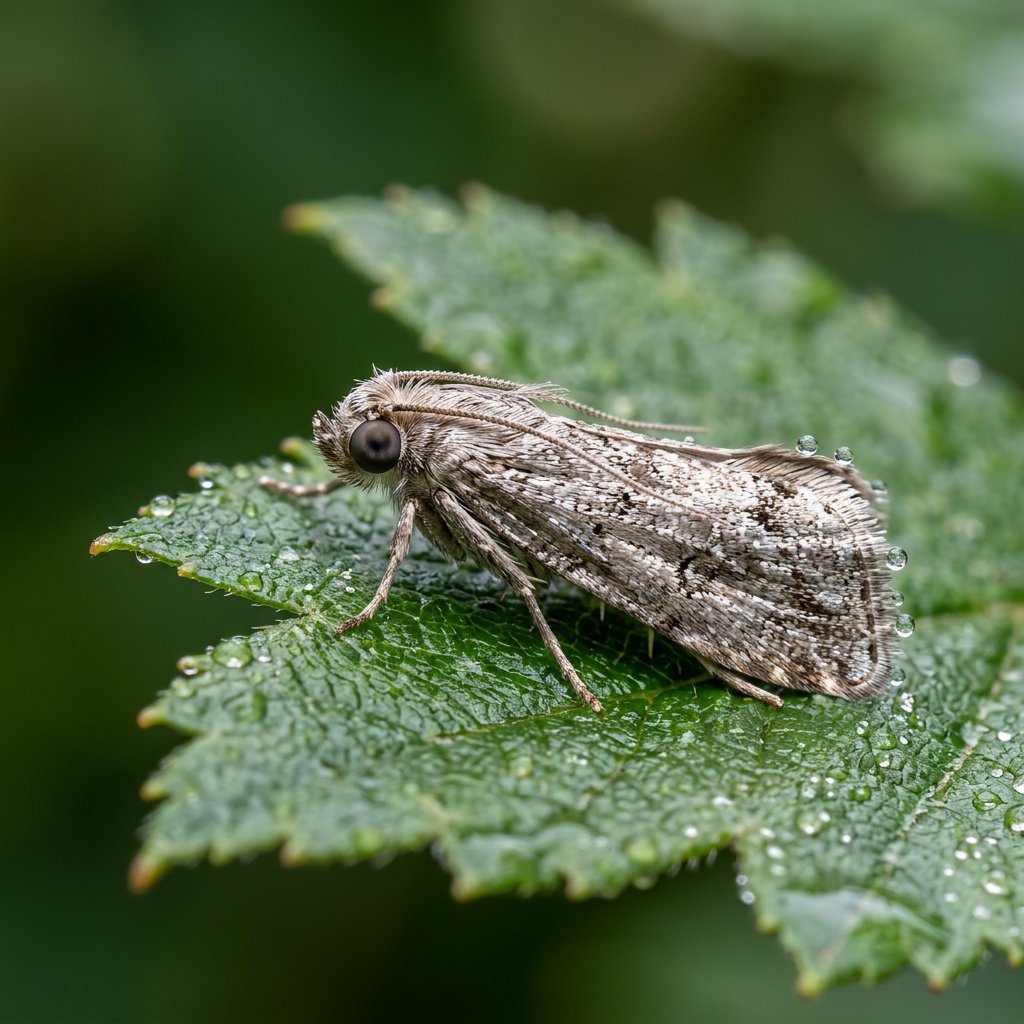
The Swammerdamia moths are tiny, elegant members of the Small Ermine moth family, often overlooked due to their diminutive size. Named after the pioneering Dutch microscopist Jan Swammerdam, these "micro-moths" are masters of disguise, resembling little more than a silver-grey splinter when resting on a leaf. While the adults are delicate and shimmering, their larvae are industrious architects that create silken "tents" in garden hedges.
🔍 How to Identify
- 🦋 Wing Pattern: The forewings are typically white or light grey, intricately speckled with darker spots. Many species feature a distinct coppery or metallic bronze patch at the very tip (the apex).
- 📏 Resting Posture: When at rest, they hold their wings tightly against their bodies in a steep, roof-like shape, making them look elongated and narrow.
- 🐛 The "Web" Sign: You will often find the larvae before you see the moth. They live in fine, light silken webs on the upper surface of leaves, which can look like a faint, shimmering film or a tiny hammock.
🌲 Habitat & Ecology
- 🍽️ Specific Appetites: These moths are picky eaters. Different species within the genus target specific host plants, most commonly Hawthorn, Rowan, Apple, and Blackthorn trees.
- 🏠 Leaf Miners to Web-Builders: As youngsters, the caterpillars start their lives as "miners," eating the tissue between the layers of a leaf. As they grow, they emerge to live externally under the protection of their silken webs, feeding on the leaf surface.
- 🌙 Night Flyers: Adults are primarily nocturnal and are frequently drawn to garden light traps. During the day, they hide deep within foliage to avoid predators.
⚠️ Safety & Toxicity
- 🛡️ Status: Completely harmless. Swammerdamia insects do not bite, sting, or carry diseases.
- 🌿 Garden Impact: While they are technically a "pest" because the larvae eat leaves, they rarely cause significant damage to the health of a tree. They are a vital food source for garden birds and parasitic wasps, making them a net positive for a healthy backyard ecosystem.
✨ Fun Fact
The man this moth is named after, Jan Swammerdam, was the first person to observe and describe red blood cells and discovered that insects undergo a biological transformation (metamorphosis) rather than just "growing bigger."
More Details








