Info
Meet the master architects of the insect world. The Syllepte genus belongs to the snout moth family, and they are most famously known as "Leaf-rollers." While the adult moths are delicate and often go unnoticed, their larvae are busy engineers, using silk to stitch leaves into private, protective bunkers. Found mostly in tropical and subtropical regions, these moths are a testament to the "origami" skills of nature.
🔍 How to Identify
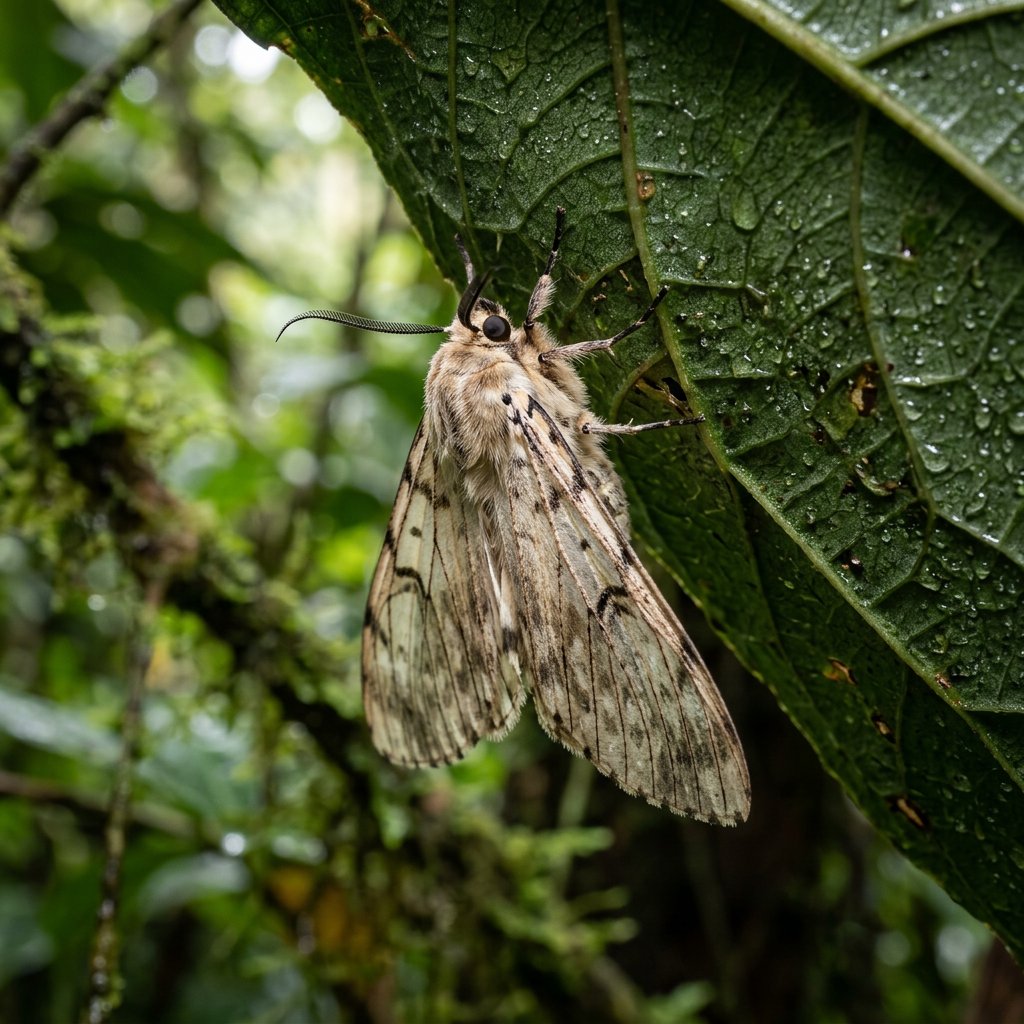
- 📐 Delta Shape: When resting, these moths hold their wings in a flat, triangular "delta" shape that makes them look like tiny fighter jets.
- 🎨 Intricate Markings: Their wings are usually a pale yellow or translucent white, decorated with a complex web of dark, wavy brown lines and spots.
- 🧶 Silken Tents: In your garden, you can identify their presence by looking for leaves that have been neatly rolled or folded over and secured with fine, white silk threads.
🌲 Habitat & Ecology
- 🍃 Host Plant Specialists: Syllepte species are often picky eaters. Depending on the specific variety, they may be found exclusively on Hibiscus, Cotton, or various forest shrubs, where the larvae feed safely inside their leaf-tunnels.
- 🌙 Night Flyers: Like most moths, they are nocturnal. During the day, they hide on the undersides of leaves to avoid birds, but they are frequently drawn to porch lights and garden lanterns once the sun sets.
⚠️ Safety & Toxicity
- ✅ Harmless: Syllepte moths are completely safe for humans and pets. They do not possess stingers, nor do they bite.
- 🌿 Garden Health: While the caterpillars eat foliage, they are generally considered minor garden pests. Unless there is a massive infestation, they won't kill your plants; they are simply a sign of a high-biodiversity ecosystem and serve as a vital food source for local birds and bats.
✨ Fun Fact
The Syllepte caterpillar doesn't actually "muscle" the leaf into a roll. Instead, it spins special silk that shrinks as it dries. By strategically placing these silk "staples," the caterpillar lets the drying process do the heavy lifting, slowly curling the leaf into a perfect tube!
More Details








