Info
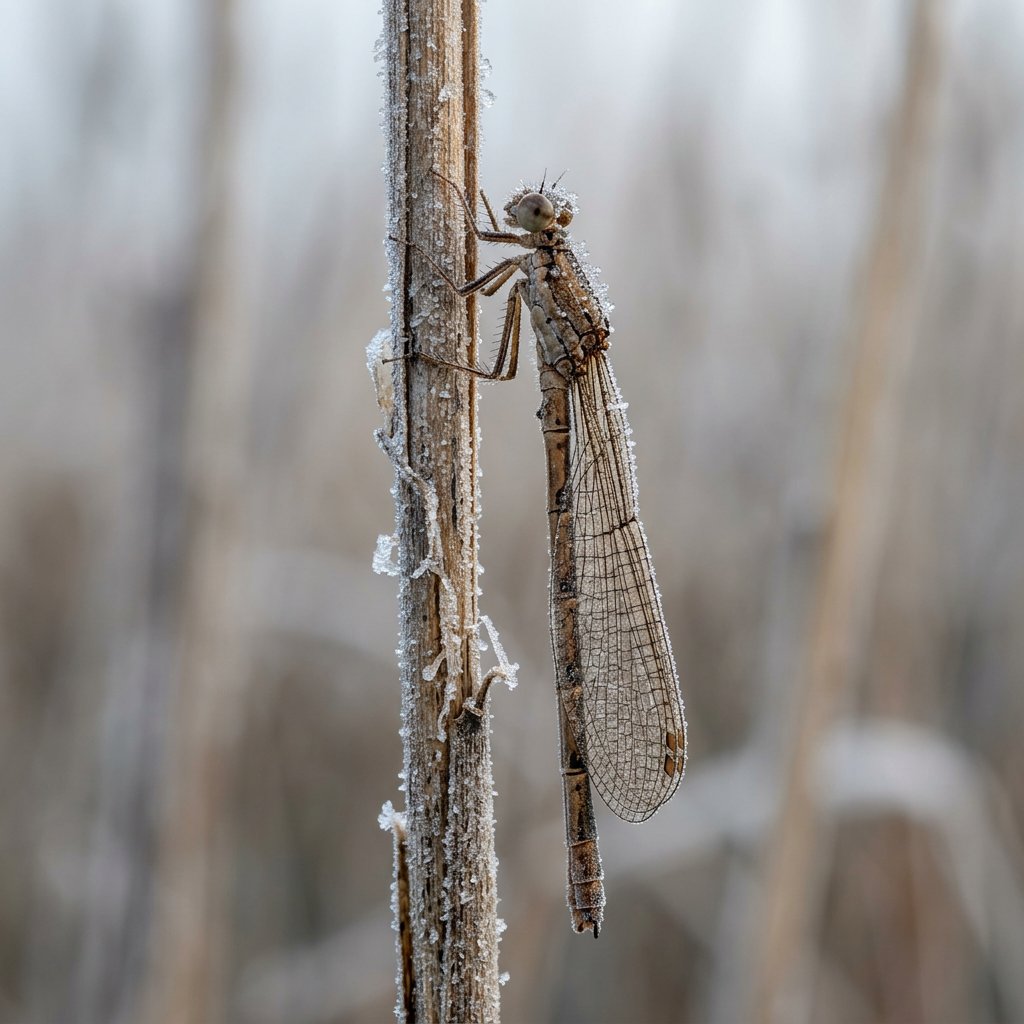
Known as the Common Winter Damselfly, this slender insect is a true survivalist of the pond world. While most dragonflies and damselflies perish or remain as underwater larvae when the temperature drops, the Sympecma fusca defies the seasons. It is one of the only European species that spends the winter as a fully-grown adult, hiding in tall grasses and brambles to emerge on the first warm days of spring.
🔍 How to Identify
- 🎨 Camouflage Colors: Unlike their bright blue or red cousins, these damselflies are a subtle brownish-bronze, designed to blend in perfectly with dried reeds and dead grass.
- 📐 Unique Resting Wing Pose: A key giveaway is how they sit; they usually rest with their wings folded together along one side of their abdomen, rather than held symmetrically over their back.
- 🖋️ Torpedo Markings: If you look closely at the top of the abdomen, you’ll see dark, elongated spots that resemble tiny torpedoes or pencil nibs.
🌲 Habitat & Ecology
- 💧 The Seasonal Shift: During the summer, you’ll find them near still waters like ponds and ditches. However, in autumn, they migrate away from the water to sheltered spots in woodlands or meadows to hibernate.
- 🦟 Tiny Guardian: They are expert hunters. By patrolling the air, they catch and eat hundreds of small flies and mosquitoes, making them a very welcome guest in any garden with a water feature.
⚠️ Safety & Toxicity
- 🛡️ Status: Completely Harmless.
- 🦟 Human Interaction: They have no stinger and are incapable of biting humans or pets. Their only defense is their incredible camouflage—if they feel threatened, they simply rotate around a stem to keep it between them and your line of sight.
✨ Fun Fact
Most damselflies live only a few weeks as adults, but because Sympecma fusca overwinters, it can live for up to ten months, making it one of the longest-lived damselflies in the world!
More Details








