Info
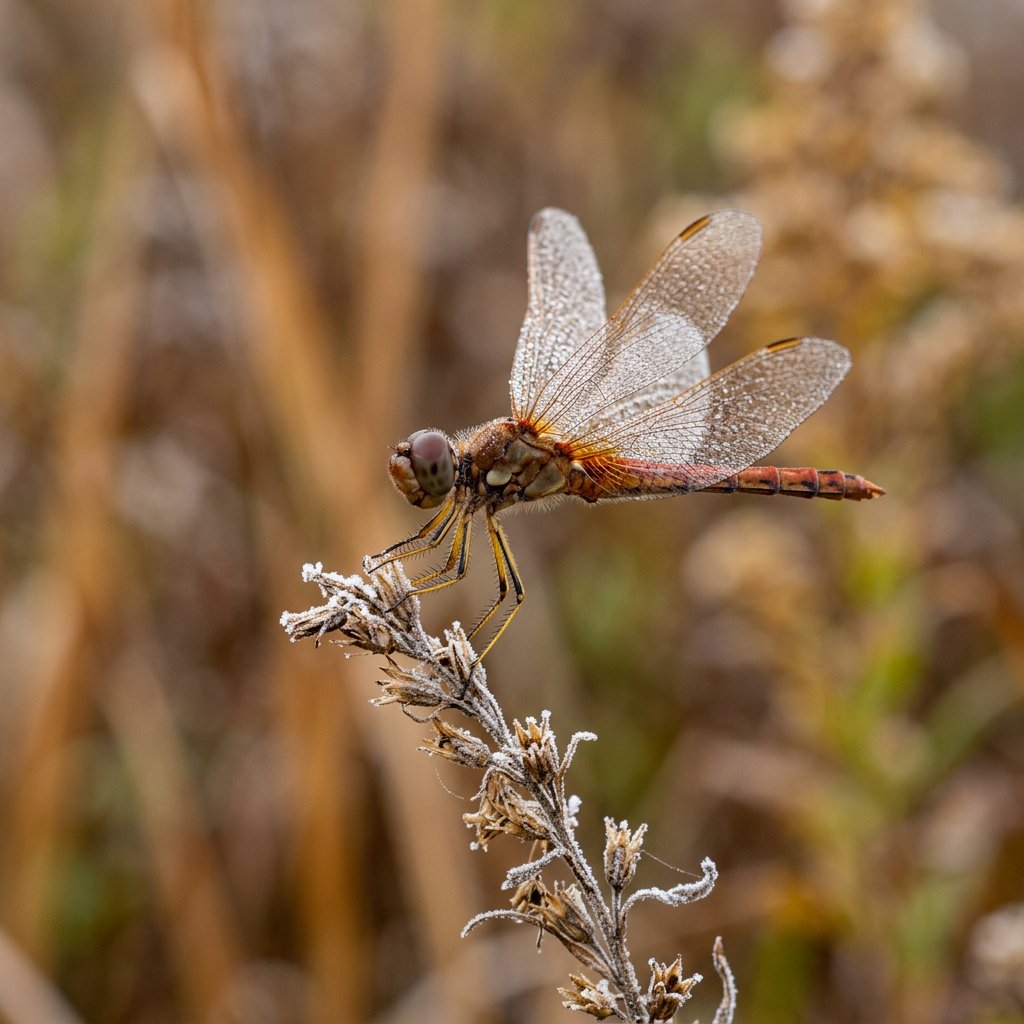
Commonly called the Autumn Meadowhawk, this little dragonfly is one of the last flyers of the season, often seen dancing over ponds well into November. Its vibrant red body stands out against the fading colors of fall, acting like a tiny living ember in the cooling landscape. It is a true friend to gardeners, serving as a relentless guardian against backyard pests.
🔍 How to Identify
- 🦵 Yellow Legs: Unlike many other meadowhawks that have black legs, this species is distinguished by its pale yellow or tan legs.
- 🎨 Brilliant Red: Mature males sport a cherry-red abdomen, while females and juveniles are a golden-brown or yellowish-tan color.
- 📏 Small Stature: They are relatively small dragonflies, usually reaching only about 1 to 1.5 inches in length with a very slender profile.
🌲 Habitat & Ecology
- 🍂 Cold Weather Warriors: These dragonflies are famous for their cold tolerance; they are often the very last dragonfly species seen before winter, sometimes remaining active even after the first light frosts.
- 🦟 Aerial Predator: They are "perch hunters," meaning they sit on a sunny twig or stone and dart out to snatch gnats, mosquitoes, and flies mid-air before returning to their spot.
- 💦 Water Connection: You will most likely find them near the edges of permanent ponds, wet meadows, or slow-moving streams where they lay their eggs in the mud or shallow water.
⚠️ Safety & Toxicity
- ✅ Completely Harmless: The Autumn Meadowhawk does not sting and is not aggressive toward humans or pets.
- 🛡️ Ecosystem Protector: They pose no threat to your garden plants; instead, they act as a natural form of pest control by keeping the local fly and mosquito populations in check.
✨ Fun Fact
While most dragonflies perish as soon as the temperature drops, the Autumn Meadowhawk has been observed flying in temperatures as low as 45°F (7°C), making it the "tough guy" of the dragonfly world!
More Details








