Info
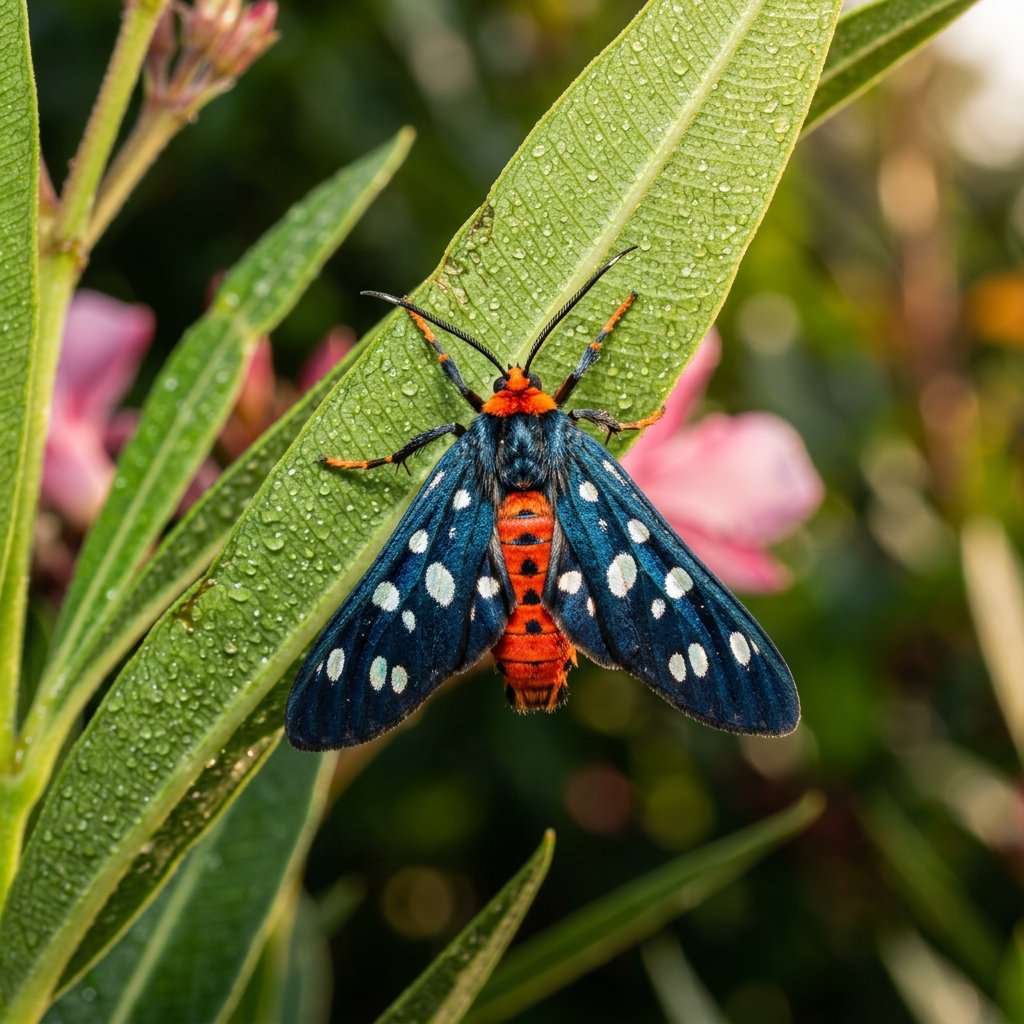
The Polka-Dot Wasp Moth is nature’s master of disguise, often mistaken for a dangerous hornet due to its sleek shape and vibrant colors. Found fluttering around gardens in the Southern United States and the Caribbean, this day-flying moth is a flashy frequent flyer that owes its survival to its favorite snack: the toxic Oleander plant. While it looks like it might pack a sting, it is actually a harmless mimic using "scare tactics" to keep predators at bay.
🔍 How to Identify
- 🔵 Metallic Sheen: The body and wings are a deep, iridescent blue-black that shimmers when caught in the sunlight.
- ⚪ Polka-Dot Pattern: Both the body and the wings are punctuated by distinct, small white spots, giving it its whimsical common name.
- 🧡 The "Tail" Light: The very tip of the abdomen is a bright, fiery orange or red, which mimics the warning colors of stinging wasps.
🌲 Habitat & Ecology
- 🌿 Oleander Specialist: You will almost always find these insects near Oleander bushes or Desert Roses. Their caterpillars are famous for munching on these plants, absorbing the plant's natural toxins to make themselves distasteful to birds.
- ☀️ Daytime Performer: Unlike most moths that hide until dark, this species is "diurnal," meaning it is active during the day. Its bright colors are meant to be seen by predators as a warning: "I taste terrible!"
- 🦋 Pollination Partner: While the caterpillars are known for their hearty appetites, the adults serve as pollinators, visiting flowers for nectar and moving pollen from bloom to bloom.
⚠️ Safety & Toxicity
- 🛑 Look But Don't Touch: While the adult moth cannot sting or bite, it is chemically defended. Because it eats toxic plants as a caterpillar, the adult moth is poisonous if ingested by pets or wildlife.
- 🐛 Caterpillar Alert: The larvae (caterpillars) are bright orange with tufts of long black hairs. These hairs can cause skin irritation or a mild rash if handled, so it’s best to observe them without picking them up.
✨ Fun Fact
These moths don't just rely on their looks to stay safe; they use high-tech sound! They are capable of emitting ultrasonic "clicks" that can jam the sonar of bats, making them essentially invisible to one of their biggest nocturnal predators.
More Details








