Info
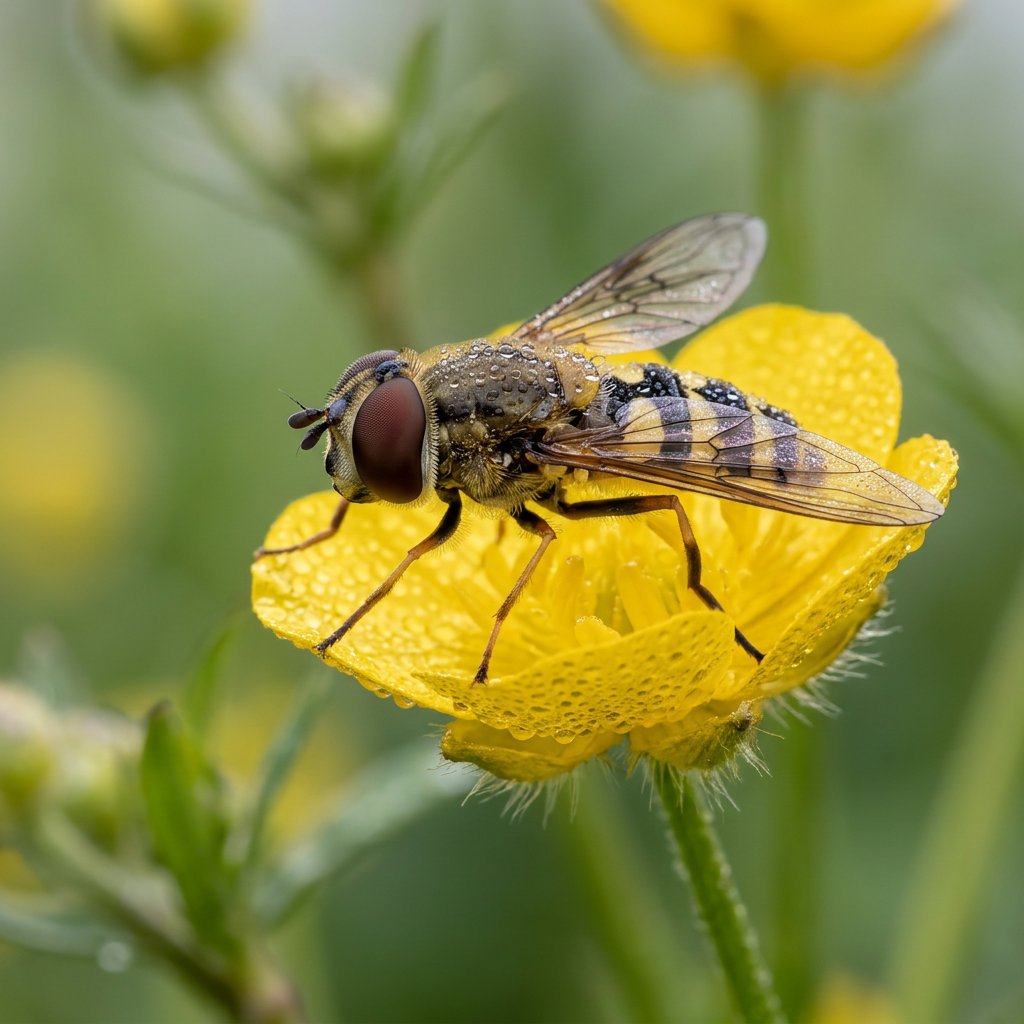
The Syrphus ribesii, commonly known as the Common Hoverfly, is the ultimate garden masquerader. Often mistaken for a small wasp or a yellowjacket due to its vibrant yellow-and-black stripes, this tiny aviator is actually a stingless fly that specializes in precision flight. Often called "Flower Flies" or "Newsflies," they are among the most beneficial guests you can welcome into your backyard.
🔍 How to Identify
- 👁️ The Eyes: Large, reddish-brown compound eyes that take up most of the head. In males, the eyes meet at the top, while in females, they are slightly separated.
- 🐝 The Mimicry: A smooth, hairless abdomen marked with bright yellow bands on a black background. This "Batesian mimicry" tricks predators into thinking the fly has a dangerous stinger.
- 🪽 The Wings: Unlike bees or wasps which have four wings, this hoverfly has only two clear wings, which it uses to perform its signature move: hovering perfectly still before darting away in a blur.
- 🦵 Yellow Thighs: A key feature of Syrphus ribesii (specifically the females) is that their hind legs are almost entirely yellow, distinguishing them from very similar-looking cousin species.
🌲 Habitat & Ecology
- ⚔️ The Aphid Assassin: While adults drink nectar, their larvae (maggots) are fierce predators. A single larva can devour hundreds of aphids during its development, making them a natural alternative to chemical pesticides.
- 🌻 Expert Pollinator: As adults, they are obsessed with flat, open flowers like daisies, fennel, and wild carrots. They play a vital role in pollinating many of the fruits and vegetables in your garden.
- 🗺️ Wide Range: You can find them across the Northern Hemisphere, from backyard gardens and urban parks to the edges of ancient woodlands.
⚠️ Safety & Toxicity
- ✅ Status: Completely Harmless.
- 🛡️ All Bark, No Bite: They possess no stinger and no venom. If one lands on you, it is likely just looking for a drink of salty sweat or mistaking your bright shirt for a flower. They do not bite humans or pets.
✨ Fun Fact
The "hover" in hoverfly isn't just for show—these insects are some of the most sophisticated fliers in the animal kingdom. They can fly backward, sideways, and even upside down for short bursts, a feat that most other flying insects find impossible!
More Details








