Info
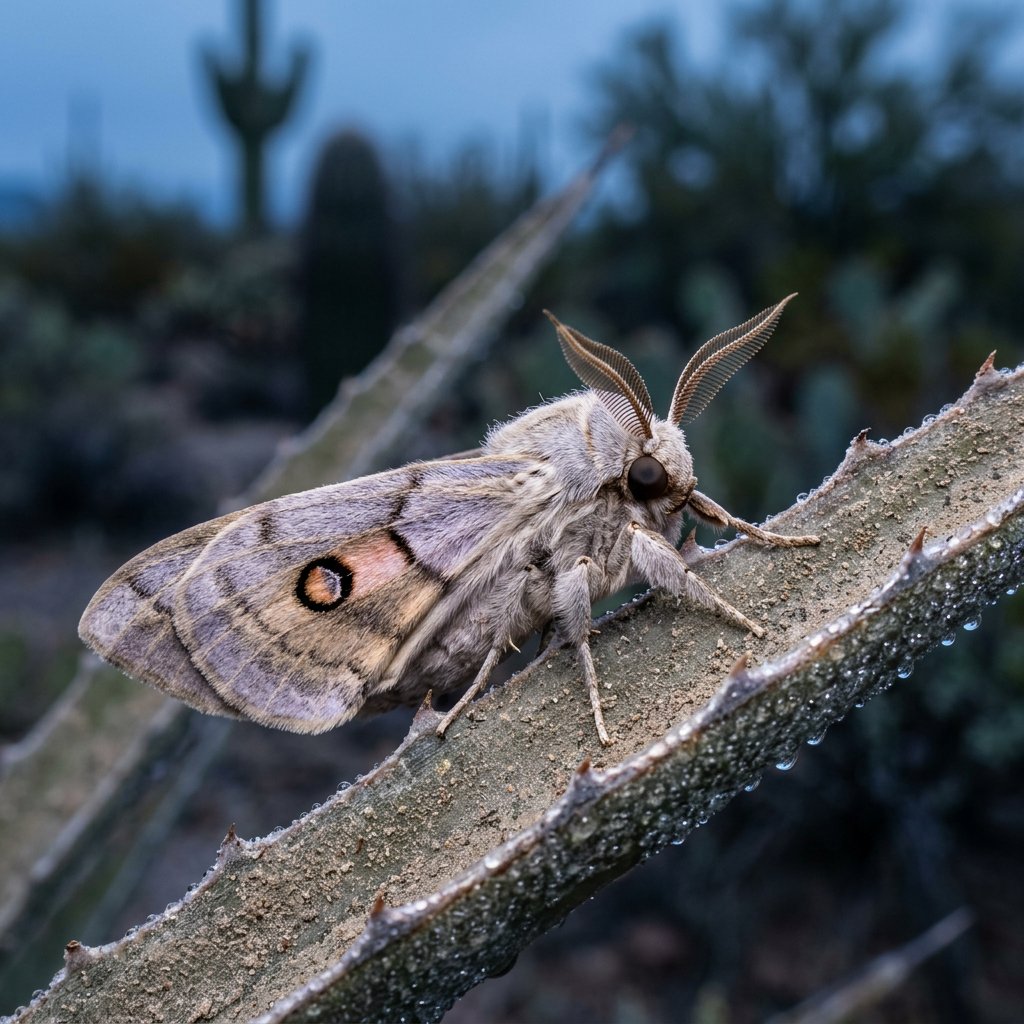
Meet the Hubbard’s Small Silkmoth, a master of desert disguise often called the "Mesquite Silkmoth." While it looks like a piece of dry bark when resting, it hides a vibrant secret beneath its wings to startle would-be predators. This stunning resident of the American Southwest and Mexico is a favorite among moth enthusiasts for its delicate lavender hues and "hidden" eyes.
🔍 How to Identify
- 🎨 The Forewings: The upper wings are typically a soft ash-gray or light brown with a tiny, distinct white dot, allowing the moth to vanish against the bark of a tree.
- 👁️ The Hindwings: When the moth spreads its wings, it reveals a brilliant splash of pinkish-lavender and two large, striking blue-and-black "eyespots" designed to mimic a larger animal.
- 🐛 The Larva: The caterpillar is a plump, lime-green character often decorated with silver or white stripes and tiny, colorful "horns" or tubercles along its back.
🌲 Habitat & Ecology
- 🌵 Mesquite Specialist: These moths are almost exclusively found near Mesquite and Acacia trees. The caterpillars are voracious eaters of these desert leaves, while the adults do not eat at all—they live off stored energy just long enough to mate.
- 🌙 Night Moves: Being strictly nocturnal, you are most likely to spot them near porch lights or "black light" traps in the desert during the monsoon season when they emerge in high numbers.
⚠️ Safety & Toxicity
- 🦋 Harmless Friend: This moth is a gentle "friend." It has no stinger, cannot bite, and possesses no chemical irritants.
- 🧤 Gentle Handling: While the adult is completely safe, the caterpillar has small spines that can feel slightly prickly. They aren't venomous, but it's always best to observe these "chunky" larvae without picking them up to avoid stressing them.
✨ Fun Fact
Hubbard's Small Silkmoth practices "Deimatism." This is a behavior where an animal flashes a startling color or pattern (like those big blue eyespots) to scare away a predator. To a hungry bird, a boring gray moth suddenly turning into a "scary face" is usually enough to make them look for lunch elsewhere!
More Details








