Info
The Pale Giant Horse-fly, often called the "Cattle Fly," is the undisputed heavyweight of the European fly world. Known for its deep, drone-like hum that can be mistaken for a large beetle or a small motor, this insect is a formidable presence in the summer heat. While the males are gentle nectar-feeders, the females are persistent pursuit hunters, chasing down large mammals with surprising speed and agility.
🔍 How to Identify
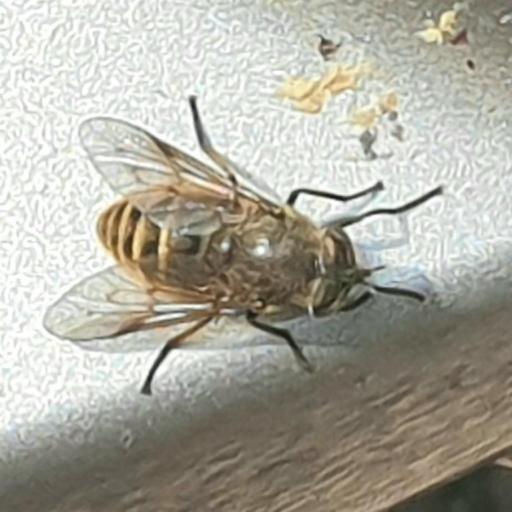
- 🪰 Massive Proportions: This is one of the largest flies you will encounter, often reaching up to 2.5 cm in length with a heavy, robust body that feels much more substantial than a common housefly.
- 👁️ Dull Green Eyes: They possess enormous compound eyes that take up most of the head. In this specific species, the eyes are typically a somber, dark green or greyish color without the bright stripes found on its cousins.
- 📐 Abdominal Pattern: Look for a series of pale, whitish-grey triangles running down the center of its dark brown or blackish abdomen. These "chevrons" are a key giveaway for the bovinus species.
🌲 Habitat & Ecology
- 🐄 The Livestock Follower: As the Latin name bovinus suggests, they are most at home near pastures, stables, and meadows. They are ecologically tied to large mammals, particularly cattle and horses, which provide the blood meals necessary for the females to develop eggs.
- ☀️ Sun Seekers: You’ll rarely see them on a cloudy day. They are "thermophilic," meaning they love the heat. They are most active during the sweltering "dog days" of mid-to-late summer, especially in damp areas near woodland edges where their larvae can grow in moist soil.
⚠️ Safety & Toxicity
- 🩸 The Bite: While not venomous, the female's bite is notoriously painful. Unlike mosquitoes that use a needle-like tube, horse-flies have scissor-like mandibles designed to slash the skin.
- 🩹 Aftercare: The bite can result in significant swelling, redness, and a "wheal" on the skin. Because they are mechanical feeders, there is a small risk of secondary infection. It is best to clean the area thoroughly and avoid scratching, as the wound is larger than a typical insect bite.
- 🐕 Pets and Livestock: Horses and dogs can become extremely distressed by their presence. If you see your pet snapping at the air or running frantically, a Tabanus fly might be the culprit.
✨ Fun Fact
Males are remarkably different from females! They lack the "knives" needed to bite and spend their days hovering in sun-dappled forest clearings, drinking nectar and performing aerial acrobatics to impress females. If a large fly is hovering peacefully near a flower, it’s likely a harmless male.
More Details








