Info
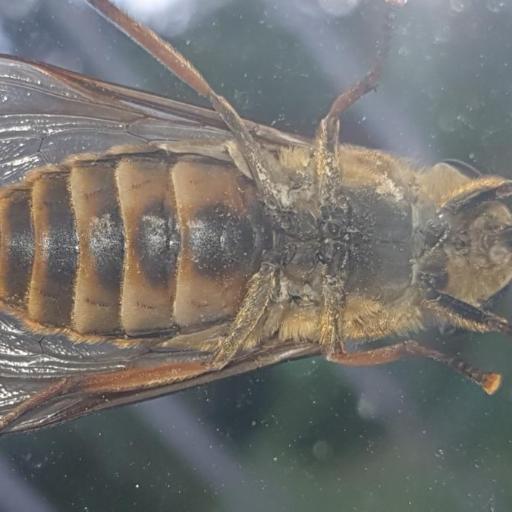
Often called the Dark Giant Horsefly, this is the heavyweight champion of the fly world in Europe and parts of Asia. It is famous for its "heavy metal" appearance and a deep, low-pitched drone that can easily be mistaken for a hornet or a small drone. While its size can be intimidating, this insect is a fascinating example of high-speed aerial engineering.
🔍 How to Identify
- 📏 Colossal Size: One of the largest fly species in its range, often reaching up to 2.5 cm (1 inch) in length with a very stout, muscular body.
- 👁️ Dark Eyes: Unlike many horsefly species that have colorful, iridescent eyes, Tabanus sudeticus typically has solid, dark chocolate-brown or black compound eyes.
- 📐 Abdominal Patterns: Look for a row of distinct, pale triangular markings running down the center of its dark, segmented abdomen.
🌲 Habitat & Ecology
- 🐎 The Livestock Link: They are most commonly found near damp pastures, marshes, and woodland edges where cattle or horses graze, as the females require a blood meal to develop their eggs.
- 🍹 Nectar Lovers: While the females are known for biting, the males are completely harmless to humans and spend their time visiting flowers to drink nectar, acting as minor pollinators.
- 💧 Muddy Nurseries: Their larvae are fierce predators that live in wet mud or damp soil, hunting other small invertebrates before they undergo metamorphosis.
⚠️ Safety & Toxicity
- 🦷 The Bite: Only the females bite. They use scissor-like mouthparts to "slash" the skin rather than pierce it. While not venomous, the bite is notably painful and can cause significant localized swelling.
- 🩹 Care: If bitten, clean the area thoroughly with soap and water. They do not leave a stinger behind, but because they frequent livestock, there is a small risk of secondary infection if the wound is scratched.
✨ Fun Fact
The flight of the Dark Giant Horsefly is incredibly powerful; they are among the fastest-flying insects in the world and have been known to keep pace with galloping horses to secure a meal!
More Details








