Info
Often referred to as the Two-tailed Spider, the Tamopsis is a master of invisibility and one of the most specialized hunters in the arachnid world. These flat, mottled spiders are famous for their "cloaking device"—a color pattern that perfectly mimics the bark and lichen of the trees they call home. If you manage to spot one, you’ve likely caught a glimpse of a true master of disguise.
🔍 How to Identify
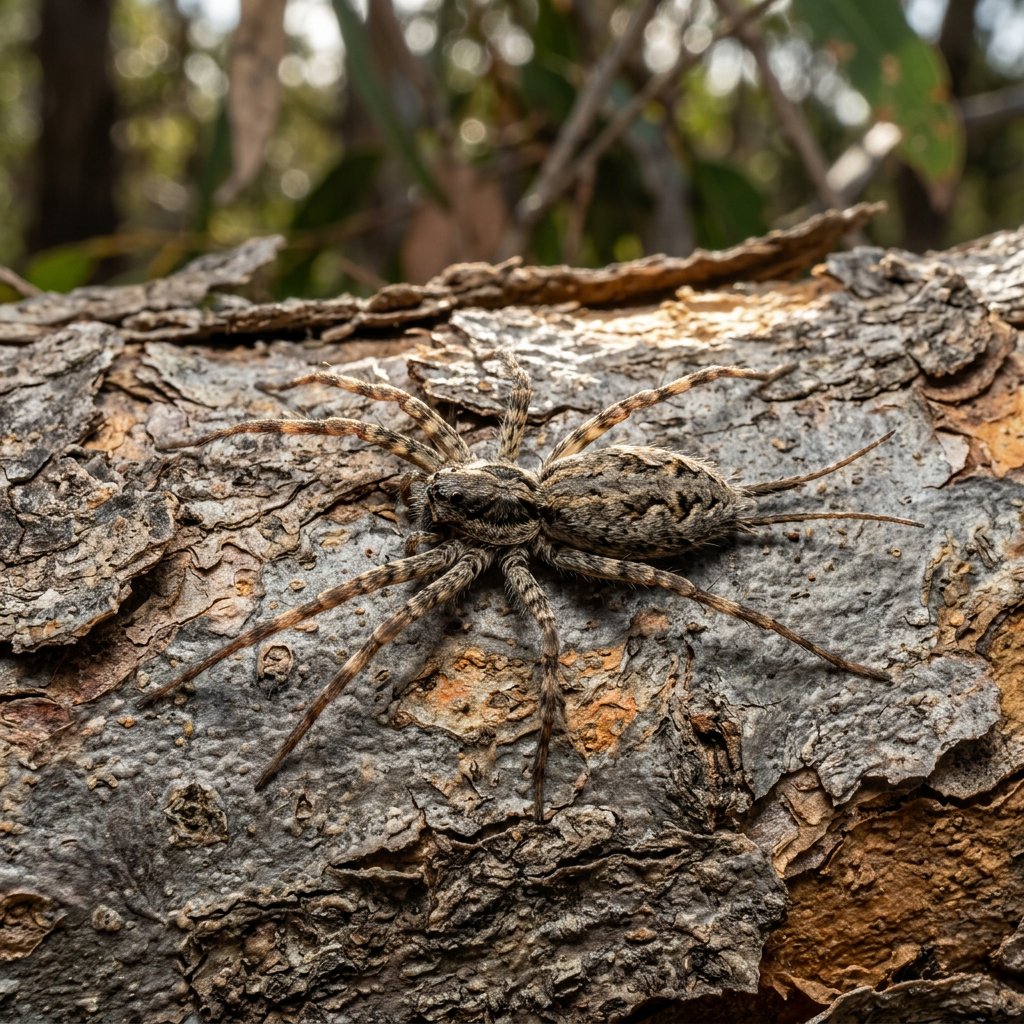
- 🕷️ The "Twin Tails": Their most distinctive feature is a pair of exceptionally long spinnerets at the rear of the abdomen, which look like two thin, pointed tails.
- 🎨 Bark Mimicry: Their bodies are incredibly flat and decorated with intricate patterns of grey, brown, white, and black, making them look like a natural growth on a tree trunk.
- 📏 Low Profile: They sit perfectly flush against a surface. Their legs are spread out in a star-like radial pattern to detect even the slightest vibrations from approaching prey.
🌲 Habitat & Ecology
- 🌳 The Trunk Specialist: You will almost exclusively find Tamopsis on the trunks of trees, particularly smooth-barked species or those covered in lichen. They do not build traditional messy webs to catch food.
- ⚔️ The Death Circle: Unlike spiders that wait for a web to do the work, Tamopsis is an active ambush predator. When a small insect wanders near, the spider sprints around it at lightning speed, "bolting" the prey to the bark using silk from its long tails.
- 🐜 Pest Control: They are excellent garden allies, feeding on various small insects, ants, and flies that crawl up and down tree trunks.
⚠️ Safety & Toxicity
- 🛡️ Non-Threatening: The Two-tailed Spider is considered harmless to humans and larger pets.
- 🚫 Shy Nature: They are extremely timid and rely on camouflage or speed to escape. They are not aggressive, and their venom is not known to be medically significant to humans. If disturbed, they are more likely to vanish into a crevice than to bite.
✨ Fun Fact
✨ The Ninja Move: When Tamopsis senses a predator or a meal, it can move so fast that it appears to teleport. They are among the fastest-moving spiders relative to their size, capable of wrapping an ant in silk in a fraction of a second!
More Details








