Info
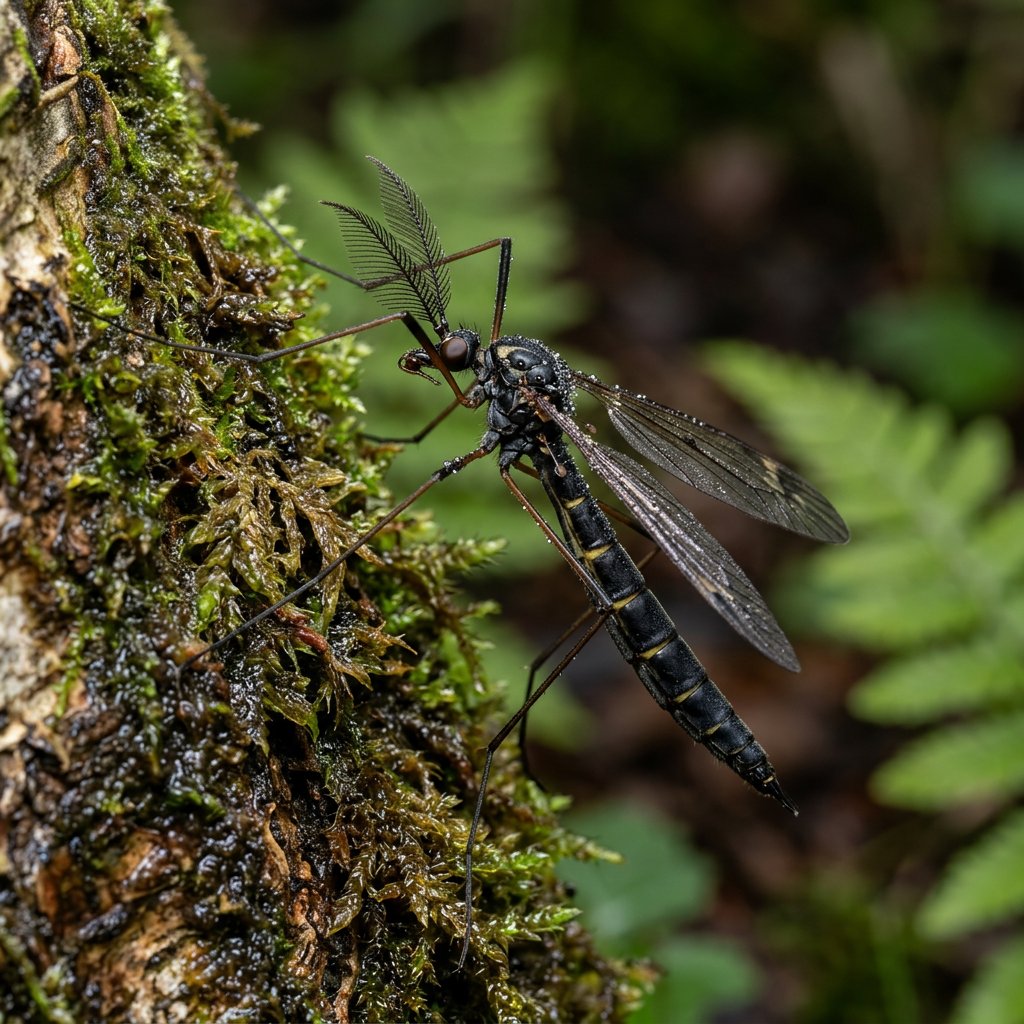
Despite its sharp-looking "stinger" and intimidating black-and-orange armor, Tanyptera atrata is one of nature’s most successful bluffers. Often called the Black Crane Fly, this insect is a master of mimicry, spending its life fluttering through ancient woodlands looking much more dangerous than it actually is. While it looks like a large, menacing wasp, it is actually a gentle giant of the fly family.
🔍 How to Identify
- 🪶 Feathery Antennae: The males possess spectacular, comb-like (pectinate) antennae used to sniff out females, while females have shorter, simpler segments.
- 🖤 Glossy Body: They feature a striking, polished black thorax and abdomen, often accented with bright orange or reddish-gold bands in the middle.
- 📍 The "Stinger": Females have a long, pointed, and needle-like end to their abdomen. While it looks like a weapon, it is actually a specialized tool for laying eggs.
🌲 Habitat & Ecology
- 🪵 Dead Wood Specialist: Unlike the common crane flies that plague your lawn, this species is a forest dweller. Its larvae live inside the decaying wood of fallen broadleaf trees like Birch or Willow, helping to break down logs into rich soil.
- 🎭 A Professional Actor: This insect practices "Batesian Mimicry." By looking and acting like a large Ichneumon wasp, it scares off birds and other predators that don't want to risk a painful sting.
⚠️ Safety & Toxicity
- 🛡️ Status: Completely harmless.
- 🚫 No Bite or Sting: Despite the frightening appearance of the female’s pointed tail, she has no venom. The structure is purely for drilling into soft, rotting wood to deposit eggs. They do not bite humans or pets and are safe to observe up close.
✨ Fun Fact
The Tanyptera atrata is often used by ecologists as an "indicator species." Because they rely on old, decaying wood to survive, their presence is a sign of a healthy, mature, and undisturbed forest ecosystem!
More Details








