Info
Often called the Forest Pierrot, this tiny, delicate butterfly looks like a piece of fluttering lace dancing through the dappled sunlight of the woods. While most butterflies are known for sipping sweet nectar, the Forest Pierrot is famous among entomologists for its "secret life" as a fierce garden protector. It is a rare example of a butterfly that is a true friend to plants, as its offspring are strictly carnivorous.
🔍 How to Identify
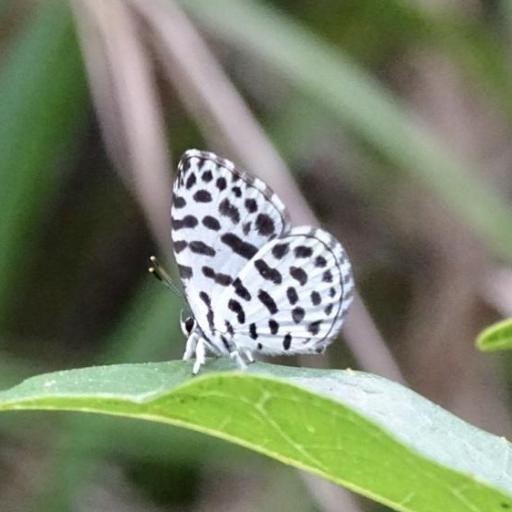
- 🏁 Wing Pattern: The underside of the wings is a brilliant, snowy white, densely covered with bold, irregular black spots that resemble a Dalmatian’s coat.
- 🦋 Size and Shape: It is a very small butterfly with rounded wings, giving it a soft, fragile appearance as it skips through the air rather than flying in a straight line.
- 🌑 Upper Side: Unlike the striking underside, the tops of the wings are mostly dark brown or blackish, which acts as camouflage when the butterfly rests with its wings open.
🌲 Habitat & Ecology
- 🐜 The Aphid Hunter: Unlike almost every other butterfly species you know, the larvae (caterpillars) of the Forest Pierrot do not eat leaves. Instead, they are predatory, feeding exclusively on woolly aphids. This makes them an incredible natural pest control agent.
- 🌿 Shady Preferences: You won't usually find these in wide-open bright fields. They prefer the "edge" of the forest, bamboo thickets, and shady garden corners where their aphid prey huddle together on stems.
⚠️ Safety & Toxicity
- ✅ Status: Completely Harmless.
- 👐 Details: The Forest Pierrot does not bite, sting, or possess any toxins that could irritate human skin. They are extremely delicate, so the only "danger" is to the butterfly itself if handled roughly. They are safe to have around children and pets.
✨ Fun Fact
The Forest Pierrot belongs to a tiny, elite group of butterflies worldwide whose larvae are carnivorous. While other caterpillars are munching on your prize hibiscus, these little warriors are busy "cleaning" the plants by eating the pests that suck the sap!
More Details








