Info
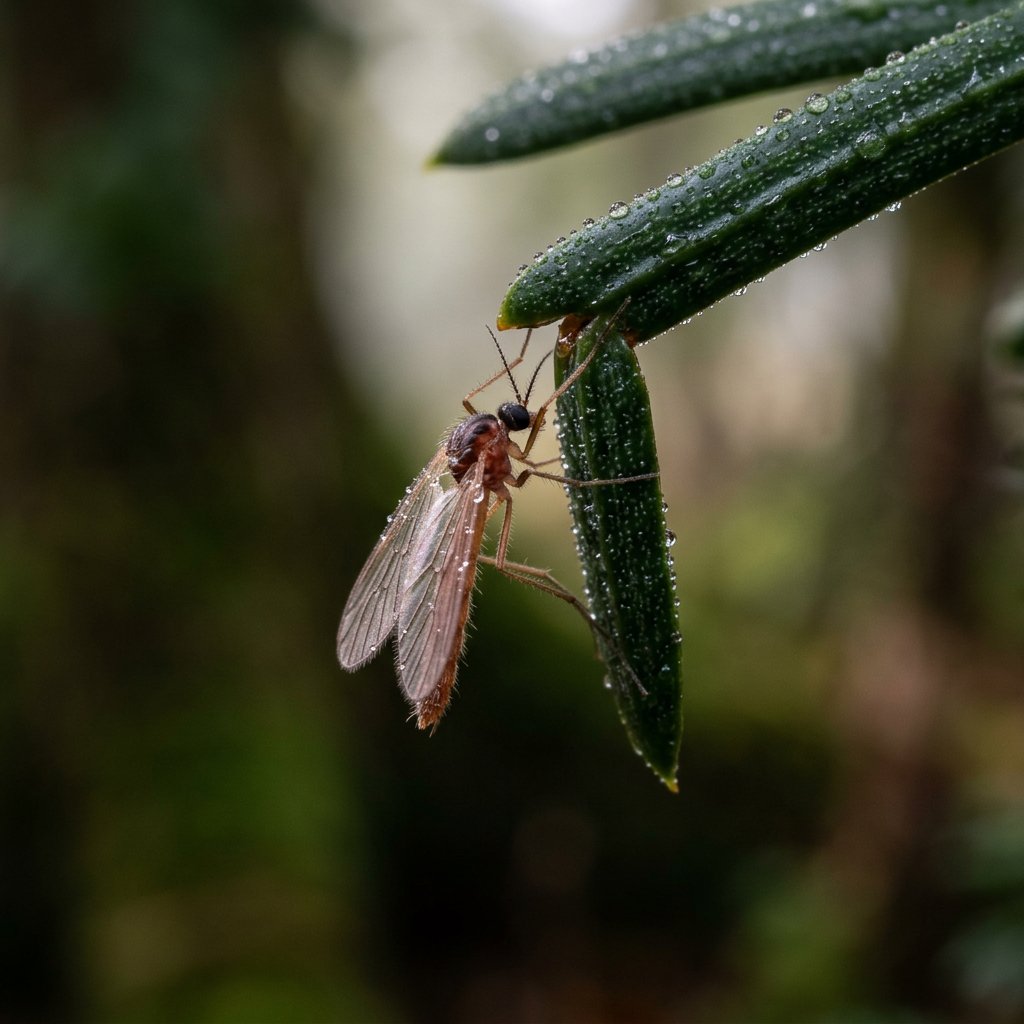
Often called the Yew Gall Midge, this tiny architect spends its life redesigning the branch tips of Yew trees. While the adult fly is rarely seen, its handiwork is unmistakable: small, leafy rosettes that look like tiny green artichokes or pinecones clustered at the ends of twigs. It is a fascinating example of nature’s "hijacking," where an insect forces a plant to build it a custom, protective home.
🔍 How to Identify
- 🌿 The "Artichoke" Gall: The most obvious sign is a tight cluster of 60–80 overlapping yew leaves at the tip of a shoot, which remain green and then turn brown as they age.
- 🦟 The Adult Midge: A delicate, tiny fly (about 3mm long) with a dark body and translucent wings. They are rarely spotted as they only live for a few days to mate and lay eggs.
- 🟠 The Larva: If you carefully peel back the layers of a fresh gall, you will find a single, bright orange or pinkish larva nestled safely in the very center.
🌲 Habitat & Ecology
- 🌳 Host Specificity: This midge is a strict specialist; it only lives on Yew trees (Taxus species). You won't find it migrating to your garden flowers or vegetable patches.
- 🛠️ Chemical Takeover: In early summer, the female lays eggs in the terminal buds. As the larva develops, it releases chemicals that trick the tree into stopping stem elongation, forcing the leaves to bunch up into a protective fortress rather than growing into a branch.
- 🦉 Ecosystem Role: While they may slightly stunt the growth of specific twigs, they are generally considered a neutral resident of the forest and provide a food source for specialized parasitic wasps.
⚠️ Safety & Toxicity
- ✅ Status: Completely harmless to humans and animals. They do not bite, sting, or carry diseases.
- 🚫 Tree Toxicity: While the insect is safe to handle, remember that almost every part of the Yew tree host (Taxus baccata) is highly toxic if ingested. Ensure children or pets do not chew on the "artichoke" galls.
- 🪴 Garden Impact: They are a cosmetic issue rather than a health threat to the tree. No chemical intervention is usually necessary; simply snip off the galls if you dislike the look.
✨ Fun Fact
The Yew Gall Midge is a "slow-life" enthusiast. While many flies live their entire cycle in weeks, this midge often takes two full years to complete its development inside its leafy penthouse before finally emerging as an adult!
More Details








