Info
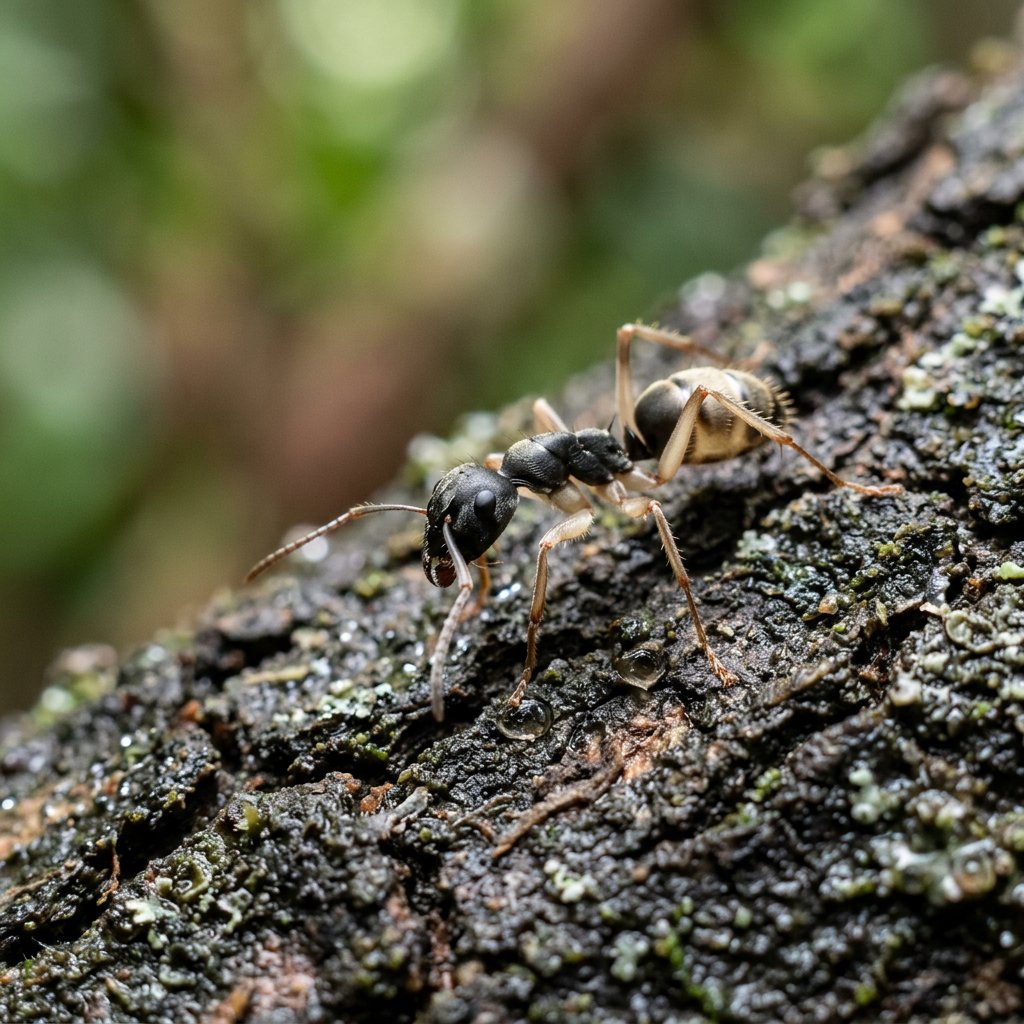
Often called the White-footed Ant, Technomyrmex is a small, busy traveler found across the globe. While they might look like common household ants at first glance, their unique social structure and pale "socks" set them apart. They are generally considered a nuisance rather than a threat, acting as tiny, persistent scavengers in both gardens and kitchens.
🔍 How to Identify
- 👣 Pale Tarsi: Their most defining feature is the yellowish-white color of the lower part of their legs, making it look like they are wearing tiny white socks.
- 🖤 Dark Body: Aside from their feet, their bodies are typically a dark brownish-black with a matte (non-shiny) finish.
- 📏 Small Size: These are tiny workers, usually measuring only about 2.5 to 3 mm in length.
- 🐜 Compact Shape: They have a single, flattened node (the petiole) between the thorax and abdomen that is often hidden, giving them a very "stubby" look compared to long-waisted ants.
🌲 Habitat & Ecology
- 🍭 Honeydew Farmers: These ants are the "ranchers" of the insect world. They protect aphids and scale insects from predators just to harvest the sweet, sticky honeydew those insects secrete.
- 🏠 Above-Ground Living: Unlike many ants that dig deep into the earth, Technomyrmex prefer nesting in "lofty" spots—hollow stems, leaf litter, under loose bark, or even inside the wall voids of houses.
- 🛤️ Follow the Trail: They are famous for creating very long, distinct foraging trails. If you see a solid line of tiny black dots moving up a tree trunk or across a patio, it’s likely a Technomyrmex highway.
⚠️ Safety & Toxicity
- 🛡️ Harmless to Humans: These ants do not have a functional stinger. While they might try to give a tiny "pinch" if handled, they are generally incapable of breaking human skin or causing pain.
- 🐜 Nuisance Level: Because they form "mega-colonies" with multiple queens, they can be very difficult to remove once they move into a home. They don't cause structural damage, but they will swarm any sugary food left on a counter.
✨ Fun Fact
Most ant species share food by regurgitating it to one another (a process called trophallaxis), but Technomyrmex ants are different! They rarely share liquid food mouth-to-mouth; instead, they produce specialized "trophic eggs" (unfertilized eggs) to feed their queens and larvae.
More Details








