Info
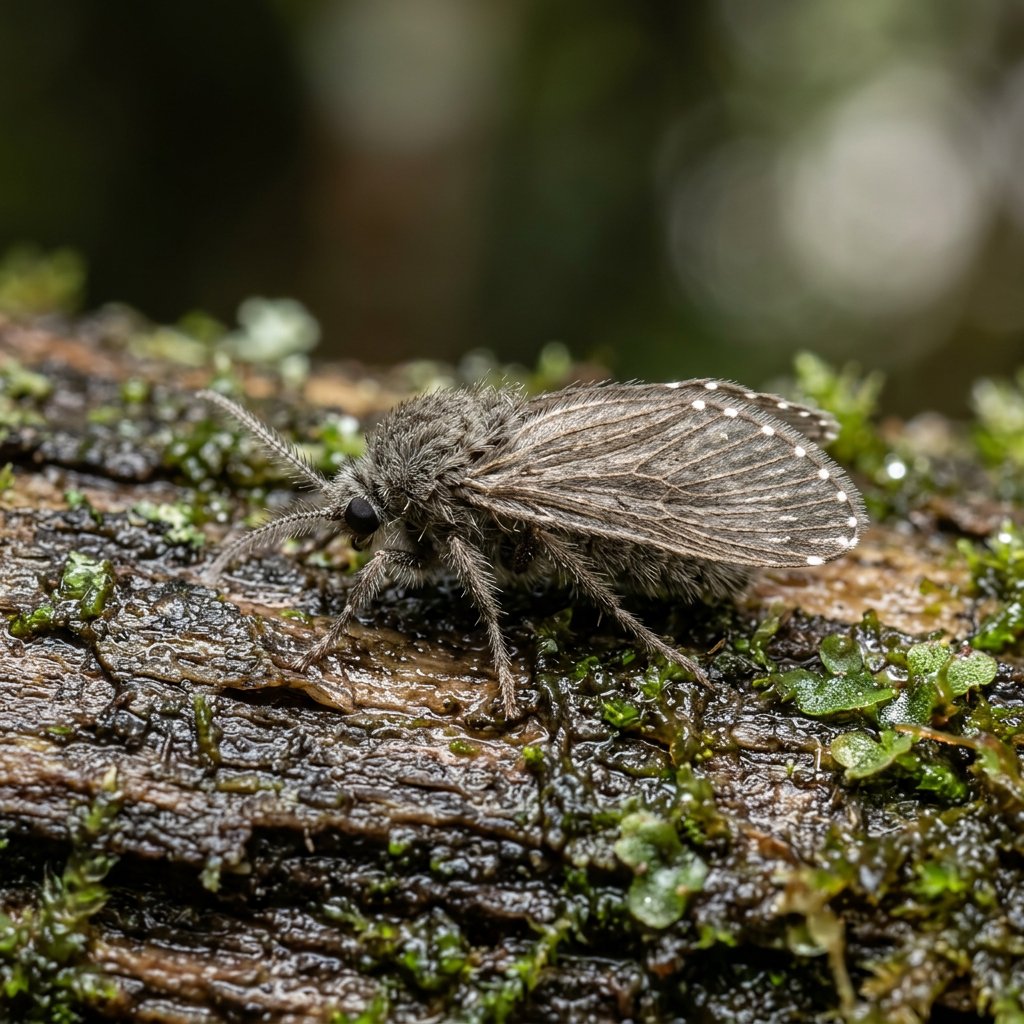
Often called the Drain Fly or Moth Fly, this tiny, fuzzy visitor is a master of the indoors. With its heart-shaped body and oversized wings, it is frequently mistaken for a miniature moth rather than a fly. While they might seem like a nuisance in your bathroom, they are actually part of nature’s highly efficient "clean-up crew," specialized for living in environments most other creatures avoid.
🔍 How to Identify
- 🦋 Wing Shape: Their wings are broad, leaf-like, and held flat over the body in a distinct "heart" shape when at rest.
- 🧶 Fuzzy Texture: The entire body and wings are covered in dense, moth-like hairs (scales), giving them a soft, dusty appearance.
- ⚪ White Spots: If you look closely, you can see tiny white tufts or spots at the ends of the wing veins, which gives them their scientific name albipunctatus ("white-spotted").
🌲 Habitat & Ecology
- 💧 The Biofilm Specialist: These insects are famous for living in drains, sewers, and septic tanks. Their larvae thrive in "gunk"—the slimy biofilm of organic matter that accumulates in pipes—where they feed on decaying hair, soap scum, and bacteria.
- 🍃 Natural Roles: In the wild, they are found in moist hollows of trees, compost piles, and swampy edges. They are weak fliers and prefer to crawl or take short, jerky "hops" along damp surfaces rather than flying across a room.
⚠️ Safety & Toxicity
- 🛡️ Harmless Guest: Drain flies do not bite, sting, or transmit diseases to humans or pets through their saliva. They are physically incapable of harming you.
- 🧼 Sanitation Note: While not toxic, their presence usually indicates a build-up of organic sludge in your plumbing. Because they emerge from drains, it is a good idea to keep kitchen and bathroom surfaces clean to prevent them from mechanically carrying bacteria from the pipes to your counters.
✨ Fun Fact
These flies are practically waterproof! Their dense coat of specialized hairs is so effective at repelling liquid that they can survive being flushed down a drain or sprayed with water; the liquid simply beads off them like a high-tech raincoat, allowing them to fly away dry.
More Details








