Info
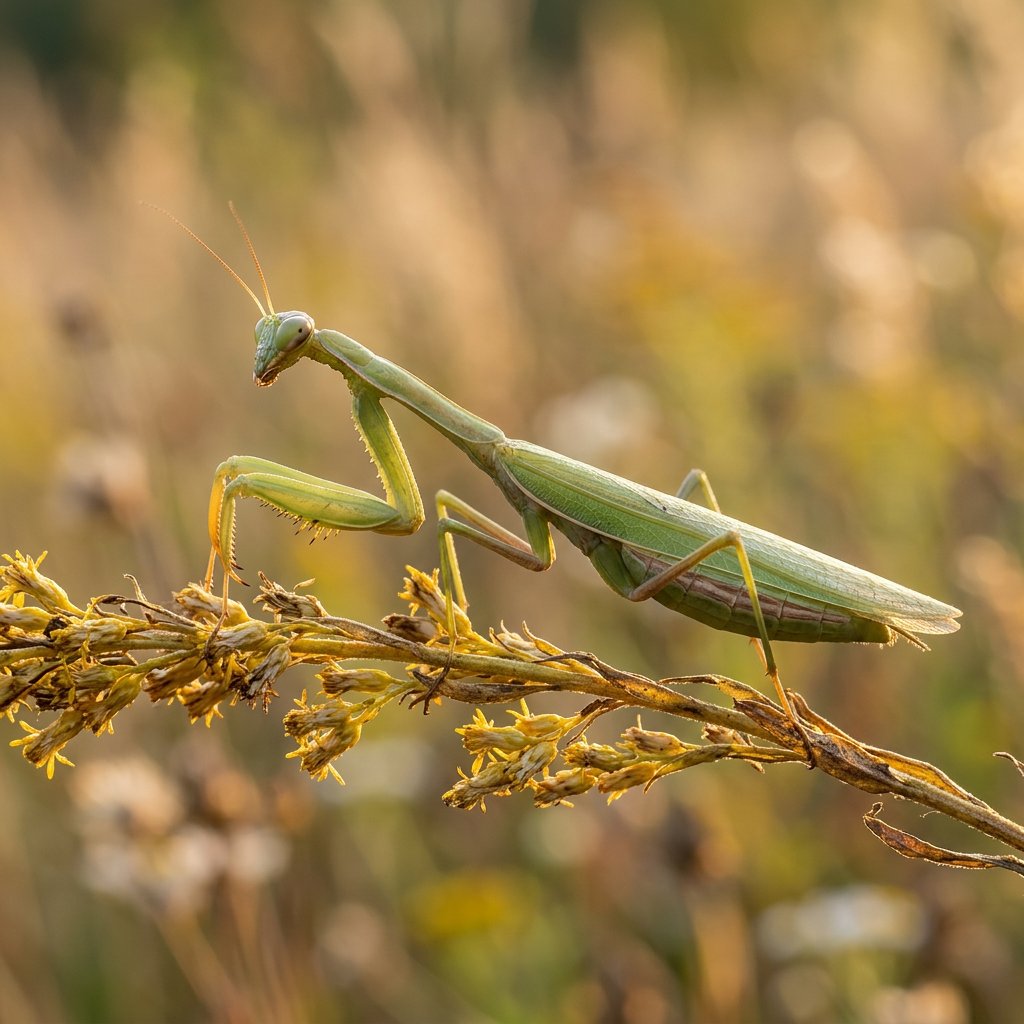
Often mistaken for its larger cousin, the Chinese Mantis, the Narrow-winged Mantis is a "zen master" of the insect world. A master of camouflage, this slender predator spends its days perfectly still, blending into tall grasses and shrubbery. While it looks like a miniature dinosaur, it is one of the most beneficial visitors you can find in your backyard.
🔍 How to Identify
- 📏 The Silhouette: True to its name, it has a notably long, slender body, reaching about 3 to 4 inches in length. It is much more "aerodynamic" than other common mantids.
- 🪶 Narrow Wings: Its wings are strikingly thin and elongated, often featuring a subtle tan or brownish border that mimics the edge of a dried leaf.
- 🟠 The "Chest" Spot: A key identifier is the spot between its front raptorial legs; in this species, the spot is typically orange or reddish, whereas the Chinese Mantis has a yellow spot.
- 🎨 Color Shifting: They appear in two primary color phases—vibrant leaf-green or woody-brown—allowing them to disappear against either fresh foliage or autumn twigs.
🌲 Habitat & Ecology
- 🌿 The Ambush Zone: You’ll typically find them in meadows, garden borders, or atop flowering shrubs. They prefer "edge" habitats where sunlight is plentiful and prey is frequent.
- 🦟 Pest Control: As generalist predators, they act as the garden's private security. They feast on moths, flies, grasshoppers, and even agricultural pests, making them a favorite for organic gardeners.
- 🥚 Winter Capsules: They spend the winter as eggs protected inside an ootheca (egg case). These cases are elongated and papery, usually glued to sturdy stems or the sides of buildings.
⚠️ Safety & Toxicity
- 🛡️ Friendly Giant: The Narrow-winged Mantis is completely non-venomous and poses no threat to humans or pets. They are actually quite curious and will often "watch" humans with their large, mobile eyes.
- 🧤 Spiky Grip: While they don't bite or sting, their front hunting legs are lined with tiny, sharp spines designed to hold onto struggling prey. If handled roughly, they may give you a harmless but surprising "pinch."
- 🐾 Pet Safety: They are safe around cats and dogs, though a curious pet might accidentally squash one during play.
✨ Fun Fact
- 🔄 The 180-Degree View: Mantises are the only insects in the world that can turn their heads 180 degrees to look over their shoulders! This, combined with their "pseudo-pupils" that seem to follow you, gives them an eerily intelligent appearance.
More Details








