Info
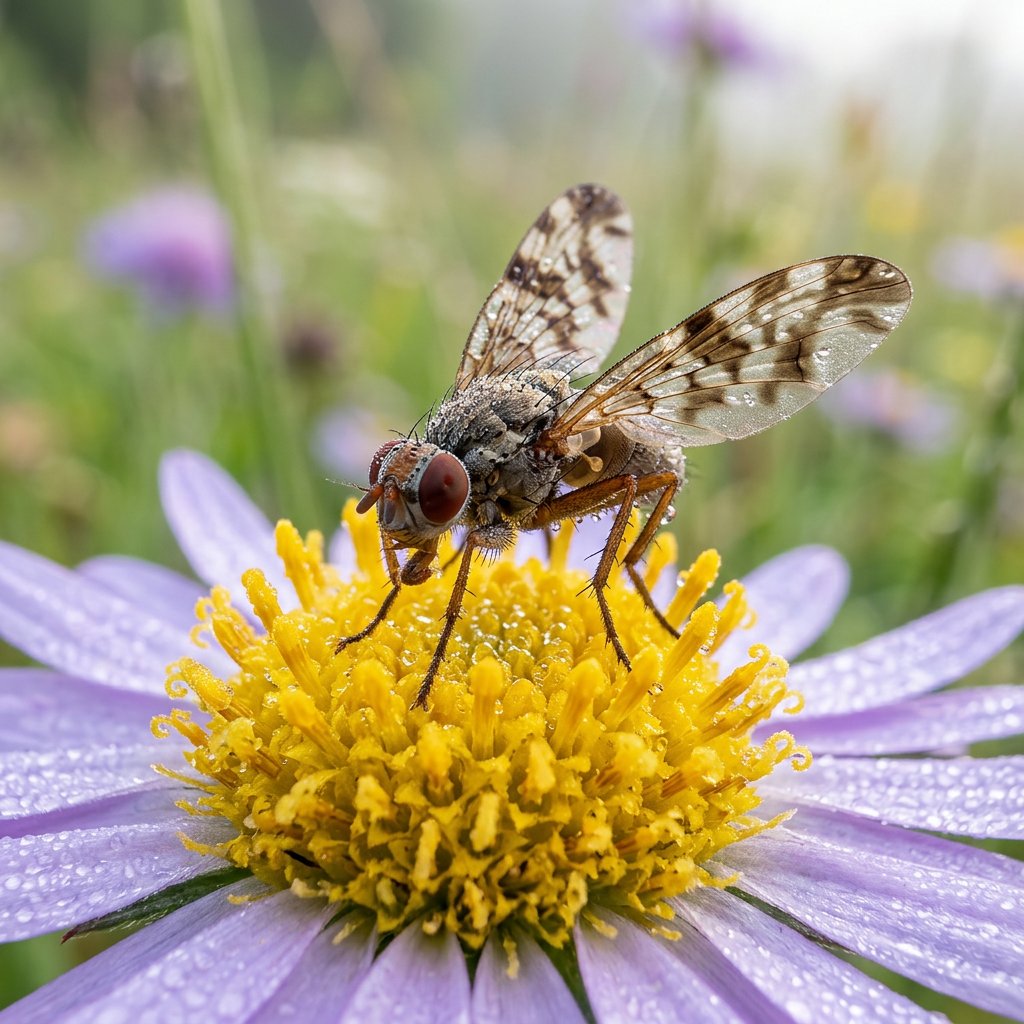
Tephritis vespertina is a tiny architect of the meadow, often known as a "Picture-wing fly" because of the intricate, lace-like patterns on its wings. While they belong to the fruit fly family, you won't find them buzzing around your kitchen fruit bowl; instead, they are sophisticated specialists of the wildflower world, particularly fond of ox-eye daisies. They are a delightful find for any macro-photography enthusiast or nature walker.
🔍 How to Identify
- 🎨 Intricate Wings: The most striking feature is the dark, mottled, or "stippled" pattern across the clear wings, which resembles a delicate piece of lace or a stained-glass window.
- 📏 Diminutive Size: These are very small flies, usually only 4 to 5 millimeters long, requiring a keen eye to spot as they rest on flower petals.
- 👀 Compact Body: They typically have a dusty-tan or greyish body with large, iridescent eyes that can shimmer with reddish or greenish hues in the right light.
🌲 Habitat & Ecology
- 🌼 Daisy Specialist: You will almost exclusively find these flies near Ox-eye Daisies (Leucanthemum vulgare). The females use their specialized anatomy to lay eggs deep within the developing flower buds.
- 🕺 The Wing Dance: If you watch them closely, you’ll see them rhythmically waving their patterned wings. This "rowing" motion is a complex language used to signal to mates or warn off territorial rivals.
- 🐛 A Life Inside: The larvae live and feed inside the seed heads of the daisies. While this consumes some seeds, they are a natural part of the meadow's ecosystem and rarely cause significant damage to the plant population.
⚠️ Safety & Toxicity
- ✅ Harmless Neighbor: Tephritis vespertina is a "friend" to the gardener. They do not bite, sting, or carry any diseases that affect humans or household pets.
- 🛡️ Non-Invasive: Unlike their cousins that attack fruit crops, these flies stay focused on wild composites (daisy-like flowers) and are not considered a pest in the home or the vegetable garden.
✨ Fun Fact
The wing patterns of some Picture-wing flies are thought to be a form of "spider mimicry." When the fly waves its wings, the patterns can look like the legs of a jumping spider, tricking actual spiders into thinking they’ve encountered a rival rather than a tasty snack!
More Details








