Info
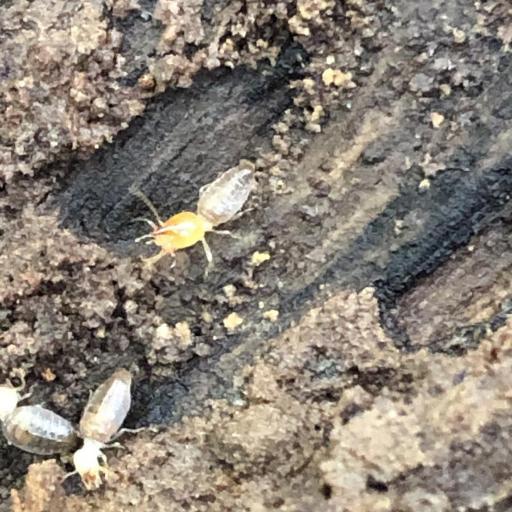
Often called the "Architects of the Underworld," the Termitidae family represents the most advanced and diverse group of termites on the planet. While they are often feared as "silent destroyers" of homes, in the wild, they act as nature’s premier recycling crew, turning dead wood and organic debris into life-sustaining soil. Their complex social structures and towering mounds are among the greatest engineering feats of the animal kingdom.
🔍 How to Identify
- 🏰 The Mound: Many species are identified by their "cathedrals"—towering, rock-hard structures made of soil, saliva, and dung that can reach over 20 feet tall.
- 🐜 Body Shape: Unlike ants, which have a "cinched" waist, termites have a broad, thick waist and straight, bead-like antennae.
- ⚔️ The Soldier Caste: Look for individuals with oversized, dark-colored heads and powerful mandibles or pointed "noses" (nasutes) used for chemical defense.
🌲 Habitat & Ecology
- 🍂 Nutrient Cyclers: Most Termitidae species feed on grass, leaf litter, or wood. They possess specialized gut microbes (and sometimes internal "fungus gardens") to break down tough cellulose that other animals cannot digest.
- 🌡️ Climate Control: Their mounds are biological masterpieces, featuring intricate ventilation shafts that maintain a constant temperature and humidity level, regardless of the harsh weather outside.
⚠️ Safety & Toxicity
- 🏠 Property Threat: While they are physically harmless to humans and pets, they are a significant threat to wooden structures. If found near a home's foundation, they should be addressed by a professional immediately.
- 🛡️ Non-Venomous: Termitidae do not sting. Soldiers may deliver a small, harmless pinch if handled, but they do not pose a medical risk to children or animals.
✨ Fun Fact
Termite mounds are so efficiently cooled that human architects have used them as inspiration for "biomimetic" buildings. The Eastgate Centre in Zimbabwe uses a ventilation system modeled after Termitidae mounds, allowing the building to stay cool without traditional air conditioning!
More Details








