Info
Often called the Lychee Stink Bug, this shield-shaped insect is a notorious resident of tropical orchards across Southeast Asia. While it might look like a harmless piece of bark or a dried leaf, it is famous for its "chemical warfare" and its specialized appetite for juicy summer fruits like lychees and longans.
🔍 How to Identify
- 🛡️ Shield Shape: Adults have a large, broad, and flat body shaped like a medieval shield, typically measuring about 2.5 to 3 centimeters in length.
- 🟤 Dull Coloration: Mature bugs are usually a tawny yellow or leather-brown, helping them blend in perfectly with tree branches and dried foliage.
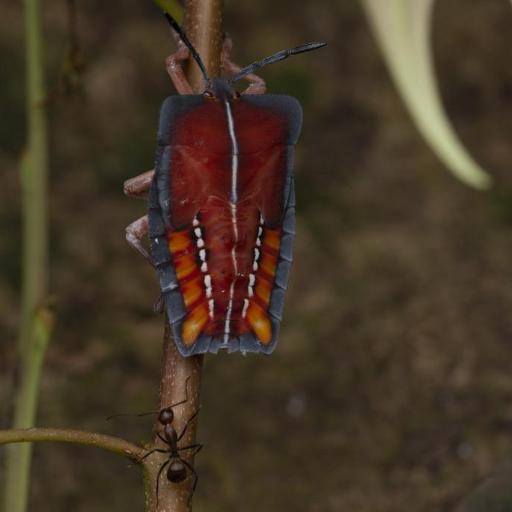
- 🎨 Vibrant Nymphs: Unlike the drab adults, the juveniles (nymphs) are strikingly beautiful, featuring bright red or orange rectangular bodies with bold black borders.
🌲 Habitat & Ecology
- 🍋 The Fruit Specialist: This insect is a dedicated herbivore that uses its needle-like mouthparts to pierce the stems of lychee and longan trees, sucking out the nutrient-rich sap.
- 🍃 Egg Clusters: Keep an eye out for neat, grid-like clusters of about 14 round, lime-green eggs usually glued to the underside of fruit tree leaves.
⚠️ Safety & Toxicity
- ☣️ Chemical Defense: When threatened, the Lychee Stink Bug sprays a highly pungent, caustic liquid from glands on its thorax.
- 🧴 Skin & Eye Irritation: This fluid is strong enough to cause "burns" or dark staining on human skin. Never bring this bug close to your face, as the spray can cause intense pain and temporary irritation if it enters the eyes.
✨ Fun Fact
In some parts of Southeast Asia, particularly in Thailand and Southern China, these bugs are considered a delicacy! Once the defensive "stink" glands are carefully removed, they are deep-fried and eaten as a crunchy, high-protein snack.
More Details








