Info
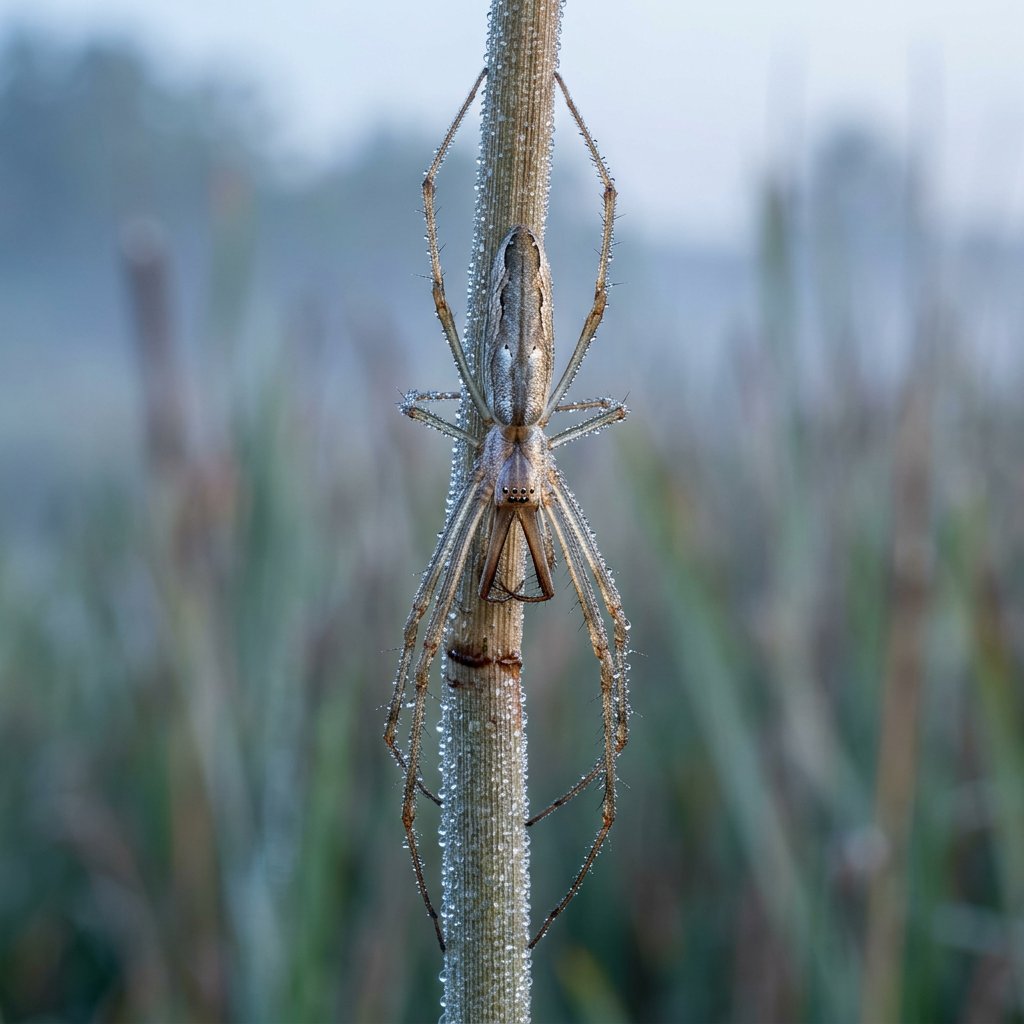
Often called the Common Stretch Spider, Tetragnatha extensa is a master of disguise and a true minimalist of the arachnid world. If you see what looks like a single, thin blade of dried grass suspended between two reeds, look closer—it might be this elegant architect. These spiders are famous for their incredibly elongated bodies and their unique habit of "vanishing" in plain sight against vegetation.
🔍 How to Identify
- 📏 Body Shape: They possess a remarkably long, slender, and cylindrical abdomen, often with a metallic or silvery sheen that helps them blend into wet environments.
- 🦵 The "Stretch" Pose: When resting, they point their front four legs straight forward and their back four legs straight back. This creates a single, continuous line that mimics a twig or a grass stem.
- 🦷 Oversized Jaws: Their scientific name means "four jaws," referring to their prominent, elongated mouthparts (chelicerae) which are much larger than those of most other spiders.
🌲 Habitat & Ecology
- 💧 Loves the Waterfront: These spiders are semi-aquatic enthusiasts. You will almost always find them in tall grasses, reeds, or bushes bordering ponds, marshes, and slow-moving streams.
- 🕸️ The Tilted Web: Unlike the perfectly vertical webs of garden spiders, the Stretch Spider often builds a horizontal or slightly angled orb web. This is a strategic design intended to catch flies and mosquitoes emerging directly from the water's surface.
- 🦟 Nature’s Pest Control: They are aggressive hunters of aquatic midges and gnats, making them a "friend" to any gardener with a backyard water feature.
⚠️ Safety & Toxicity
- 🛡️ Status: Completely harmless.
- 🐜 Details: While they look intimidating due to their long jaws, they are not aggressive toward humans or pets. Their venom is designed for tiny insects, and their fangs are rarely capable of piercing human skin. They prefer to play "stick" rather than bite.
✨ Fun Fact
When a Stretch Spider feels threatened, it doesn’t always run away. Instead, it will drop from its web and remain perfectly stiff and motionless in the grass, relying on its "stick" disguise to convince predators it is nothing more than a piece of dead debris.
More Details








