Info
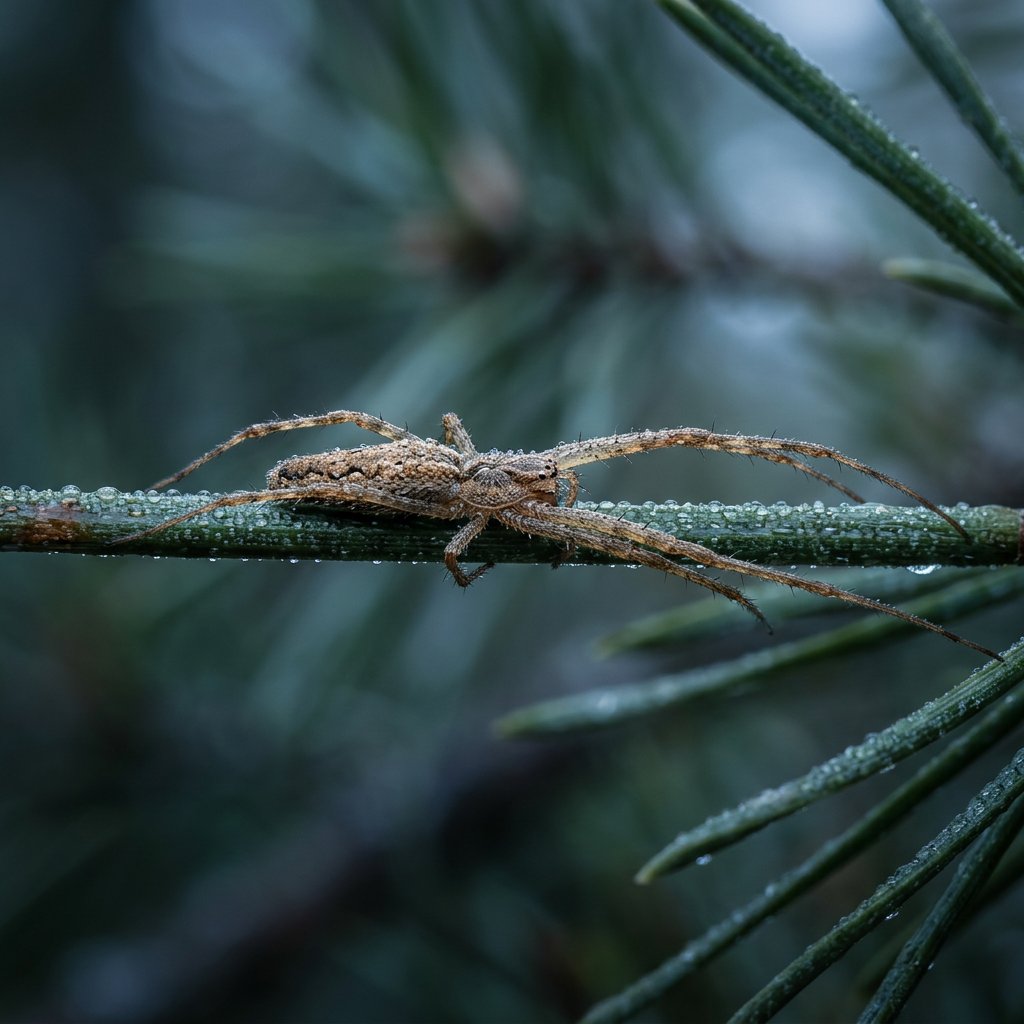
Often called the Obtuse Long-jawed Spider, this slender architect is a master of disguise. While its elongated jaws might look intimidating, it is a shy gardener's ally that spends its days pretending to be a harmless twig. Found throughout Europe and parts of Asia, it is a unique member of the "stretch spider" family that prefers the heights of trees over the riverbanks its cousins frequent.
🔍 How to Identify
- 🦴 Body Shape: Unlike its very thin relatives, T. obtusa has a slightly wider, more oval-shaped abdomen with a distinctive "obtuse" or blunt appearance at the front end.
- 🦵 The "Stretch" Pose: When resting on a branch, it pulls its long front and back legs into a perfectly straight line, making its entire body look like a thin, dead splinter of wood.
- 👄 Protruding Jaws: It features the characteristic elongated chelicerae (mouthparts) of the Tetragnatha genus, which are used to grasp prey and lock together during mating.
🌲 Habitat & Ecology
- 🌳 Tree Dwellers: While many long-jawed spiders are found near water, T. obtusa is a "dry" species, usually found in the canopy of deciduous trees, thick hedges, or garden evergreens.
- 🕸️ Horizontal Webs: They spin delicate orb webs with an "open hub" (a hole in the center). These webs are often tilted horizontally or at an angle to catch insects flying upward from the ground.
- 🦟 Night Hunter: This spider is primarily nocturnal. It spends the daylight hours in its camouflage pose and moves to the center of its web at dusk to wait for midges and flies.
⚠️ Safety & Toxicity
- 🟢 Non-Aggressive: These spiders are extremely timid and will usually drop to the ground or hide behind a leaf if they feel vibrations from a human.
- 🛡️ Low Risk: While they do possess venom to subduing insects, it is not medically significant to humans or pets. A bite is very rare and typically results in nothing more than minor, localized redness.
✨ Fun Fact
To avoid being eaten by sharp-eyed birds, Tetragnatha obtusa can slowly adjust its body color over several days to better match the specific bark or lichen of the tree it is living on!
More Details








