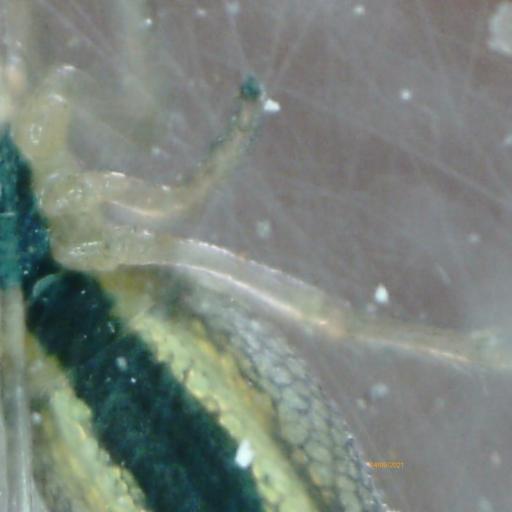
Info
Meet the "Pinewood Stretch Spider," a master of disguise often found lurking among needles and branches. Despite its somewhat alien appearance and elongated jaws, this spider is a shy garden ally that specializes in keeping small flying insect populations in check. It is one of nature’s most dedicated minimalists, using its body shape to vanish into its surroundings.
🔍 How to Identify
- 📏 The "Stretched" Profile: It features an exceptionally long, slender abdomen that is typically silver, straw-colored, or pale green with delicate dark markings.
- 🦵 Extreme Limb Extension: When resting, it stretches its front and back legs out in a perfectly straight line, making it look like a tiny, harmless splinter or a dry pine needle.
- 🦷 Prominent Jaws: As a member of the long-jawed orb-weaver family, it has oversized chelicerae (mouthparts) that project forward, giving it a distinctively "toothy" silhouette when viewed up close.
🌲 Habitat & Ecology
- 🕸️ Low-Level Architect: Unlike many spiders that build vertical webs at eye level, this species often constructs its circular "orb" webs at a slant or almost horizontally among tall grass, shrubs, or low pine branches.
- 🦟 The Gnat Specialist: It plays a vital role as a predator of small Diptera (flies), gnats, and mosquitoes, often positioning its web near damp areas where these insects congregate.
- 🪵 Camouflage Master: It spends its daylight hours sitting motionless on a twig or leaf vein. By pressing its body flat against the surface, it becomes virtually invisible to predators like birds.
⚠️ Safety & Toxicity
- 🛡️ Status: Completely harmless and non-aggressive.
- 🐾 Details: While those long jaws might look intimidating, they are designed for handling tiny insects. They have no interest in humans or pets, and their venom is far too weak to cause a reaction in anything larger than a fly. They will almost always choose to drop to the ground or hide rather than confront a human.
✨ Fun Fact
When a Tetragnatha pinicola feels a vibration that signals a large predator, it doesn't just run; it enters a state of "thanatosis" (playing dead) or pulls its legs so tight against its body that it transforms into a "living toothpick" to fool the eyes of hungry birds.
More Details








