Info
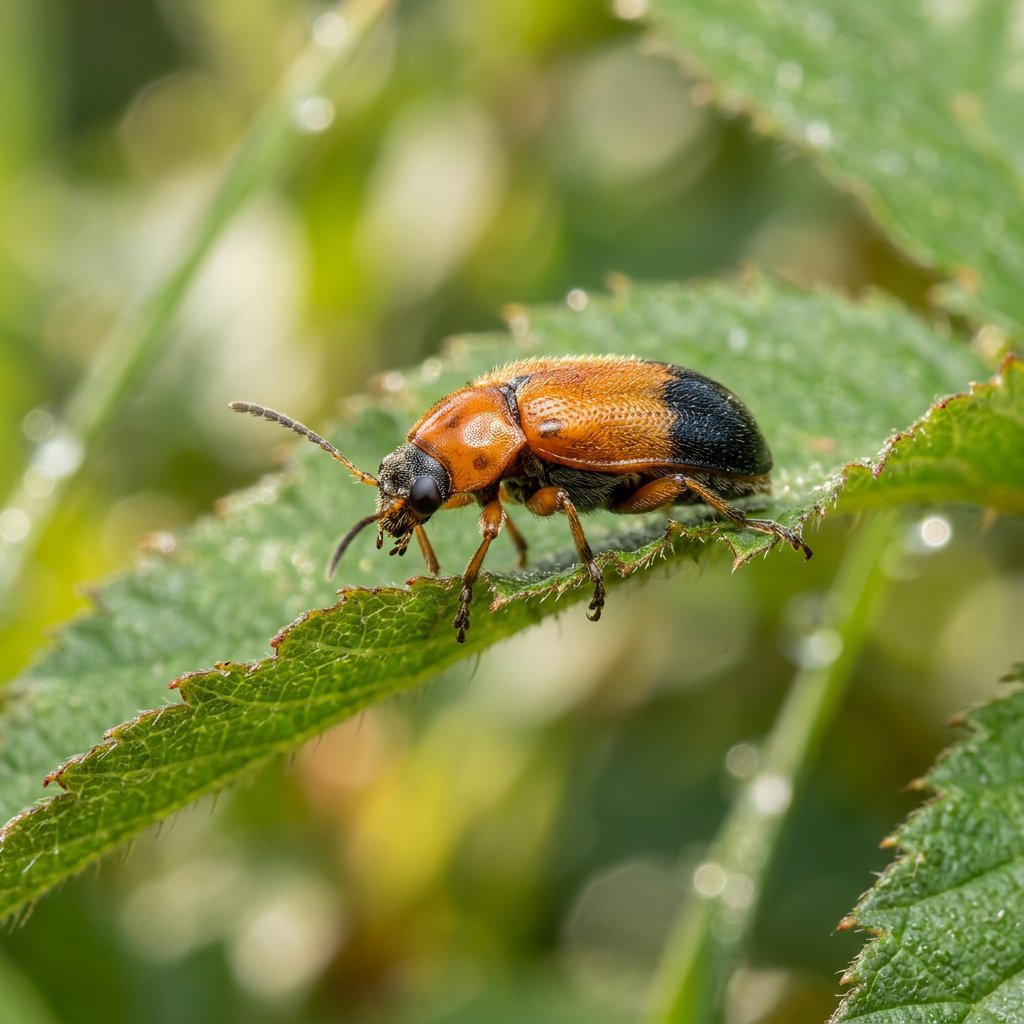
Often known as the Plum Longhorn Beetle, this tiny, fuzzy beetle is a common sight in European and North African orchards and gardens. While its "longhorn" family members are often giant and intimidating, Tetrops praeustus is a miniature version that focuses its attention on fruit trees. It is generally considered a minor "foe" for gardeners, as its larvae enjoy tunneling through the twigs of plum and apple trees, but it rarely causes enough damage to be a true villain.
🔍 How to Identify
- 🪲 The "Dipped" Wings: The most striking feature is the elytra (wing cases), which are a pale, mustard-yellow color but look as if the very tips have been dipped in black ink.
- 👀 Divided Eyes: Its scientific name, Tetrops, refers to its unique eyes, which are so deeply notched by the base of the antennae that they look like four separate eyes instead of two.
- 📏 Miniature Size: Unlike the massive longhorns you might fear, this beetle is tiny, usually measuring only 3 to 6 millimeters in length.
- ☁️ Fuzzy Texture: If you look closely, the entire body—especially the black head and thorax—is covered in fine, erect hairs, giving it a slightly "dusty" or velvety appearance.
🌳 Habitat & Ecology
- 🍎 Orchard Resident: You are most likely to find this beetle near Rose-family trees, specifically Plum, Apple, Hawthorn, and Pear. They love sun-drenched hedges and the edges of woodlands.
- 🪵 The Twig Tunneler: The life cycle begins when the female lays eggs in dead or dying twigs. The larvae then spend their time boring through the center of the wood, eventually pupating inside the twig before emerging as adults in late spring.
- 🍃 Leaf Nibbler: Adult beetles are active from May to July. You might spot them resting on leaves or feeding on the soft tissue of leaf petioles and midribs.
⚠️ Safety & Toxicity
- ✅ Harmless to Humans: Despite its long antennae and "beetle" look, this species is completely harmless. It does not sting, and its mandibles are far too small to bite human skin.
- 🐾 Pet Safety: There are no known toxins associated with this beetle. If a curious dog or cat happens to snack on one, there is no cause for alarm.
- 🏡 Garden Impact: While they do "attack" fruit trees, they prefer weakened or dead wood. Keeping your trees pruned and healthy is usually enough to keep their populations in check.
✨ Fun Fact
The Tetrops praeustus is a master of the "four-eyed" illusion! Because its antennae are positioned right in the middle of its eyes, the eye is physically split into two distinct upper and lower sections. This gives the beetle a 360-degree-like awareness, helping it spot predators from any angle.
More Details








