Info
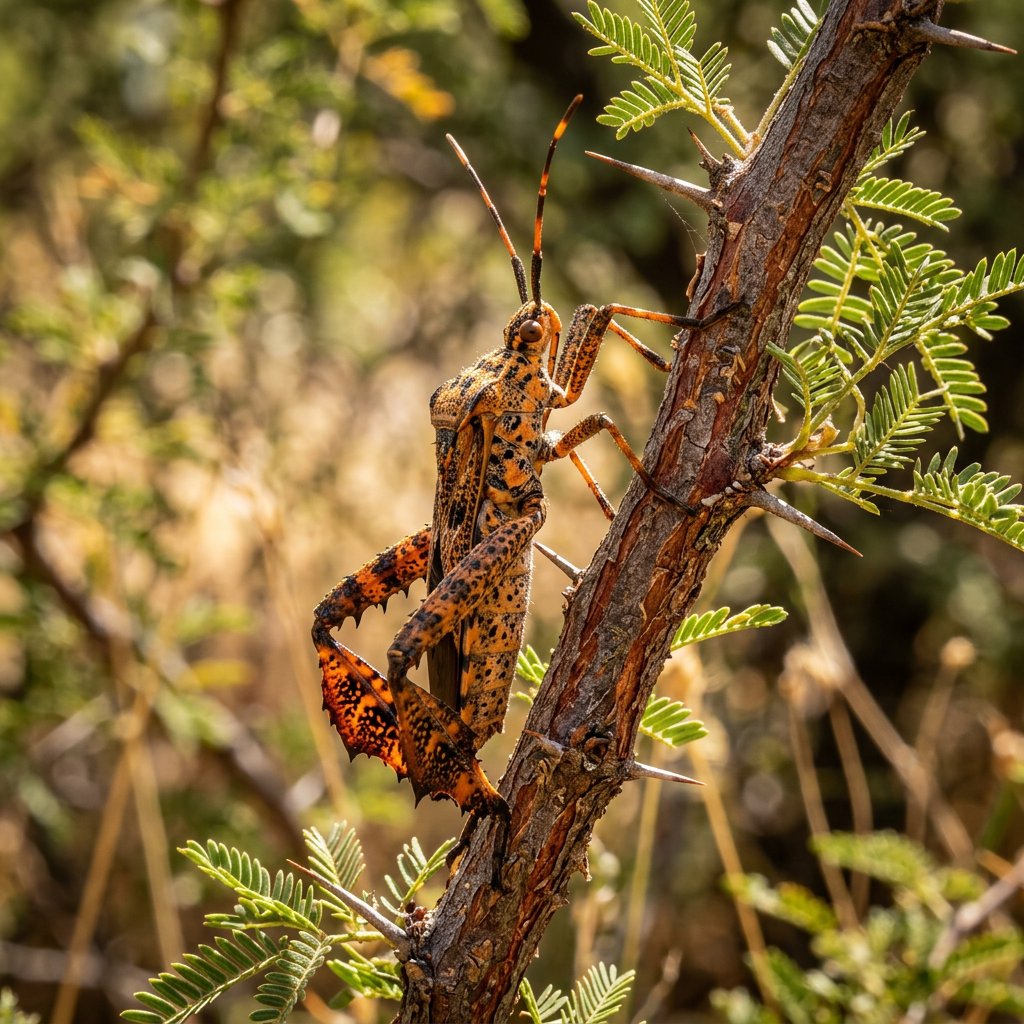
Commonly known as the Giant Mesquite Bug, this impressive insect is one of the largest "true bugs" in North America. Often found clustering on desert trees in the American Southwest and Mexico, they look like miniature armored tanks with flashy leg decorations. While their size might be intimidating, they are peaceful desert dwellers that spend their lives in a slow-motion quest for the perfect Mesquite pod.
🔍 How to Identify
- 🦵 Leaf-like Legs: They belong to the "leaf-footed bug" family, recognized by the wide, flattened expansions on their hind legs that look like tiny paddles or dried leaves.
- 🎨 Vibrant Nymphs: The juveniles (nymphs) are much more colorful than the adults, sporting striking red, white, and yellow patterns that warn predators of their foul taste.
- 🛡️ Armored Adults: Mature bugs are dark brown or black with intricate orange or yellow veining on their wings and thick, banded antennae.
🌲 Habitat & Ecology
- 🌳 The Mesquite Specialist: As their name suggests, these insects are almost exclusively found on Mesquite trees. They use needle-like mouthparts to sip sap from seed pods and tender young stems.
- 👥 Strength in Numbers: You will often find them in large, social clusters. This "group huddle" helps concentrate their defensive scents, making the entire branch smell unappetizing to hungry birds or lizards.
⚠️ Safety & Toxicity
- 🛡️ Harmless Giant: Despite their large size and "armored" appearance, they do not bite or sting. They are remarkably docile and will usually just lumber away if disturbed.
- 👃 Stink Defense: If they feel threatened or are handled roughly, they can release a pungent, foul-smelling chemical from glands on their thorax. While not dangerous, the smell is stubborn and hard to wash off.
- 🐾 Pet Safety: They are non-toxic to pets, though the bitter defensive spray is usually enough to make a curious dog or cat lose interest immediately.
✨ Fun Fact
The bright red and white colors of the young nymphs are a classic example of "aposematism"—a biological "warning sign" that tells predators they are chemically defended and will taste terrible if eaten!
More Details








