Info
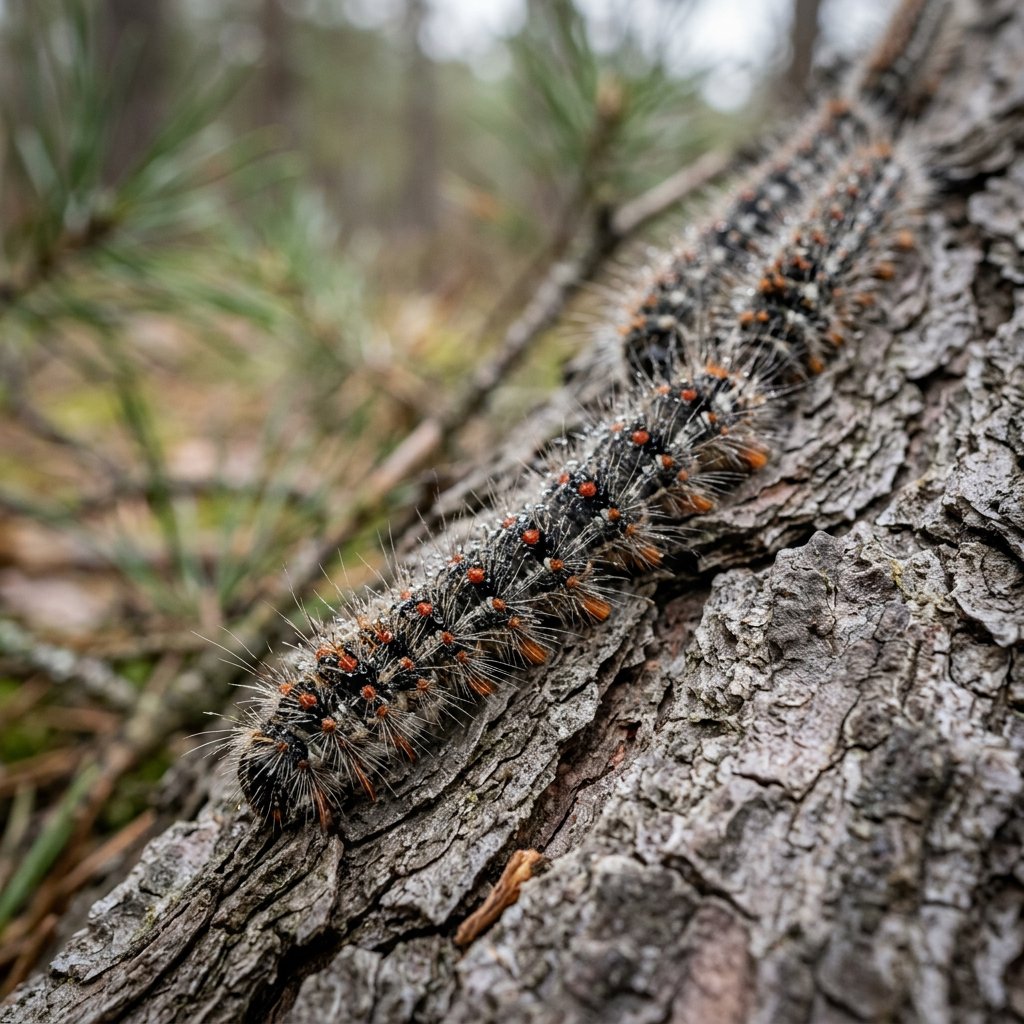
Commonly known as the Eastern Pine Processionary, this moth is most famous for its social larvae that travel in long, nose-to-tail "trains." While they may look like a fuzzy parade, they are one of the most notorious pests of pine forests across Europe and the Mediterranean. In folklore, their appearance often signals the arrival of spring, but for foresters and pet owners, they are a sign to stay vigilant.
🔍 How to Identify
- 🐛 The "Procession": The most iconic trait is their movement. The caterpillars travel in a single-file line, sometimes dozens of feet long, connected by silken threads and pheromones.
- 🧶 Silken Tents: During the winter, you will spot large, white, gossamer nests that look like thick cobwebs or "tents" perched on the sunniest branches of pine trees.
- 🦔 Urticating Hairs: The caterpillars are covered in thousands of tiny, orange-brown bristles. These aren't just for show—they are specialized "harpoons" designed to break off and release toxins.
- 🦋 The Adult Moth: If you find the adult, it is a rather nondescript, grayish-brown moth with subtle zig-zag patterns on the wings, usually only seen fluttering around lights at night.
🌲 Habitat & Ecology
- 🌲 Pine Specialists: As the name suggests, these insects are strictly tied to pine trees (and occasionally cedars or larches). They feed on needles, which can significantly weaken a tree if the infestation is heavy.
- 🌙 Nocturnal Workers: The caterpillars stay inside their warm silken nests during the day to avoid predators and emerge at night to feed, using their collective body heat to survive chilly winter temperatures.
- 🍂 Pupation Journey: The famous "procession" usually happens when the caterpillars leave their tree to find a soft patch of soil where they can burrow and transform into moths.
⚠️ Safety & Toxicity
- 🚫 HIGH ALERT: These caterpillars are dangerous to both humans and animals. Do not touch them, and do not even stand downwind of a heavily infested tree on a breezy day.
- 🐕 Pet Danger: Dogs are at extreme risk. If a dog licks or bites a caterpillar, the toxic hairs can cause severe swelling of the tongue, tissue death (necrosis), and even respiratory failure. Seek a vet immediately if contact is suspected.
- 🤒 Human Reaction: Contact with the hairs causes "pine processionary dermatitis," a painful, itchy rash. If hairs get into the eyes or are inhaled, they can cause serious inflammatory reactions and breathing difficulties.
✨ Fun Fact
The "leader" of the procession isn't necessarily a special caterpillar; it’s simply the first one to start moving. If you move the leader to the back of the line, the entire group will eventually reorganize, showing a fascinating, albeit simple, collective intelligence.
More Details








