Info
Meet the Marius Hairstreak, a tiny, fluttering magician often found dancing through the gardens of Central and South America. Part of the diverse "hairstreak" family, this butterfly is famous for its clever survival tactics and delicate, hair-like wing extensions that give it its name. It is a common visitor to tropical sun-drenched clearings, where it plays a vital role as a local pollinator.
🔍 How to Identify
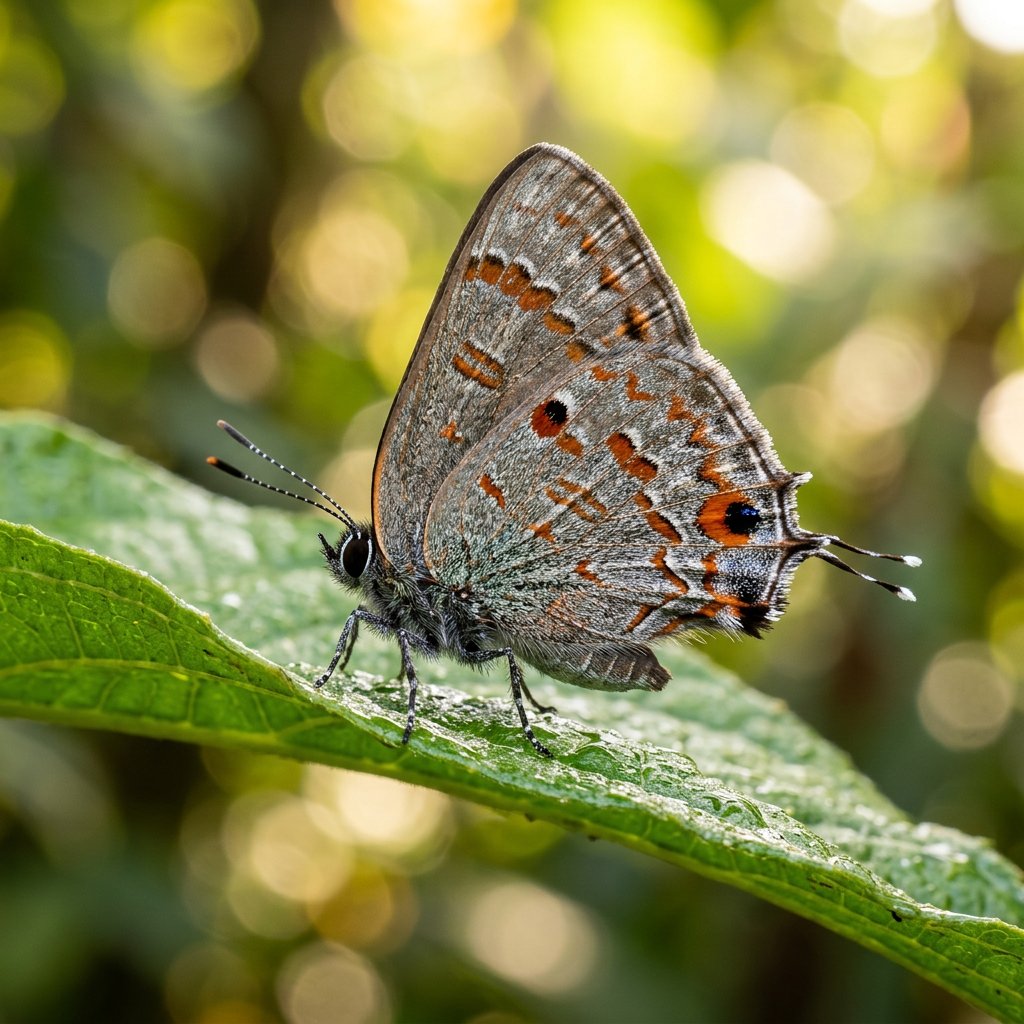
- 🦋 The False Head: Look closely at the bottom of the hindwings; you will see two thin, thread-like "tails." These mimic antennae to trick predators into attacking the wrong end of the butterfly.
- 🎨 Underside Patterns: When resting with its wings closed, it displays a soft, brownish-gray underside decorated with thin, dark wavy lines and two distinct, bright orange-red spots near the tail.
- ✨ Hidden Blue: If you catch a glimpse of it in flight, the upper side of the wings reveals a subtle, smoky blue-gray sheen that contrasts beautifully with its more muted underside.
🌲 Habitat & Ecology
- 🌺 Nectar Hunter: This insect is a frequent visitor to gardens and forest edges. It favors small, clustered flowers where it can easily perch and sip nectar, moving quickly from bloom to bloom.
- 🍃 Versatile Diet: As a caterpillar, the Marius Hairstreak is quite the adventurer, feeding on the flower buds and young leaves of various plants, including those in the Malpighia (acerola) and legume families.
- ☀️ Sun Seeker: You are most likely to spot them during the warmest parts of the day, as they rely on the sun to warm their flight muscles before patrolling their territory.
⚠️ Safety & Toxicity
- ✅ Completely Harmless: The Marius Hairstreak is a "friend" to the gardener. It does not bite, sting, or possess any venom, making it perfectly safe for children and pets to observe.
- 🚫 Fragile Beauty: While safe, they are very delicate. The "dust" on their wings is actually thousands of tiny scales; touching them can rub these off, hindering their ability to fly and regulate body temperature.
✨ Fun Fact
- 🎭 The Great Decoy: To make its "false head" even more convincing, the Marius Hairstreak will often wiggle its hindwings back and forth after landing. This makes the tiny tails move like twitching antennae, ensuring a hungry bird gets a mouthful of wing instead of a meal!
More Details








