Info
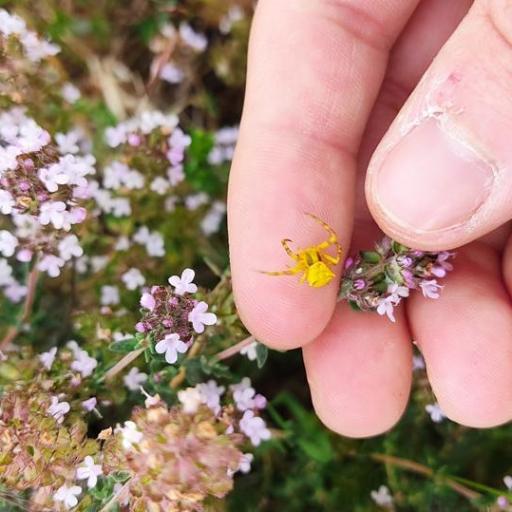
Meet the "Pink Crab Spider," the garden’s most patient and colorful master of disguise. Named for its uncanny ability to walk sideways like a crab and its habit of hiding deep within flower petals, this tiny hunter is a marvel of evolution. Whether it's blending into a vibrant rose or a sunny daisy, Thomisus onustus is the ultimate example of nature’s "hide-and-seek" champion.
🔍 How to Identify
- 🦀 Crab-like Stance: The front two pairs of legs are significantly longer and stronger than the back pairs, usually held wide in a "ready-to-grab" pose.
- 🎭 Color Shifting: Their bodies are polymorphic, meaning they can appear in shades of brilliant white, sunny yellow, or deep pink to match the flower they are sitting on.
- 📐 Angular Abdomen: They feature a distinctively wide, trapezoidal abdomen that often has two small "humps" or points at the upper corners.
🌲 Habitat & Ecology
- 🌸 The Floral Ambush: You won't find this spider spinning a traditional spiral web. Instead, it stakes out a high-traffic flower and sits perfectly still, waiting for a pollinator like a bee or butterfly to land nearby.
- 🦋 Pound-for-Pound Strength: Despite their small size, they are incredibly powerful. They use a potent venom to quickly paralyze prey that is often two or three times their own body weight.
- ☀️ Sun Lovers: They are most active during the warm spring and summer months in meadows, gardens, and scrublands where wildflowers are in full bloom.
⚠️ Safety & Toxicity
- ✅ Generally Harmless: While the "crab" look might seem intimidating, these spiders are not aggressive toward humans and prefer to hide or drop to the ground when disturbed.
- 🤏 Minor Bite: In the rare event of a bite (usually if the spider is accidentally squeezed), it is comparable to a mild bee sting. It is not considered medically significant for humans or pets, though some minor swelling may occur.
✨ Fun Fact
- 🎨 Slow-Motion Magic: The Pink Crab Spider can actually change its body color to match its surroundings! However, it isn't instant like a chameleon; it takes between 2 to 6 days for the spider to produce the pigments necessary to transition from white to yellow or pink.
More Details








