Info
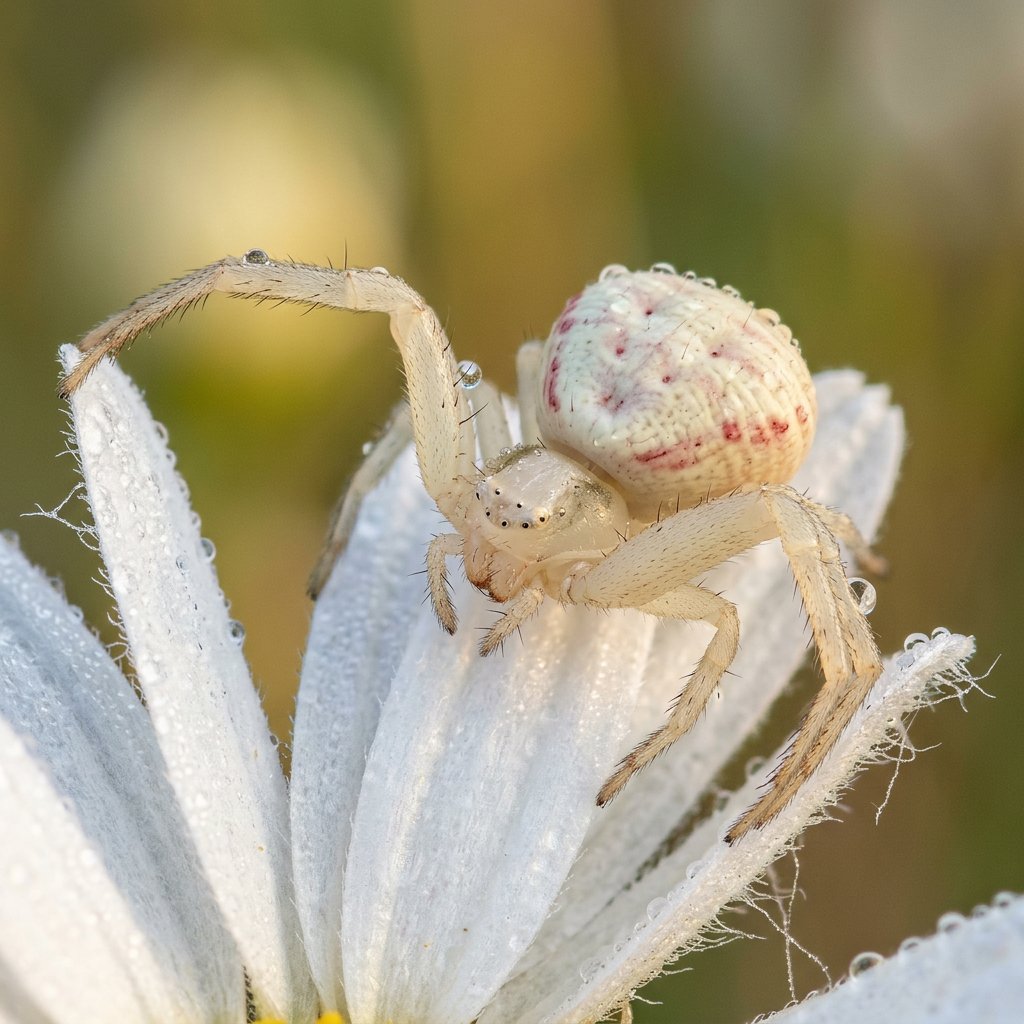
Often called the Australian White Crab Spider, this elegant arachnid is the ultimate "master of disguise" in the garden. Instead of weaving messy webs to catch its dinner, it sits perfectly still on flower petals like a silent, porcelain statue. It is a favorite among photographers for its striking color and its habit of "waving" its front legs in a crab-like greeting.
🔍 How to Identify
- 🦀 The Crab Stance: It is easily recognized by its two pairs of long front legs that it holds out widely to the sides, allowing it to scuttle sideways just like a crab.
- 🎨 Porcelain Palette: The body is typically a brilliant milky white or pale cream, often featuring a smooth, matte texture that mimics the look of flower petals.
- 👀 Raised Eye Turrets: Their tiny eyes are set on small, blunt projections on the head, giving them a wide-angle view of any approaching prey or predators.
🌲 Habitat & Ecology
- 🌸 The Flower Ambush: You will almost always find them perched at the very center of a bloom. They are particularly fond of white and yellow flowers like Daisies, Gardenias, and Jasmine, where their camouflage is most effective.
- 🐝 Beneficial Predator: As "sit-and-wait" hunters, they provide excellent natural pest control. They tackle flies and beetles, though they are bold enough to seize honeybees and butterflies much larger than themselves.
⚠️ Safety & Toxicity
- 🕷️ Low Risk: While the White Crab Spider looks "alien" and can be defensive if poked, they are not aggressive toward humans.
- 🩹 Minor Reaction: They do possess venom (used to paralyze insects), but a bite to a human typically only causes mild, localized pain or slight swelling, similar to a bee sting. They are not considered dangerous to children or healthy pets.
✨ Fun Fact
The female Thomisus spectabilis is a true shapeshifter; if she moves from a white flower to a yellow one, she can actually change her body color over the course of a few days to match her new home!
More Details








