Info
Known as one of the most common caddisflies across Europe, Tinodes waeneri is a tiny architect of the water’s edge. Often mistaken for a small, dull moth, this insect is actually a vital member of the freshwater ecosystem, spending most of its life building intricate silken tunnels on submerged rocks. They are often called "Sedges" by fly-fishers, who view them as a lucky sign of a healthy, thriving river or lake.
🔍 How to Identify
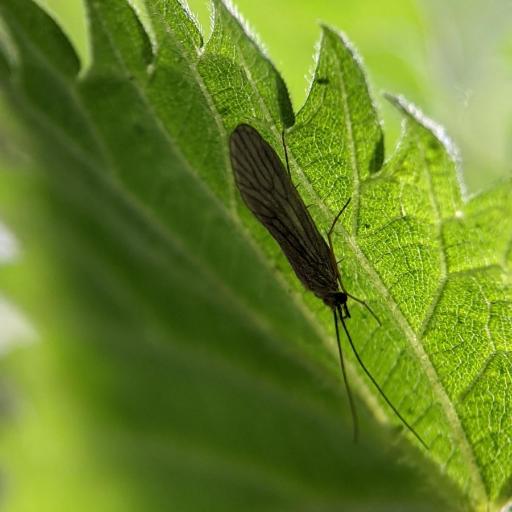
- 🦋 Hairy Wings: Unlike moths, which have scales, the wings of Tinodes waeneri are covered in fine, dense hairs. They are typically a mottled brownish-grey color.
- 📐 Tent-Like Posture: When resting, they hold their wings in a steep, roof-like shape over their backs, giving them a very triangular silhouette.
- 📡 Sweeping Antennae: They possess long, slender antennae that often point straight forward or wave rhythmically as they navigate the shoreline.
- 📏 Small Stature: These are delicate insects, usually reaching only about 7–10mm in length, making them easy to miss unless they are swarming near a light source.
🌊 Habitat & Ecology
- 🏠 Underwater Tunnels: While the adults fly, the larvae are famous for building "galleries"—fixed, winding tunnels of silk and sand on the surface of stones in large lakes and slow-moving rivers.
- 🍽️ Algae Grazers: The larvae act like tiny lawnmowers, rarely leaving their silken homes as they graze on algae and organic "slime" (periphyton) that grows on submerged rocks.
- 🐟 The Fisherman's Friend: Because they are so abundant, they are a primary food source for trout and other freshwater fish. Seeing a swarm of these adults usually means the fish will be rising to feed soon!
⚠️ Safety & Toxicity
- ✅ Harmless Neighbor: Tinodes waeneri is completely harmless to humans. They do not bite, sting, or carry diseases.
- 🐾 Pet & Child Safe: They are non-toxic and pose no threat to curious pets or children who might find them fluttering near garden ponds or porch lights.
- 💡 Light Seekers: Like their moth cousins, they are highly attracted to artificial lights at night, which is usually how they end up inside homes near water.
✨ Fun Fact
The silk produced by Tinodes waeneri larvae is incredibly strong and sticky even underwater—scientists have studied caddisfly silk as inspiration for developing medical adhesives that can work inside the human body!
More Details








