Info
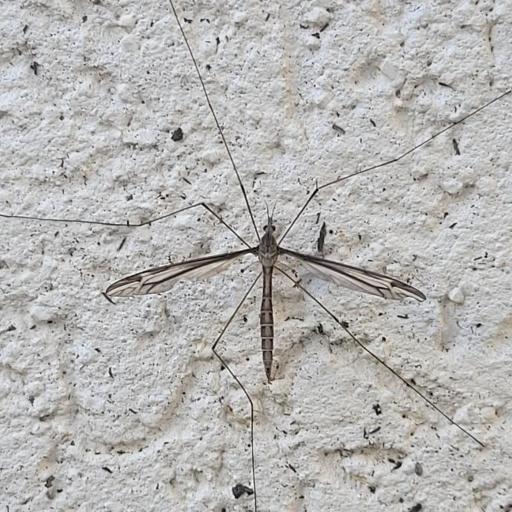
Often mistaken for a "giant mosquito," Tipula furca is actually a gentle, bumbling giant of the insect world. Commonly known as a Crane Fly or "Gollywhopper," these leggy wanderers are frequently seen bobbing against window screens or dancing over damp lawns during the spring and summer. Despite their somewhat intimidating size, they are completely harmless spirits of the garden that play a vital role in the ecosystem.
🔍 How to Identify
- 🦵 Stilt-Like Legs: They possess six incredibly long, spindly legs that are extremely fragile and often twice the length of their body.
- ✈️ The Wings: They feature a single pair of long, narrow wings that typically stay spread out when at rest, revealing a "V" shaped suture on their back (thorax).
- 📏 Slender Profile: The body is thin and cylindrical, often grayish-brown, with a distinct "snout" that lacks the needle-like biting parts found on a real mosquito.
🌲 Habitat & Ecology
- 💧 Damp Environments: Tipula furca is most at home near streams, marshes, or well-irrigated garden beds. They are particularly attracted to areas with moist soil and plenty of leaf litter.
- 🍂 The "Leatherjacket" Stage: While the adults are focused solely on mating, their larvae—known as "leatherjackets" due to their tough skin—live underground. They act as recyclers, breaking down decaying organic matter and turning it into nutrient-rich soil.
- 🕊️ A Seasonal Snack: Because they are weak flyers and lack defenses, they are a crucial "superfood" for backyard birds, bats, and predatory insects.
⚠️ Safety & Toxicity
- 🛡️ Completely Harmless: Despite their nicknames like "Mosquito Hawk," they do not eat mosquitoes, and more importantly, they cannot bite or sting humans. They don't even have functional mouthparts for biting in their adult stage.
- 🐕 Pet Friendly: If your cat or dog decides to chase and eat one, there is no cause for alarm. They are non-toxic and carry no venom or chemical irritants.
✨ Fun Fact
Crane flies are masters of the "breakaway" escape. If a predator (or a curious human) grabs them by a leg, they can voluntarily detach that limb to make a quick getaway. This process is called autotomy. While they can't grow the leg back, they can survive and fly just fine with a few missing limbs!
More Details








