Info
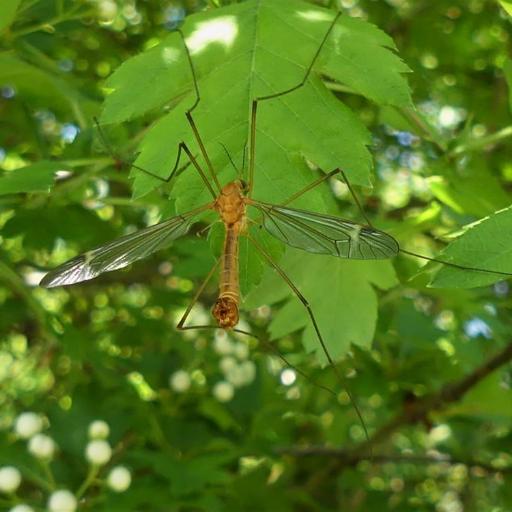
Often mistaken for a "giant mosquito," Tipula lunata is actually a gentle giant of the insect world. Known commonly as a Crane Fly, this spindly-legged visitor is a frequent guest in gardens during late spring and early summer. Despite their somewhat clumsy flight and "scary" size, they are completely harmless neighbors who spend most of their short adult lives looking for a mate.
🔍 How to Identify
- 🦵 Spindly Legs: Characterized by six incredibly long, thin legs that are very fragile and can easily detach if the insect is handled.
- 🪽 Crescent Wings: The wings feature a distinct pale, moon-shaped mark (a "lunule") on the leading edge, which is what gives the species its Latin name, lunata.
- 📏 Slender Body: A long, grayish-brown cylindrical abdomen that lacks the needle-like mouthparts (proboscis) found on biting mosquitoes.
🌲 Habitat & Ecology
- 🌾 Damp Meadows: They thrive in moist environments, particularly tall grasslands, woodland edges, and garden lawns where the soil stays relatively humid.
- 🍂 The "Leatherjacket" Phase: Before they take flight, they live underground as tough-skinned larvae known as "leatherjackets," where they feed on decaying organic matter and plant roots.
- 🦇 Nature's Snack: They play a vital role in the food chain, serving as a high-protein feast for birds, bats, and spiders during the peak of their emergence.
⚠️ Safety & Toxicity
- 🛡️ Harmless Friend: Tipula lunata is 100% non-toxic. They do not bite, they do not sting, and they do not carry any diseases.
- 🚫 Mistaken Identity: While the female has a pointed tip at the end of her abdomen, this is an "ovipositor" used strictly for laying eggs in the soil—not a stinger.
- 🐾 Pet Friendly: They are safe around curious cats and dogs, though their erratic flying patterns often trigger a playful (and messy) chase.
✨ Fun Fact
Crane flies are masters of "autotomy"—the same survival trick used by lizards! If a bird or a predator grabs one of their legs, the fly can voluntarily "snap" the limb off to make a quick, albeit lopsided, escape.
More Details








