Info
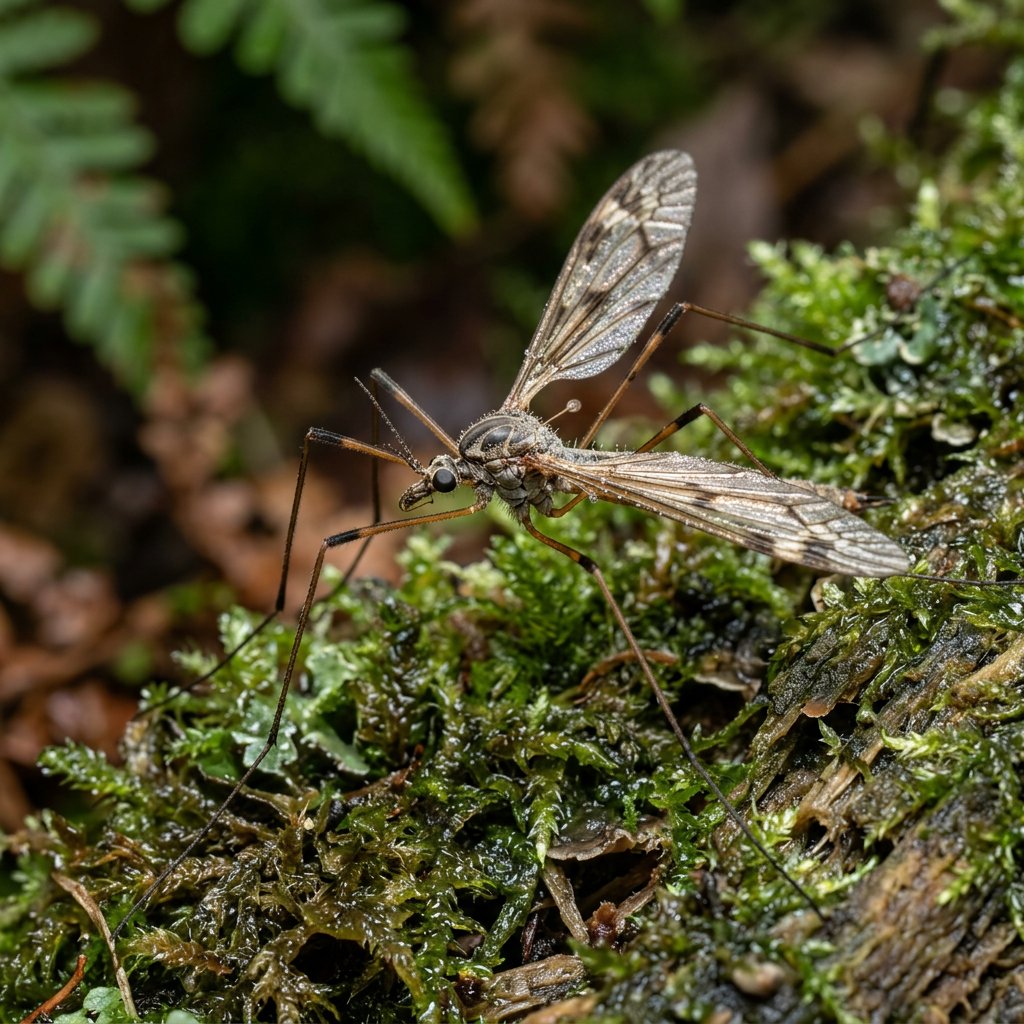
The Tipula maxima is the undisputed "King of Crane Flies." Often mistaken for a giant, mutant mosquito, this spindly insect is actually a harmless seasonal visitor that prefers damp woodlands over human bedrooms. Known as the largest crane fly in Europe, it carries an air of prehistoric grace as it bobbles through the air on oversized wings.
🔍 How to Identify
- 📏 Size Record: This is the largest crane fly you are likely to encounter, with a wingspan that can reach a staggering 6.5 to 7 centimeters.
- 🪽 Patterned Wings: Unlike its plain-looking relatives, its wings feature distinct dark, smoky zig-zag markings along the front edges, making it look like stained glass.
- 🦵 Fragile Limbs: It possesses six incredibly long, hair-thin legs. These are designed to break off easily (a process called autotomy) to help the fly escape the grasp of a hungry bird.
🌲 Habitat & Ecology
- 💧 Moisture Seekers: You will mostly find them near running water, boggy marshes, or damp leaf litter. Their larvae, known as "leatherjackets," live in saturated soil or moss where they feed on decaying plant matter.
- 🌙 Night Owls: While they can be seen during the day, they are most active at dusk and are frequently drawn to porch lights, which is how they often end up accidentally trapped inside homes.
⚠️ Safety & Toxicity
- 🛡️ Gentle Giants: Despite their "scary" appearance, they are 100% harmless. They do not have a stinger, and their mouthparts are soft and incapable of biting humans or pets.
- 🧶 Delicate Guests: The only real "danger" is to the fly itself; they are so fragile that even a gentle touch can damage their wings or legs. If you find one inside, it’s best to move it outdoors using a glass and a piece of paper.
✨ Fun Fact
🎓 The Fasting Adult: Once they reach their giant adult form, Tipula maxima rarely eat at all. They spend their entire adult life—which usually lasts only a few days—searching for a mate, fueled entirely by the "snacks" they ate months ago as larvae!
More Details








