Info
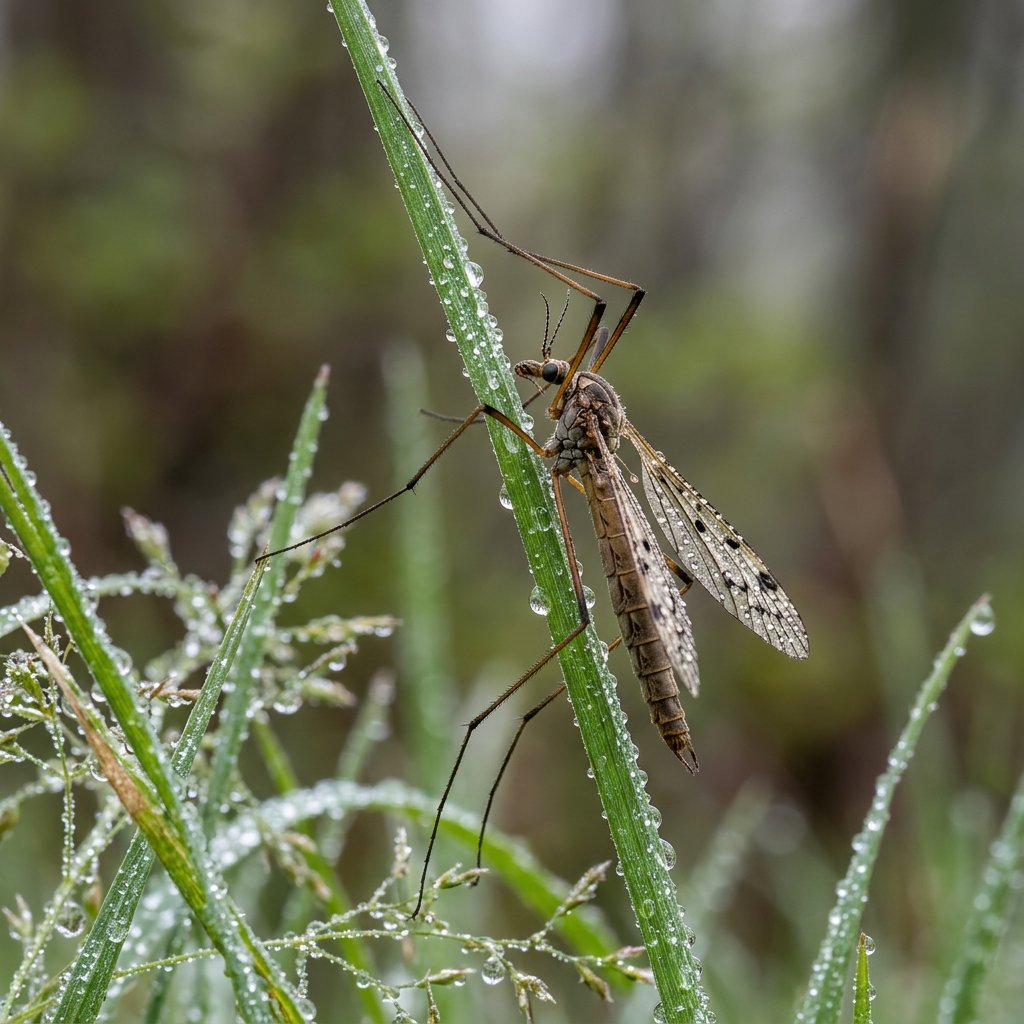
Often called the "Spotted Crane Fly" or "Mosquito Hawk," Tipula vernalis is a harmless giant of the insect world that frequently startles homeowners. Despite their intimidating, mosquito-like appearance, they are gentle creatures that act as a sure sign that spring has arrived. You will most likely encounter them dancing clumsily over lawns or resting on your garden walls during the damp months of April and May.
🔍 How to Identify
- 🪶 Mottled Wings: Unlike many common crane flies, this species features distinct dark, smoky patches or "clouds" on its wings, giving them a patterned, antique look.
- 🦵 Spindly Legs: They possess six incredibly long, fragile legs that seem almost too thin to support their bodies. These legs are prone to breaking off easily as a defense mechanism.
- 📏 Needle-Like Body: The body is slender and greyish-brown. Females have a pointed tip at the end of their abdomen called an ovipositor, which is used for laying eggs in the soil.
🌲 Habitat & Ecology
- 🌱 Meadow Dwellers: These insects thrive in damp grasslands, marshes, and well-watered garden lawns. They prefer areas where the soil remains moist enough for their larvae to develop.
- 🍂 Nature's Recyclers: While the adults rarely eat, their larvae (known as "leatherjackets") live underground. They feed on decaying organic matter and plant roots, helping to break down nutrients in the soil.
- 🦉 The Buffet Base: They serve as a vital food source for many backyard friends; birds, bats, and spiders rely heavily on these slow-moving flies for protein during the nesting season.
⚠️ Safety & Toxicity
- 🛡️ Status: Completely harmless to humans, children, and pets.
- 🚫 Details: They lack the mouthparts to bite and do not possess a stinger. The pointed "tail" on the female is strictly for depositing eggs into the ground and cannot pierce skin. They are non-toxic if accidentally ingested by a curious cat or dog.
✨ Fun Fact
- 🦎 The Great Escape: Crane flies are masters of "autotomy"—the ability to shed a limb voluntarily. If a predator grabs one of their long legs, the fly can simply disconnect it and fly away, leaving the confused predator with a very small, twitching snack while the fly escapes to safety!
More Details








