Info
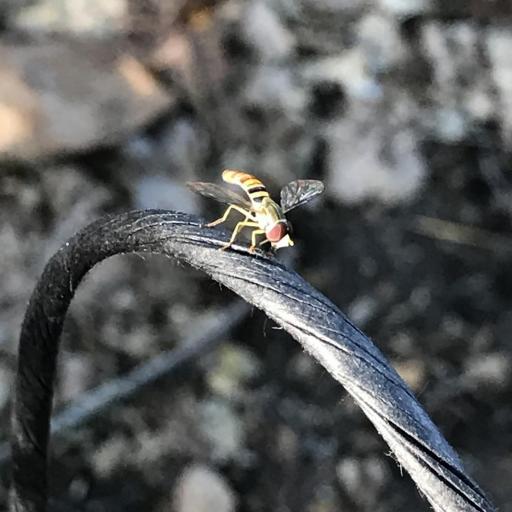
Meet the Maize Calligrapher, a tiny, hovering artist that spends its days darting between blooms with the precision of a miniature helicopter. Often mistaken for a small wasp due to its bold yellow stripes, this "Syrphid fly" is actually a harmless mimic that uses its "tough guy" look to scare away predators while it focuses on the peaceful work of pollination.
🔍 How to Identify
- 🎨 The "Calligraphy" Abdomen: Its name comes from the intricate, dark-ink patterns and bright yellow bands on its abdomen that look as if they were painted with a fine-tipped brush.
- 👀 The Mega-Eyes: Like most flies, it has massive, reddish-brown compound eyes that take up most of its head, providing a nearly 360-degree field of vision.
- 🚁 Hovering Flight: It is famous for its ability to hover perfectly still in mid-air before suddenly darting in a new direction—a feat most bees and wasps can't replicate.
🌲 Habitat & Ecology
- 🌽 The Corn Connection: While most hoverfly larvae eat aphids, the Maize Calligrapher is unique; its larvae often feed on the pollen and tender tissues of corn (maize) and other grasses, which is how it earned its common name.
- 🌸 Pollination Partner: As adults, they are obsessed with nectar. You will find them in gardens, meadows, and agricultural fields, serving as vital pollinators for various wildflowers and vegetable crops.
⚠️ Safety & Toxicity
- ✅ Status: Completely Harmless.
- 🛡️ The Great Bluff: Although it looks like it could deliver a nasty sting, the Maize Calligrapher has no stinger and no venom. It is a "Batesian mimic," meaning it survives by pretending to be a dangerous wasp.
- 👶 Interaction: They are safe to have around children and pets. They may even land on your skin to sip a bit of salty perspiration, but they cannot bite.
✨ Fun Fact
The Maize Calligrapher is one of the few flies in the world that has evolved to be a "vegetarian" during its larval stage, preferring to munch on corn pollen rather than hunting other insects!
More Details








