Info
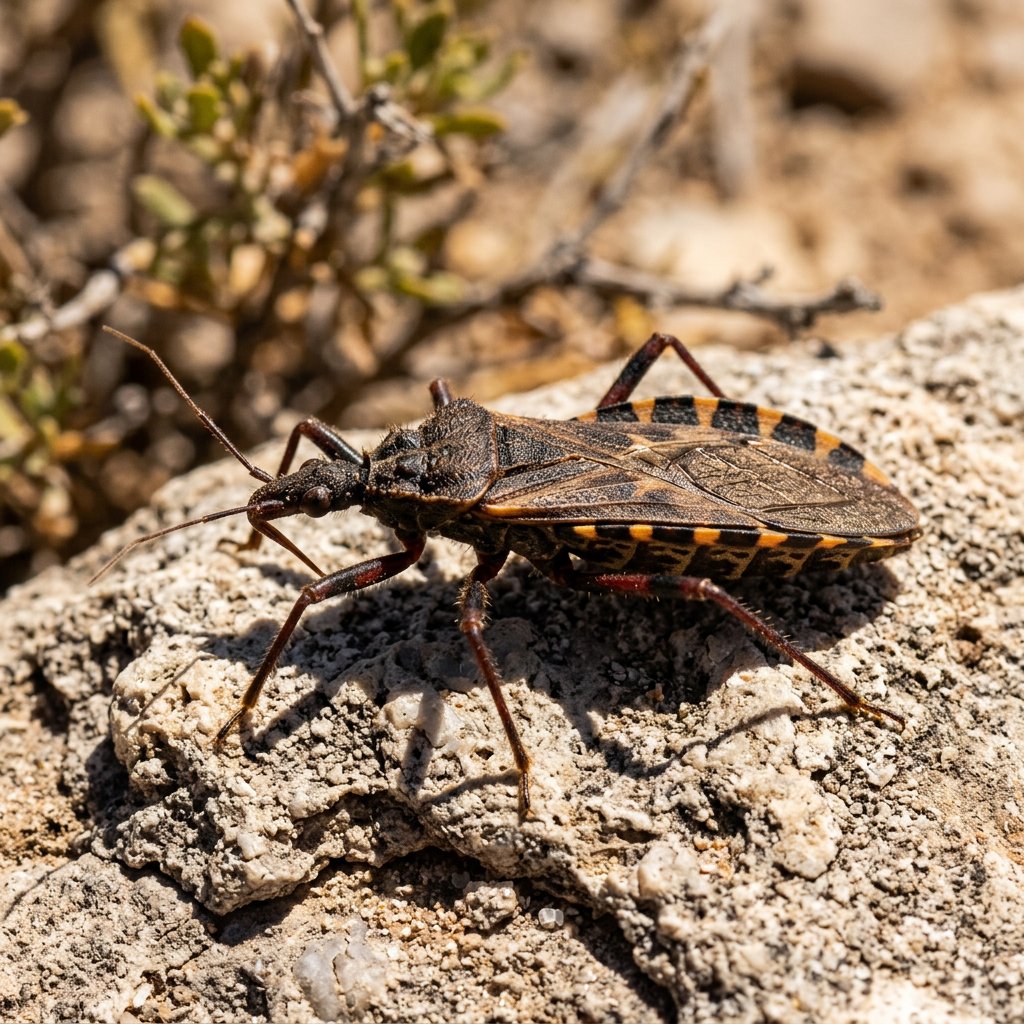
Often called the Gerstaecker’s Kissing Bug, this insect is part of a specialized group of "assassin bugs" known for their stealthy nighttime habits. While they may look like common garden beetles at first glance, they possess a distinct "cone-shaped" head and a notorious reputation in the southwestern United States and Mexico. They are frequently found near homes, drawn in by the very lights we use to keep the dark at bay.
🔍 How to Identify
- 🎭 The Head: Features a very long, narrow, "cone-like" snout with beady eyes and mouthparts that tuck neatly underneath the body when not in use.
- 🎨 Abdominal Border: The outer edge of the abdomen (called the connexivum) displays striking, rectangular orange or yellowish-white marks that contrast against its dark brown or black body.
- 🛡️ Body Shape: It has a large, flattened, oval-shaped body—usually about an inch long—with leathery wings that fold flat over its back in an "X" pattern.
🌲 Habitat & Ecology
- 🌓 The Light Trap: These insects are strictly nocturnal. While they naturally live outdoors, they are highly attracted to bright porch lights and indoor lighting, which is the most common reason they end up inside human dwellings.
- 🐀 Wild Neighbors: In the wild, they are "nest parasites," typically living in the dens of woodrats (packrats) or in rocky crevices. They stay hidden during the day and emerge at night to feed on the blood of mammals.
⚠️ Safety & Toxicity
- 🛑 Vector Status: Triatoma gerstaeckeri is a known vector of Chagas disease, a condition caused by the parasite Trypanosoma cruzi. The parasite is not transmitted through the bite itself, but through the bug's waste.
- 🐕 Pet Warning: Dogs are at a higher risk than humans in many areas, as they may accidentally eat the bugs or be bitten while sleeping in outdoor kennels. This can lead to serious heart complications in canines.
- 🧤 Handling: DO NOT touch this insect with bare hands. If you find one, use a glove or a container to move it. If you suspect a bite, monitor for swelling or flu-like symptoms and consult a professional.
✨ Fun Fact
The nickname "Kissing Bug" comes from their preference for biting humans on the soft skin around the lips and eyes. They choose these spots because the skin is thin and blood flow is high, allowing them to feed quickly while the "host" remains fast asleep!
More Details








